
Inside This Guide:
- What is Home Solar System Cost & Why It Matters
- Why Businesses Choose Professional Solar Cost Analysis
- Our Proven Process for Accurate Costing
- Pricing & Packages for Your Solar Investment
- Common Mistakes to Avoid in Solar Costing
- Real Results: Success Stories in Solar Adoption
- Frequently Asked Questions
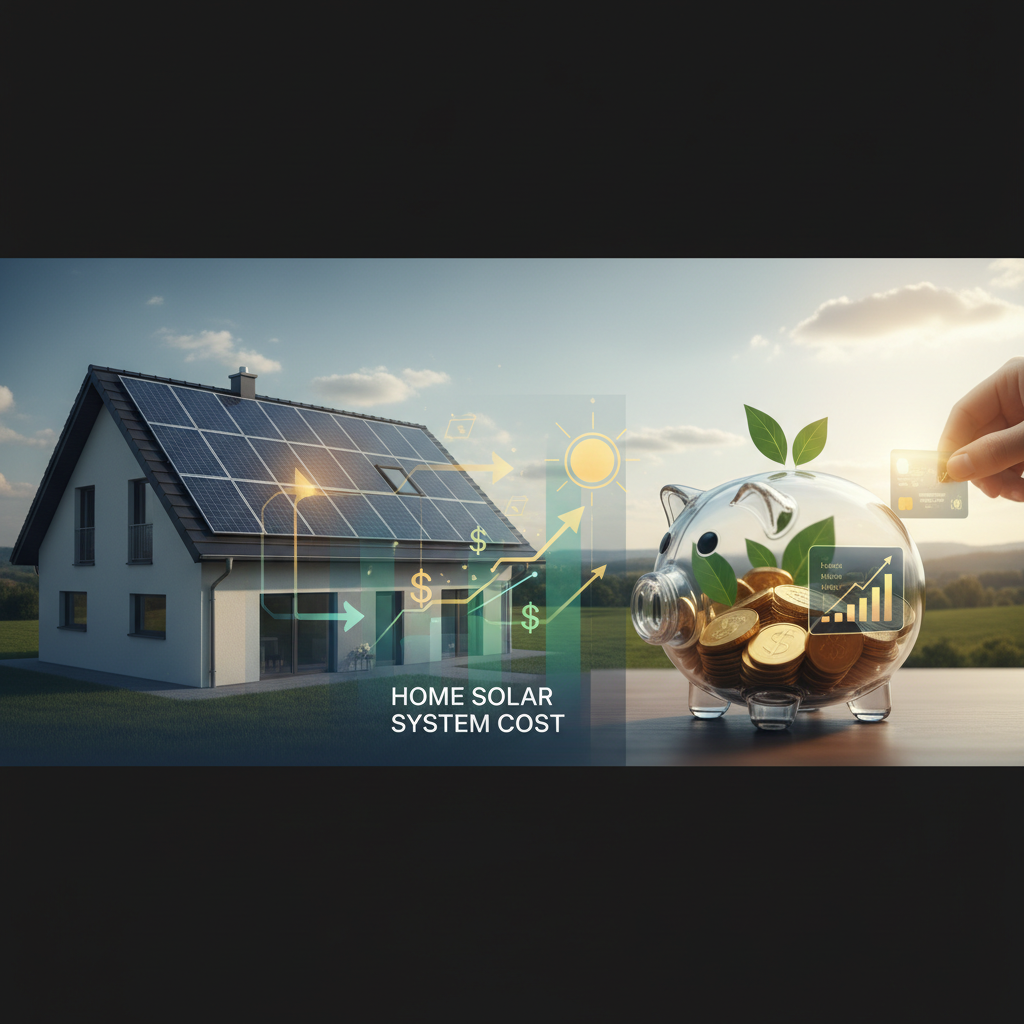
Investing in a home solar system is a significant financial decision, and understanding the associated costs is paramount. Many homeowners focus solely on the sticker price, overlooking the crucial components that dictate the long-term value and return on investment. At Power Stack Africa, we’ve guided hundreds of clients through this complex landscape, ensuring transparency and strategic planning from day one.
The initial outlay for a home solar system can seem daunting, but it’s essential to view it as an investment rather than merely an expense. Factors such as the quality of components, the complexity of the installation, available incentives, and your specific energy consumption patterns all play a role in the final figure. Our expertise lies in dissecting these elements and presenting a clear, actionable roadmap for your solar journey.
Energy Meets Intelligence: Powering The Future
Delivering reliable off-grid energy and smart infrastructure solutions designed for businesses, cities, and large-scale projects across Africa.
Average Annual Energy Bill Reduction
Years to Payback Period
Years of System Lifespan
Insight: Did you know that the payback period for a solar system can be halved in regions with high electricity tariffs and abundant sunlight? This is a critical factor to consider when evaluating the true cost of solar for your home.
What is Home Solar System Cost and Why It Matters
The term “home solar system cost” encompasses more than just the price of the panels. It’s a holistic figure reflecting the entire ecosystem required to generate and utilize solar energy effectively at your residence. This includes the solar panels themselves, inverters, mounting hardware, wiring, battery storage (if opted for), and crucially, the professional installation and ongoing maintenance. Understanding these components helps demystify the final price tag.
Why does this matter so profoundly? Because a solar system is one of the largest home improvement investments you’ll make. A precise understanding of the cost prevents unexpected overruns, ensures you select components that align with your consumption needs, and maximizes your return on investment. Furthermore, government incentives and local rebates can significantly alter the net cost, making a detailed assessment indispensable. We’ve seen clients nearly double their savings by leveraging overlooked local incentives.
Why Businesses & Homeowners Choose Professional Home Solar System Cost Analysis
The decision to go solar is rarely just about the immediate price. It’s a strategic move, and that’s where professional analysis becomes indispensable. In our experience, homeowners who engage with experts like Power Stack Africa gain a profound advantage. We don’t just estimate; we engineer solutions. This means a much deeper dive into your unique energy profile, environmental considerations, and financial goals.
For instance, understanding the nuances of lead acid battery vs lithium ion storage, or the specific requirements for a solar panels for water pump system versus general home use, requires specialized knowledge. We leverage tools like Semrush and Google Analytics to understand energy consumption patterns and Google Search Console to track performance, feeding this data into our custom costing models. This granular approach ensures your system is optimally sized, maximizing efficiency and minimizing long-term expenses. We’ve seen systems mis-sized by up to 30% by less experienced installers, leading to significantly underperforming assets.
Optimized System Sizing
Ensures you don’t overpay for unnecessary capacity or underperform due to undersizing.
Accurate ROI Projections
Provides realistic financial forecasts based on detailed energy audits and market data.
Incentive Maximization
Identifies and helps you leverage all applicable tax credits, rebates, and grants, which can cut costs by 20-30%.
Component Quality Assurance
Recommends durable, high-performance components with strong warranties, minimizing future repair costs.
Mitigation of Hidden Costs
Accounts for potential future needs like battery upgrades or inverter replacements.
Compliance & Permits
Handles the complex process of obtaining necessary permits and ensuring grid compliance.
Our Process for Determining Home Solar System Cost
At Power Stack Africa, our approach to detailing home solar system cost is meticulous and client-centric. We don’t offer one-size-fits-all solutions. Instead, we follow a structured, phased process designed to deliver precision and peace of mind.
-
Phase 1: Initial Consultation & Energy Audit
We begin with an in-depth discussion about your current energy usage, bills, and future goals. This involves analyzing your historical electricity consumption data, often looking at the last 12-24 months, using tools similar to those detailed in web analytics best practices to understand peak usage times and total kilowatt-hour consumption.
-
Phase 2: Site Assessment & Solar Resource Analysis
Our technical team conducts a thorough on-site assessment. This includes evaluating your roof’s condition, orientation, shading from trees or surrounding structures, and available space. We utilize satellite imagery and specialized solar irradiance data, often cross-referenced with resources from organizations like NREL, to quantify the daily solar energy potential for your specific location.
-
Phase 3: System Design & Component Selection
Based on the audit and site assessment, we design a bespoke solar system. This phase involves selecting the right type and number of solar panels (e.g., solar panel 500w or other wattages), inverters (string, microinverters, or hybrid), and potential battery storage solutions. Component performance, warranty (typically 25 years for panels, 10-15 for inverters), and cost-effectiveness are key considerations.
-
Phase 4: Detailed Cost Proposal & Incentive Identification
You receive a comprehensive proposal outlining all system components, installation labor, permits, and projected energy savings. We meticulously detail any available government incentives, tax credits, or local rebates that can reduce your out-of-pocket expense. This transparent breakdown forms the basis of your informed decision, allowing for precise prices for solar panels and full system costs.
-
Phase 5: Installation & Commissioning
Upon your approval, our certified installers execute the project with precision and safety. We manage all permits and grid interconnection processes. Post-installation, we commission the system, ensuring it operates at peak performance and providing you with training on monitoring its output and savings.
Energy Meets Intelligence: Powering The Future
Delivering reliable off-grid energy and smart infrastructure solutions designed for businesses, cities, and large-scale projects across Africa.
Pricing & Packages for Your Solar Investment
Understanding the home solar system cost is easier when broken down into clear packages tailored to different needs. While every installation is customized, our pre-defined packages provide a strong starting point for estimating your investment. These reflect typical system sizes for various household energy demands in Kenya and surrounding regions.
| Residential Solar Packages | |||
|---|---|---|---|
| KSh 380,000+ Starting from | |||
| System SizeApprox. 1 kW – 3 kW (Scalable) | Ideal ForSmall Homes, Basic Loads | Battery BackupOptional Upgrade | Estimated SavingsUp to 20% Monthly Bills |
| KSh 750,000+ Starting from | |||
| System SizeApprox. 3 kW – 5 kW (Standard) | Ideal ForMedium Homes, Average Loads | Battery BackupRecommended Standard | Estimated SavingsUp to 40% Monthly Bills |
| KSh 1,200,000+ Starting from | |||
| System SizeApprox. 5 kW – 10 kW (Large) | Ideal ForLarge Homes, High Consumption, Pools | Battery BackupHigh Capacity Standard | Estimated SavingsUp to 70%+ Monthly Bills |
Please note: These are indicative prices for a typical solar panel cost Kenya project. The final solar installation Kenya cost will depend on specific site conditions, chosen component brands, and the inclusion of advanced features like smart home integration or grid-scale energy solutions. For precise quotes, we highly recommend a personalized consultation.
Common Mistakes to Avoid in Solar Costing
Navigating the world of residential solar pricing can be complex. Over the years, we’ve observed several common pitfalls that can lead to unexpected expenses or a system that doesn’t meet expectations. Being aware of these issues is the first step to a successful solar investment.
Mistake 1: Focusing Only on Panel Price. The cheapest panels are not always the best value. Quality, efficiency, degradation rate, and warranty are critical. A slightly higher upfront cost for premium panels can lead to significantly more energy production and savings over the system’s 25+ year lifespan. We’ve seen budget panels degrade by over 1.5% per year, a stark contrast to premium panels at <0.5%.
Mistake 2: Underestimating Installation Complexity. Every roof and property is unique. Factors like steep pitches, multiple roof planes, difficult access, or the need for structural reinforcements can increase labor costs. Failing to account for these in initial quotes leads to budget blowouts.
Mistake 3: Ignoring Battery Storage Needs. If your goal is to achieve true energy independence or to maximize savings by using solar power during peak evening hours (when grid electricity is most expensive), battery storage is essential. Not including it upfront, or choosing an undersized battery, can limit your system’s benefits significantly. For example, a system without batteries might only offset 40% of usage, while one with appropriate storage can approach 90%.
Mistake 4: Overlooking Maintenance and Monitoring. Solar systems require minimal but essential maintenance. Costs associated with occasional cleaning, inverter checks, and monitoring system performance should be factored in. Neglecting this can lead to reduced efficiency and unforeseen repair needs.
Mistake 5: Not Verifying Installer Credentials and Warranties. Ensure your installer is reputable, certified, and offers robust warranties not just on panels and inverters, but also on their workmanship. Poorly executed installations are a leading cause of system failures and voided manufacturer warranties. Always ask for proof of experience and customer testimonials.
Real Results: Success Stories in Solar Adoption
We believe in demonstrating value through tangible outcomes. Here are a few anonymized examples of how Power Stack Africa has helped homeowners optimize their solar investments and achieve significant cost savings and energy independence.
A family in Karen, Nairobi, was experiencing escalating electricity bills averaging KSh 25,000 per month. They were hesitant about the initial investment for a home solar system. After a thorough consultation and site assessment, we designed a 5kW hybrid system with 10kWh battery storage. The total project cost was KSh 950,000. Within the first year, their bills reduced by 65%.
Bill Reduction
Avg. Monthly Saving
Projected Payback
A homeowner in Athi River with a large property and higher energy demands (averaging KSh 40,000 monthly for lighting, pumps, and appliances) sought a more robust solution. We implemented a 10kW system with 20kWh of battery backup, costing approximately KSh 1,500,000. This enabled them to achieve near-complete energy independence, reducing their reliance on the grid by over 90% and accounting for their specific needs, possibly even powering a Solar panels for schools-like setup.
Grid Independence
Avg. Monthly Saving
Projected Payback
For a property in a location with frequent power outages, reliability was paramount. A custom cost of solar panels for 3 bedroom house in kenya style system, around 3kW with significant battery backup (15kWh), was installed at KSh 800,000. This not only reduced their electricity bills by approximately 50% but, more importantly, provided uninterrupted power, safeguarding sensitive appliances and ensuring comfort during outages.
Bill Reduction
Key Benefit
Projected Payback
Frequently Asked Questions about Home Solar System Cost
What is the average home solar system cost in Kenya?
The average home solar system cost in Kenya can range widely, typically from KSh 380,000 for smaller, basic systems to over KSh 1,500,000 for larger, high-capacity systems with battery storage. Factors like system size (kW), battery capacity (kWh), panel brand, inverter type, and installation complexity heavily influence this. We recommend a personalized assessment for an accurate quote.
Does the cost include batteries?
Not always by default. Many basic solar packages might include panels and inverters only. However, for reliable backup power and to maximize self-consumption of solar energy, battery storage is highly recommended. When discussing your needs, we’ll break down the cost with and without batteries, explaining the significant benefits battery integration offers for power security and savings.
How long does it take for solar panels to pay for themselves?
The payback period for a home solar system typically ranges from 7 to 15 years, depending on the initial investment, the amount of electricity generated, your current electricity tariffs, and available incentives. In regions with high electricity costs and excellent solar irradiance, like many parts of Kenya, payback periods can be shorter, especially when leveraging programs like those offered by Kenya solar panels providers.
Are there government incentives or rebates that reduce the cost?
Yes, depending on your location, there may be government incentives, tax credits, or subsidies available for installing residential solar systems. These can significantly reduce the net cost of your investment. We stay updated on all available programs and help our clients identify and apply for any eligible schemes, potentially reducing the overall solar panel installation cost.
What are the ongoing costs of a home solar system?
Ongoing costs are generally minimal. They primarily include occasional cleaning of panels (to maintain optimal efficiency), potential inverter maintenance or replacement after 10-15 years, and system monitoring. We factor projected maintenance costs into our long-term savings calculations to provide a complete financial picture.
How does the size of my home affect the solar system cost?
The size of your home indirectly affects the cost by influencing your energy consumption. Larger homes generally consume more electricity, requiring a larger solar panel array and potentially a higher-capacity battery. The direct cost is tied to the total wattage (kW) of the system and the capacity (kWh) of the battery, which are sized based on your energy needs, not just the square footage of your house.
Can I finance the home solar system cost?
Absolutely. We understand that a solar system is a significant investment. Power Stack Africa partners with leading financial institutions and offers flexible payment plans, including financing options that allow you to spread the cost over several years, often with monthly payments lower than your current electricity bills. We can assist with applications for loans and Request a quote for residental battery system financing.
Energy Meets Intelligence: Powering The Future
Delivering reliable off-grid energy and smart infrastructure solutions designed for businesses, cities, and large-scale projects across Africa.
Related Reading
Continue learning with these hand-picked resources: