Choosing the Right Battery: Why It Matters for Africa
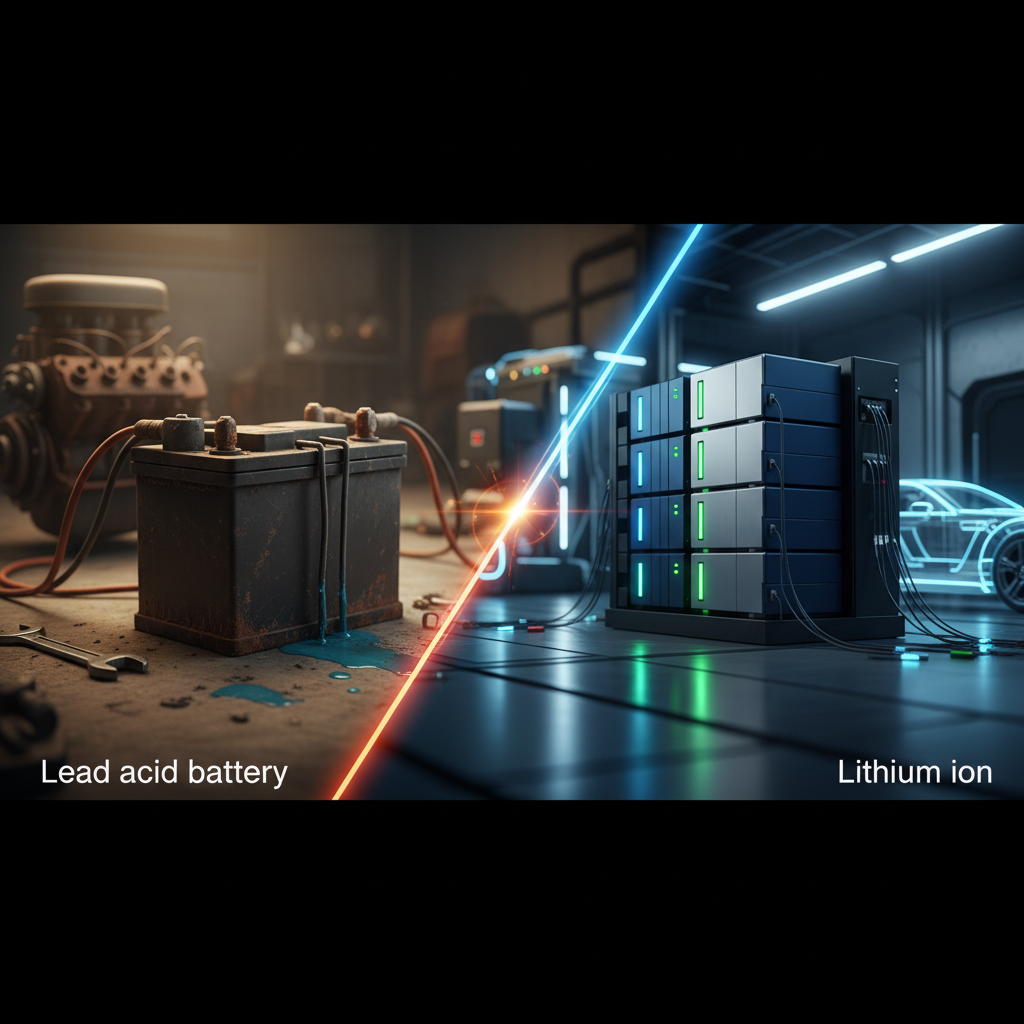
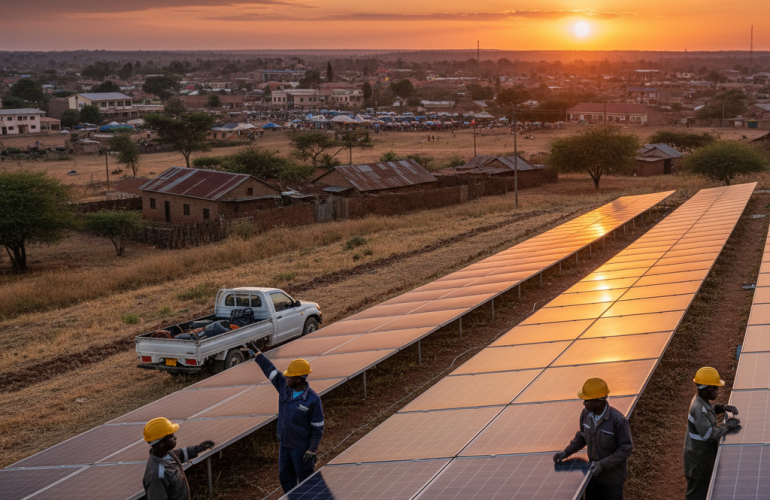
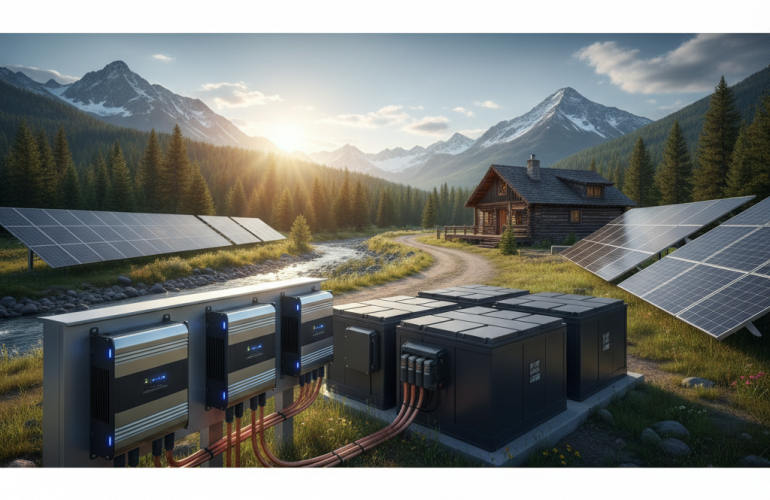
In our experience implementing renewable energy solutions across Africa, the choice of battery technology is often one of the most critical decisions. It directly impacts project viability, operational longevity, and overall return on investment. For decades, lead-acid batteries have been the workhorse, favored for their affordability and established infrastructure. However, the rapid advancements in lithium-ion technology present compelling alternatives, promising enhanced performance and efficiency. This article dives deep into the nuances of lead-acid versus lithium-ion batteries, equipping you with the knowledge to make an informed decision for your specific needs, whether it’s for a remote community’s off-grid power system, a commercial solar installation, or large-scale industrial applications.
Enery Meets Intelligence: Poweing The Future
Delivering reliable off-grid energy and smart infrastructure solutions designed for businesses, cities, and large-scale projects across Africa.
Start Your Project
Understanding the fundamental differences is the first step. While both technologies store electrical energy, their internal chemistry, physical properties, and performance characteristics diverge significantly. For instance, a common misconception is that both battery types offer similar energy density. In reality, a lithium-ion battery can often store twice as much energy as a lead-acid battery of the same weight and volume. This stark difference has profound implications for deployment, especially in space-constrained or weight-sensitive applications prevalent in Africa’s diverse terrains. We’ve seen projects that would be infeasible with lead-acid due to weight limitations become practical with lithium-ion.
Key Insight:
The ‘total cost of ownership’ for lithium-ion batteries, while higher upfront, is frequently lower than lead-acid over their lifespan due to superior efficiency, longer cycle life, and reduced maintenance requirements. This is a critical metric for long-term energy planning.
40–60%
More Energy Density
The Core Chemistry: Understanding the Technologies
At their heart, batteries convert chemical energy into electrical energy through electrochemical reactions. The materials used in these reactions define the battery type and its behavior. Let’s break down the fundamental differences:
| Feature |
Lead-Acid Battery |
Lithium-Ion Battery |
| Primary Chemistry |
Lead plates submerged in sulfuric acid electrolyte. |
Lithium compounds (e.g., Lithium Iron Phosphate – LiFePO4, Lithium Nickel Manganese Cobalt Oxide – NMC) and a liquid electrolyte. |
| Energy Density (Wh/kg) |
Generally lower (30–50 Wh/kg). |
Significantly higher (100–265 Wh/kg). |
| Power Density (W/kg) |
Moderate. |
Higher, allowing for faster charge/discharge rates. |
| Cycle Life |
Typically 300–1000 cycles (depth of discharge dependent). |
Typically 2000–7000+ cycles (can vary greatly by specific chemistry). |
| Depth of Discharge (DoD) |
Recommended 50% to maximize lifespan. |
Can often handle 80–100% DoD without significant degradation. |
| Charge Efficiency |
Around 70–85%. |
Around 95–99%. |
| Discharge Efficiency |
Around 70–85%. |
Around 95–99%. |
| Voltage Curve |
Gradually sloping voltage during discharge. |
Relatively flat voltage during most of the discharge cycle. |
| Operating Temperature |
Slightly better performance in very cold conditions, but reduced capacity and lifespan. |
Optimal range typically 0°C to 45°C; performance degrades outside this. Requires thermal management. |
| Maintenance |
Requires regular checks for water levels (for flooded types), terminal cleaning, and equalization charges. |
Virtually maintenance-free; only requires occasional cleaning and ensuring proper connections. |
| Safety Concerns |
Risk of hydrogen gas explosion if overcharged, acid leaks, heavy weight. |
Risk of thermal runaway if damaged or improperly managed; requires Battery Management System (BMS). |
| Environmental Impact |
Recyclable, but lead pollution is a concern. |
Recycling infrastructure is developing; contains valuable materials but also rare earths. |
When we evaluate battery performance for a client, we look at several key metrics. These aren’t just numbers; they translate directly into the reliability and usability of the energy system.
01
Traditional Lead-Acid Batteries
★ Best for Budget-Constrained, Stable Applications ★
The standard for decades, lead-acid batteries are a familiar and cost-effective energy storage solution. They are robust but have limitations regarding depth of discharge and lifespan.
Proven Reliability
Low Initial Cost
Wide Availability
Simple Charging Requirements
PROS
Readily available and widely understood technology. 70% lower upfront cost compared to lithium-ion. Operates well in sub-zero temperatures.
CONS
Heavy and bulky. Limited lifespan (3-5 years). Requires deep discharge (50% DoD) for best life. Maintenance needed (water refills for flooded types). Slower charging.
Lead-acid remains a go-to for applications where initial cost is the primary driver and consistent, moderate power is sufficient, such as basic backup power for short durations.
“For many established grid-tied systems or less demanding off-grid needs, lead-acid still makes financial sense upfront.”
💰 Starting at $500 (for a typical 100Ah 12V battery)
02
Lithium-Ion (LiFePO4) Batteries
★ Best for High-Cycle Life, Efficiency, and Deep Discharge ★
Lithium-ion, particularly the LiFePO4 (Lithium Iron Phosphate) variant, has become the dominant choice for modern energy storage. It offers superior energy density, significantly longer cycle life, and higher efficiency.
Exceptional Cycle Life
High Energy Density
Deep Depth of Discharge (DoD)
Fast Charging Capability
Maintenance-Free
Built-in BMS Protection
PROS
Much lighter and smaller. Up to 10-20x longer lifespan (2000-7000+ cycles). Can be discharged to 100%. Higher charge/discharge efficiency (95%+). Near-zero maintenance. Safer chemistry (LiFePO4).
CONS
Significantly higher upfront cost ($1500+ for equivalent capacity). Performance can be affected by extreme temperatures (requires careful system design). Requires a Battery Management System (BMS).
LiFePO4 batteries are ideal for demanding applications requiring frequent cycling, long-term reliability, and minimal maintenance, such as solar power systems for homes, businesses, and electric vehicles.
“The longevity and efficiency of LiFePO4 often result in a lower total cost of ownership, making it a superior long-term investment.”
💰 Starting at $1500 (for a typical 100Ah 12V equivalent)
From a performance standpoint, the ‘flat voltage curve’ of lithium-ion is a significant advantage over the sloping curve of lead-acid. This means that as a lithium-ion battery discharges, its voltage remains relatively stable throughout most of the cycle. For users, this translates to a consistent power output for their devices. In contrast, lead-acid batteries experience a noticeable drop in voltage as they discharge, which can impact the performance of sensitive electronics. This consistency is why we often recommend lithium-ion for critical infrastructure or applications where stable voltage is paramount, such as powering telecommunication towers or medical equipment.
Furthermore, the depth of discharge (DoD) is a critical factor in battery lifespan. Lead-acid batteries are best operated within a 50% DoD to achieve their rated cycle life, meaning you effectively only use half their capacity. Pushing them deeper significantly shortens their lifespan. Lithium-ion batteries, especially LiFePO4, can comfortably handle 80–100% DoD. This means for the same usable capacity of 100Ah, a lithium-ion battery provides 90–100Ah, while a lead-acid battery realistically offers only 50Ah. This effectively doubles the usable energy from a lithium-ion system of equivalent *rated* capacity.
Cost Considerations: Upfront vs. Total Cost of Ownership
The initial price tag is often the most discussed aspect. Lead-acid batteries are undeniably cheaper at the point of purchase. For instance, a 12V, 100Ah lead-acid battery might cost between $150-$300, whereas an equivalent 12V, 100Ah LiFePO4 battery can range from $500-$1000+. This difference can lead many to default to lead-acid, especially for smaller budgets. However, as specialists in energy solutions, we emphasize the importance of looking beyond the initial layout.
The ‘total cost of ownership’ (TCO) paints a different picture. Consider an off-grid home that requires 100Ah of usable daily capacity.
A lead-acid battery bank might need replacement every 2-4 years if consistently discharged to 50%. If replacements cost $500 each, over a 10-year period, you might spend $1,250 – $2,500 on batteries alone (assuming 2.5-5 replacements).
Conversely, a LiFePO4 system with a lifespan of 10-20 years (3000-7000 cycles) and a higher upfront cost of $700 might only require one purchase over the same decade, or perhaps a second if pushing extreme usage. This makes the TCO for lithium-ion significantly lower in many scenarios we encounter for commercial, industrial, or even robust residential systems.
We’ve calculated TCO for clients where lithium-ion proved to be 30–50% cheaper over a 15-year project lifecycle, despite the higher initial investment. This is a critical factor for scalability and long-term financial planning. When looking at solar panel cost or related equipment, the battery is a substantial component, and its lifecycle cost is paramount.
Enery Meets Intelligence: Poweing The Future
Delivering reliable off-grid energy and smart infrastructure solutions designed for businesses, cities, and large-scale projects across Africa.
Start Your Project
Lifespan & Durability: Years of Service
The expected lifespan of a battery is often measured in ‘cycles’ – a charge and discharge event. This is where lithium-ion, particularly LiFePO4, significantly outperforms lead-acid. A typical lead-acid battery might offer 300–1,000 cycles at reasonable depths of discharge. In contrast, LiFePO4 batteries can achieve anywhere from 2,000 to 7,000+ cycles. This difference is not trivial. For a system that experiences a full cycle daily, a lead-acid battery might last 1–3 years, while a LiFePO4 battery could last 5–20 years. This longevity is particularly valuable in off-grid applications in Africa, where frequent battery replacement can be logistically challenging and prohibitively expensive. We’ve consulted on projects expecting 15-20 years of service, where LiFePO4 becomes the only viable option for energy storage.
Weight and volume are also crucial durability factors. Lithium-ion batteries are typically 40–60% lighter and significantly smaller than lead-acid batteries of equivalent *rated* capacity. This makes them ideal for mobile applications, rooftop installations where structural load is a concern, or simply easier and safer installation, especially for the solar installation kenya projects we manage.
Safety & Environmental Impact: Conscious Choices
Safety is paramount, and both battery types have unique considerations. Lead-acid batteries have been around for over a century, and their risks are well-understood. The primary concerns are:
- Acid Leaks: The sulfuric acid electrolyte can be corrosive.
- Hydrogen Gas: Overcharging can produce explosive hydrogen gas, requiring good ventilation.
- Heavy Weight: Handling and installation pose physical risks.
Lithium-ion batteries, especially LiFePO4, offer enhanced safety due to their inherent chemical stability. The main risk with lithium-ion is thermal runaway, where excessive heat can cause a fire. This is mitigated by the inclusion of a Battery Management System (BMS). A BMS is a critical component that monitors voltage, current, and temperature, preventing overcharging, over-discharging, and short-circuiting, thereby significantly reducing safety risks. In our installations, we never compromise on a quality BMS for lithium-ion systems.
Environmentally, lead-acid batteries are highly recyclable. Around 99% of lead-acid batteries are collected and recycled. However, lead itself is a toxic heavy metal, and improper disposal poses significant environmental risks. Lithium-ion battery recycling is a growing field, and while infrastructure is still developing, there is a strong push to recover valuable materials like lithium, cobalt, nickel, and copper. The sustainability of lithium-ion relies heavily on advancements in recycling processes and ethical sourcing of raw materials.
Application Suitability: Where Each Battery Excels
The choice between lead-acid and lithium-ion isn’t always absolute; it depends heavily on the specific application’s demands and constraints.
03
AGM & Gel Lead-Acid Batteries
★ Best for Stable, Low-Cycle Applications & Budget Projects ★
These are sealed lead-acid variants that require no regular maintenance and are generally safer than flooded lead-acid. They are a step up from basic lead-acid types but still share many performance limitations.
Maintenance-Free Design
Robust for Stationary Use
Decent Performance in Cooler Temps
Good for Occasional Deep Discharges
PROS
No need to check electrolyte levels. Safer than flooded lead-acid. Good for applications with less frequent, but deeper discharges than traditional flooded types.
CONS
Still heavy and bulky. Shorter lifespan than lithium (5-7 years typical). Susceptible to sulfation if left discharged. Limited charging efficiency.
AGM and Gel batteries are suitable for smaller solar home systems, RVs, or backup power solutions where initial cost is a concern and cycle requirements are moderate.
“A step up from flooded lead-acid, offering convenience at a slightly higher price point.”
💰 Starting at $200 (for a typical 100Ah 12V battery)
04
Lithium Iron Phosphate (LiFePO4)
★ Best for High-Demand Cycles, Longevity, and Efficiency ★
LiFePO4 is the most popular lithium-ion chemistry for stationary energy storage due to its excellent safety profile, long cycle life, and thermal stability.
Excellent Safety Profile
2000+ Cycle Life
High Energy Density
Deep DoD Capability
Fast Charging
Maintenance-Free
PROS
Longest operational lifespan. Minimal weight and footprint. Very efficient charging and discharging. Stable voltage output. Resilient to deep discharge.
CONS
Highest upfront cost. Requires a BMS for operation and safety. Performance reduction in extreme cold or heat without thermal management.
Ideal for solar-powered homes and businesses, RVs, boats, off-grid systems, and anywhere maximum energy density, longevity, and efficiency are required.
“The go-to for modern, high-performance energy storage, offering the best long-term value.”
💰 Starting at $1500 (for a typical 100Ah 12V equivalent)
05
Lithium-ion (NMC/LCO/Other Chemistries)
★ Best for High Power Density & Compact Devices ★
Other lithium-ion chemistries like NMC (Nickel Manganese Cobalt) and LCO (Lithium Cobalt Oxide) are prevalent in portable electronics and EVs. They offer very high energy density but often at a lower cycle life and higher cost than LiFePO4, and sometimes with greater safety concerns.
Extremely High Energy Density
Very High Power Output
Compact Size
Used in High-End Applications
PROS
Highest energy density by weight and volume. Excellent for applications where space is severely limited. High power delivery for rapid acceleration (EVs) or high-drain devices.
CONS
Generally shorter cycle life than LiFePO4 (500-2000 cycles). Higher cost. Increased safety risks (thermal runaway) requiring sophisticated BMS.
Primarily used in electric vehicles, laptops, smartphones, and power tools where maximum energy and power in the smallest possible package are critical.
“The performance champions for power-hungry, space-critical devices, but less ideal for stationary storage.”
💰 Varies widely based on application.
For a typical residential or commercial solar system installation in Kenya, or indeed across Africa, we often find ourselves leaning towards LiFePO4. Its balance of safety, longevity, and efficiency makes it superior for long-term, stable energy storage. For instance, powering critical systems like solar panels for water pump operations or reliable backup for businesses, LiFePO4 is unmatched. While lead-acid might serve for basic, budget-sensitive smaller systems like a simple cost of solar panels for 3 bedroom house in kenya setup with minimal daily usage, it struggles with higher demands.
We have also observed that many clients underestimate the charging requirements and maintenance needs of lead-acid. In remote areas of Africa, where access to spare parts or maintenance personnel can be difficult, the virtually maintenance-free nature of LiFePO4 is a significant advantage. Many lead-acid systems require periodic equalization charges to prevent sulfation and maintain capacity, a process that is easily overlooked or misunderstood.
Power Stack Africa’s Advantage: Expert Integration
At Power Stack Africa, our expertise lies not just in understanding battery technologies but in integrating them seamlessly into robust, reliable energy solutions. We’ve deployed hundreds of systems across diverse African environments, from the bustling streets of Nairobi to remote off-grid communities. Our process involves detailed energy audits, site assessments, and understanding the client’s long-term goals. This holistic approach ensures we recommend and install the most appropriate battery technology—be it lead-acid for a specific niche budget application or, more commonly, lithium-ion for its proven performance and longevity.
We partner with leading manufacturers and utilize advanced monitoring tools to ensure optimal performance and safety. For example, we implement sophisticated Battery Management Systems (BMS) for all our lithium-ion installations, ensuring safety, maximizing lifespan, and providing valuable data on system health. Our deep understanding of Kenya solar panels and energy storage systems allows us to deliver solutions that are not only technically sound but also financially viable over the long haul. We help clients navigate complex decisions, ensuring they invest wisely in their energy future.
Comprehensive Comparison: At a Glance
To summarize the key differences and help you make an informed choice:
| Attribute |
Lead-Acid (Standard) |
LiFePO4 (Lithium-ion) |
NMC/LCO (Lithium-ion) |
| Initial Cost |
Lowest |
High |
Very High |
| Energy Density |
Low |
High |
Very High |
| Cycle Life |
Low (300-1000) |
Very High (2000-7000+) |
Medium-High (500-2000) |
| Depth of Discharge (DoD) |
50% Recommended |
80-100% |
80-100% |
| Efficiency |
70-85% |
95-99% |
95-99% |
| Weight/Volume |
Heavy & Bulky |
Light & Compact |
Very Light & Compact |
| Maintenance |
Required (Flooded) |
None |
None |
| Safety |
Moderate (Gas, Acid) |
High (with BMS) |
Moderate (Requires robust BMS) |
| Best For |
Budget backup, low-cycle, stable temp. |
Long-term solar, off-grid, deep cycles. |
EVs, portable electronics, devices needing max power/density. |
| Power Stack Africa Recommendation |
Niche budget applications. |
Most solar, off-grid, commercial & residential. |
Specific high-performance applications, consult us. |
Frequently Asked Questions
What is the main difference between lead-acid and lithium-ion batteries?
The fundamental difference lies in their internal chemistry. Lead-acid batteries use lead plates and sulfuric acid, while lithium-ion batteries use lithium compounds and various electrolytes. This chemical difference leads to substantial variations in energy density, lifespan, charging speed, efficiency, weight, and cost.
Which type of battery lasts longer?
Lithium-ion batteries, particularly the LiFePO4 (Lithium Iron Phosphate) chemistry, generally last much longer than lead-acid batteries. While a lead-acid battery might offer 300-1000 cycles, a LiFePO4 battery can typically provide 2,000-7,000+ cycles. This translates to a potential lifespan of 5-20 years for lithium-ion versus 2-5 years for lead-acid, depending on usage and depth of discharge.
Is lithium-ion battery technology really that much more expensive?
Yes, the initial upfront cost for lithium-ion batteries is significantly higher than for lead-acid batteries of equivalent rated capacity. However, when considering the total cost of ownership over the battery’s lifespan, lithium-ion often proves more economical due to its longer life, higher efficiency, and minimal maintenance. We’ve found this to be true for many solar companies in kenya clients.
Can I use my existing lead-acid charger with a lithium-ion battery?
Generally, no. Lithium-ion batteries require specific charging profiles and voltages that differ from lead-acid batteries. Using a lead-acid charger can lead to inefficient charging, reduced battery lifespan, or even damage. Lithium-ion batteries also require a Battery Management System (BMS) for protection, which integrates with their charging needs.
Are lithium-ion batteries safe for my home or business?
Lithium-ion batteries have excellent safety records, especially LiFePO4 chemistry, which is inherently more stable. Critical to their safety is the Battery Management System (BMS), which protects against overcharging, over-discharging, and extreme temperatures. When properly installed and managed by experts like Power Stack Africa, lithium-ion batteries are very safe for residential and commercial applications.
Which battery type is better for solar power systems in Africa?
For most solar power systems in Africa, especially those requiring reliable, long-term performance and minimal maintenance, lithium-ion (specifically LiFePO4) is the superior choice. Its higher energy density, longer cycle life, and efficiency make it ideal for handling daily charge/discharge cycles common in solar applications. While lead-acid might be considered for very small, budget-constrained systems with low daily energy needs, lithium-ion offers better long-term value and reliability.
What does “Depth of Discharge (DoD)” mean and why is it important?
Depth of Discharge (DoD) refers to the percentage of a battery’s capacity that has been discharged. For lead-acid batteries, it’s recommended to stay around 50% DoD to maximize lifespan. Discharging deeper significantly reduces the number of cycles the battery can endure. Lithium-ion batteries, particularly LiFePO4, can handle much higher DoD (80-100%) without the same degree of degradation, making more of their rated capacity usable daily.
What are the environmental impacts of each battery type?
Lead-acid batteries are highly recyclable, but the lead content is toxic if improperly disposed of. Lithium-ion batteries contain valuable resources that can be recycled, though the infrastructure is still developing. Both technologies require responsible end-of-life management. The longer lifespan of lithium-ion can reduce the environmental footprint by decreasing the frequency of replacements.
Enery Meets Intelligence: Poweing The Future
Delivering reliable off-grid energy and smart infrastructure solutions designed for businesses, cities, and large-scale projects across Africa.
Start Your Project