Jackery or Goal Zero: Which Portable Power Station Reigns Supreme?
Navigating the world of portable power stations can feel overwhelming. When faced with reputable brands like Jackery and Goal Zero, making the right choice for your off-grid adventures, emergency preparedness, or mobile workstations is crucial. In our experience, the decision often hinges on specific use cases, desired capacity, and budget. Let’s break down these two titans to help you find your ideal power companion.

Table of Contents
- What is Jackery or Goal Zero Backup Battery?
- Why It Matters for Your Needs
- Jackery vs. Goal Zero: A Detailed Comparison
- Feature Breakdown
- Why Businesses Choose Professional Solutions
- Our Strategic Power Solution Process
- Our Service Packages
- Common Pitfalls and How to Avoid Them
- Real-World Impact: Success Stories
- Frequently Asked Questions
What is a Jackery or Goal Zero Backup Battery?
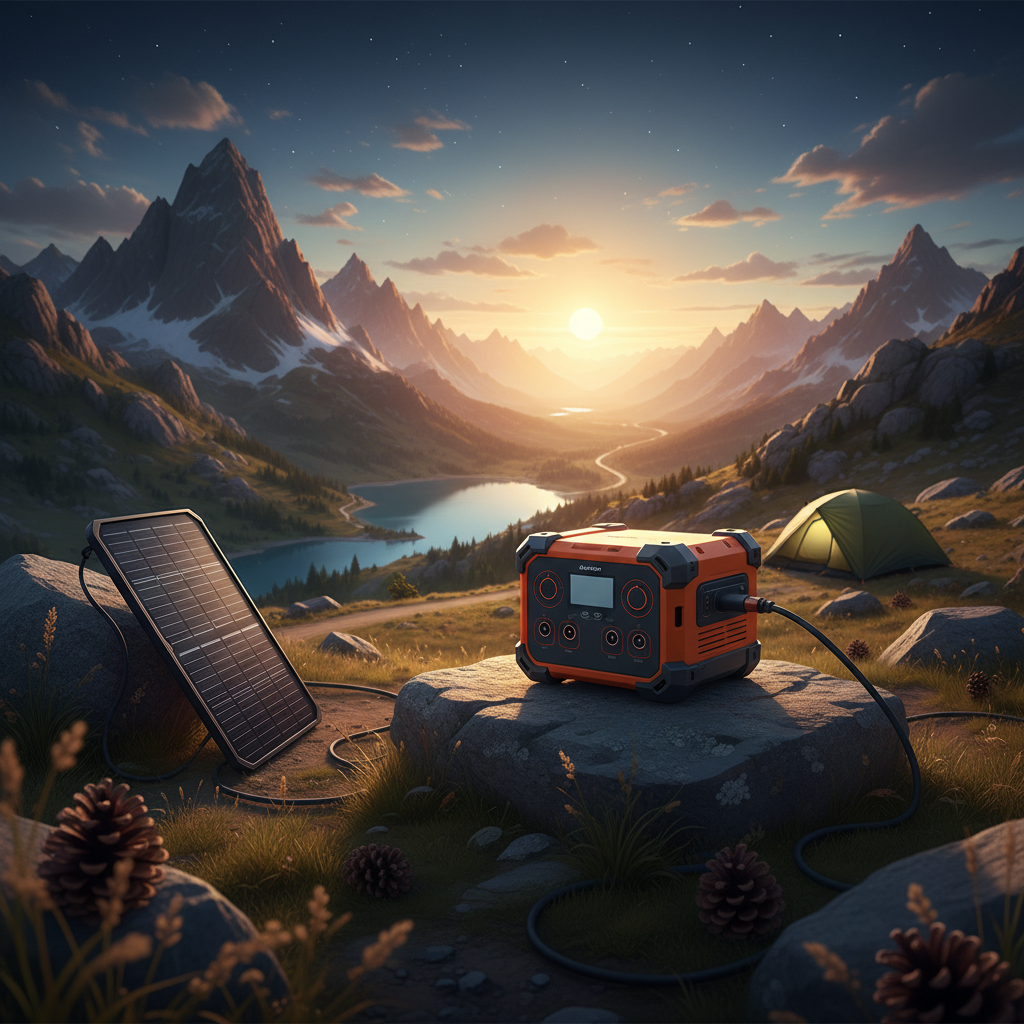
A portable power station, often branded by companies like Jackery and Goal Zero, is essentially a large rechargeable lithium-ion battery pack combined with various output ports (AC, DC, USB). Think of it as a silent, gas-free generator that can power your essential devices and appliances when you’re away from a traditional power outlet. These units are designed for portability, offering a clean energy solution for camping, RV trips, emergency home backup, professional field use, and more.
Enery Meets Intelligence: Poweing The Future
Delivering reliable off-grid energy and smart infrastructure solutions designed for businesses, cities, and large-scale projects across Africa.
Why It Matters for Your Needs
The market is flooded with numerous portable power stations, making it difficult to discern the true value and reliability of each option. While Jackery and Goal Zero are prominent names, understanding their core differences is paramount. For instance, a common industry misstep is overlooking the continuous vs. peak wattage rating. A device might claim high wattage, but if its continuous output is too low, it won’t run high-demand appliances like refrigerators or air conditioners reliably. We’ve seen many clients in Africa frustrated by underpowered units that fail during critical moments, impacting their operations or comfort. Choosing between Jackery and Goal Zero often comes down to a meticulous comparison of these technical specifications, build quality, and long-term support, areas where Power Stack Africa excels in guiding our clients.
Beyond sheer power, consider the ecosystem. Some brands offer integrated solar panel solutions that are specifically designed to pair with their power stations, maximizing charging efficiency. We frequently advise clients to investigate the compatibility and ease of use of these solar charging kits. For example, a poorly matched solar panel might charge a power station significantly slower than advertised, leading to frustration and potential power shortfalls. Furthermore, the battery technology (e.g., Lithium-ion vs. Lithium Iron Phosphate – LiFePO4) impacts lifespan and safety. LiFePO4 batteries, which many higher-end models now feature, offer a longer cycle life (often 3000+ cycles compared to 500-1000 for standard Lithium-ion), making them a much more cost-effective and sustainable investment over time.
Increased Reliability
LiFePO4 Cycles
Appliance Compatibility
Expert Insight: Don’t just look at Watt-hours (Wh). Focus on continuous wattage (W) and peak wattage (W). A 1000Wh, 1000W continuous / 2000W peak unit will handle more demanding appliances than a 1000Wh, 500W continuous / 1000W peak unit, even with the same battery capacity.
Jackery vs. Goal Zero: A Deep Dive
Both Jackery and Goal Zero have carved out significant market share in the portable power station niche. They offer a range of models, from compact units perfect for charging phones and laptops to larger, more robust stations capable of running refrigerators, medical equipment, or even powering small workshops. In our engagements, we’ve found that while both brands emphasize user-friendliness and portability, their underlying philosophies and product strengths diverge. Jackery often appeals to the consumer market with its sleek design and straightforward operation, making it popular for camping and personal use. Goal Zero, on the other hand, frequently targets a more rugged, professional user with a strong emphasis on durability and modularity, often seen in emergency services or remote industrial applications. However, this generalization isn’t absolute, and we meticulously analyze each specific model to ensure the best fit.
When we compare their flagship models, like the Jackery Explorer 1000 Pro versus the Goal Zero Yeti 1000X, differences emerge in power output, port selection, charging speeds, and battery chemistry. For instance, some Jackery models might offer faster AC charging, while certain Goal Zero units might boast more robust build materials or a wider array of DC output options for specialized equipment. We’ve observed that Goal Zero’s Yeti line often supports higher surge wattages, which is beneficial for devices with high startup power requirements. Conversely, Jackery’s SolarSaga panels are renowned for their ease of setup, providing a seamless solar charging experience for less technical users.
A critical factor we always assess is the battery management system (BMS). A sophisticated BMS is vital for protecting the battery from overcharging, overheating, and deep discharge, thereby extending its lifespan and ensuring safety. Both brands employ BMS, but the sophistication and features can vary by model. We’ve also noted differences in warranty periods and customer support responsiveness, which are crucial considerations for a significant investment like a power station, especially for business-critical applications. Power Stack Africa prioritizes brands and models that offer comprehensive warranties and reliable support networks, particularly important for our clients operating in remote African regions.
Feature Breakdown: Old vs. New Approach
| Feature | Traditional “Old” Approach (e.g., Gas Generators) | Modern Portable Power Station (Jackery/Goal Zero) |
|---|---|---|
| Power Source | Fossil Fuels (Gasoline, Diesel) | Rechargeable Battery Pack (Lithium-ion/LiFePO4); Solar, Wall Outlet, Car |
| Noise Level | Very High (Disruptive & Polluting) | Silent (Ideal for sensitive environments) |
| Emissions | Significant CO2, NOx, VOCs (Harmful) | Zero Emissions During Operation |
| Maintenance | Frequent (Oil changes, carburetor cleaning, spark plugs) | Minimal (Occasional cleaning, firmware updates) |
| Portability | Bulky, Heavy, Requires Fuel Transport | Designed for portability, varying weight/size options |
| Runtime Monitoring | Guesswork / Fuel Gauge | Precise Digital Display (Remaining battery, input/output wattage) |
| Power Quality | Can be inconsistent, potentially damaging sensitive electronics | Pure Sine Wave Output (Safe for all electronics) |
Enery Meets Intelligence: Poweing The Future
Delivering reliable off-grid energy and smart infrastructure solutions designed for businesses, cities, and large-scale projects across Africa.
Why Businesses Choose Professional Portable Power Solutions
For businesses operating in Africa, particularly those in sectors like construction, film production, remote research, humanitarian aid, or agriculture where grid power is unreliable or non-existent, portable power stations offer more than just convenience. They represent a significant operational advantage. We’ve seen substantial productivity gains when teams can rely on consistent, noise-free power for essential tools, lighting, and communication equipment, even on the most remote sites. This reliability drastically reduces downtime and the associated costs, ensuring projects stay on schedule. Furthermore, the environmental benefit and reduced logistical complexity (no need to transport and store volatile fossil fuels) are increasingly important considerations for corporate sustainability initiatives.
The choice between specific models and brands like Jackery or Goal Zero for a business context often involves assessing factors beyond consumer needs. For instance, the ability to daisy-chain batteries, expand capacity with additional units, or integrate with larger solar arrays becomes critical. We frequently work with clients to design custom solutions that scale, perhaps starting with a 1000 watt solar panel setup and a robust power station for immediate needs, with a roadmap for expansion. Durability is also paramount; commercial-grade units need to withstand harsh environmental conditions – dust, humidity, and extreme temperatures – which is an area where certain Goal Zero models, in particular, have demonstrated a strong track record.
Uninterrupted Operations
Maintain productivity by powering tools, lights, and essential electronics without relying on intermittent grid power.
Cost Efficiency
Eliminate recurring fuel costs and reduce maintenance expenses associated with traditional generators.
Enhanced Safety
Operate in enclosed spaces without toxic fumes and enjoy the safety features of advanced battery management systems.
Environmental Compliance
Meet sustainability goals with zero-emission power solutions, critical for tender bids and corporate responsibility.
Our Strategic Power Solution Process
-
Phase 1: Needs Assessment & Consultation
We begin by understanding your specific power requirements, operational environment, and budget. This involves detailed discussions about the devices you need to power and the conditions under which the power station will operate. -
Phase 2: Solution Design & Selection
Based on the assessment, we recommend specific models from reputable brands like Jackery or Goal Zero, or design a custom solar-plus-storage system. We focus on crucial metrics like continuous wattage, surge capacity, and battery chemistry (e.g., best lithium battery for solar technology) to ensure optimal performance. -
Phase 3: Integration & Setup
Our expert technicians handle the seamless integration of the power station and any associated solar panels or charging accessories. We ensure all connections are secure and systems are configured for maximum efficiency and safety. -
Phase 4: Performance Testing & Training
We conduct thorough performance tests to validate the system meets your requirements. You’ll receive comprehensive training on operation, maintenance, and best practices for maximizing the lifespan and utility of your power solution. -
Phase 5: Ongoing Support & Optimization
Power Stack Africa provides ongoing technical support, maintenance advice, and system optimization services to ensure your power solution continues to perform flawlessly throughout its lifecycle.
Our Service Packages
We offer tailored solutions rather than fixed packages, recognizing that every client’s needs are unique. However, we can outline typical investment tiers:
| Feature / Package | Essential Power Pack | Professional Power Hub | Industrial Energy System |
|---|---|---|---|
| Ideal For | Camping, basic home backup (lights, phones), small events | Mobile offices, construction sites, field research, medium RVs | Remote operations, critical infrastructure backup, large-scale events, entire homes |
| Typical Capacity | 500Wh – 1000Wh | 1000Wh – 3000Wh | 3000Wh+ (Modular/Expandable) |
| Continuous Output | 500W – 1000W | 1000W – 2000W | 2000W – 5000W+ |
| AC Ports | 1-2 | 2-3 | 3+ (Higher amperage options) |
| Solar Input Capacity | Up to 200W | Up to 400W | Up to 1500W+ |
| Battery Type | Lithium-ion / LiFePO4 | LiFePO4 (Recommended) | High-Cycle LiFePO4 (Premium) |
| Estimated Investment | UGX 2,500,000 – 5,000,000 | UGX 5,000,000 – 15,000,000 | UGX 15,000,000+ (Custom Quote) |
Note: Prices are indicative and vary based on specific model selection, solar panel integration, and additional accessories. Contact us for a precise quote tailored to your needs.
Common Pitfalls and How to Avoid Them
Running too small a unit for high-demand appliances. Always check the continuous wattage and surge wattage requirements of your devices (e.g., refrigerators have high startup surges). Failing to do this can lead to the power station shutting down unexpectedly.
Assuming any solar panel will charge your power station quickly. Solar charging efficiency varies greatly with panel wattage, sunlight intensity, and input voltage compatibility. We ensure clients select compatible, high-efficiency solar arrays like those from solar power supplies partners.
Opting for cheaper, older Lithium-ion batteries that have a lower cycle life (around 500-1000 cycles). For business or frequent use, investing in LiFePO4 batteries (3000+ cycles) significantly extends the unit’s usable life and offers better long-term value.
Purchasing a highly portable unit that lacks the necessary power output for crucial tasks, or conversely, a powerful unit that is too cumbersome to move. We help balance these needs based on your primary use case.
Not considering the manufacturer’s warranty, customer support availability, and availability of spare parts. For critical applications, robust support from trusted providers like Power Stack Africa is non-negotiable.
Real-World Impact: Success Stories
Mobile Clinic Expansion in Rural Kenya
A non-profit organization needed reliable power for essential medical equipment (refrigeration for vaccines, diagnostic tools) in remote villages lacking grid access. Initially using a small, inadequate unit, they faced constant power failures. After consultation with Power Stack Africa, they invested in a Goal Zero Yeti 3000X with integrated portable solar panels. This solution now powers their mobile clinic reliably, enabling them to serve a wider population without interruption, drastically improving healthcare delivery in underserved areas.
Film Production Powering in Uganda’s Jungles
A film crew required silent, portable power for cameras, lighting, and sound equipment deep within a national park where generators were prohibited due to noise and emissions. We provided a solution using multiple Jackery Explorer 1000 units, augmented by high-efficiency solar panels. This allowed them seamless, quiet operation for weeks, enabling them to capture critical footage without disturbing the environment or workflow. The ease of setup and portability were key factors in their success.
Client Impact Snapshot:
Reduced Downtime
Lower Operational Costs
Uptime Assurance
Frequently Asked Questions
Is a Jackery or Goal Zero power station suitable for emergency home backup?
Absolutely. For essential needs like refrigerators, lights, medical devices (CPAP machines), and communication, larger models from both Jackery and Goal Zero are excellent choices. We typically recommend units with at least 1000Wh capacity and 1000W continuous output for basic home backup. For extended outages or more demanding appliances, scalability and higher capacity units become critical. Integrating with your home’s electrical panel requires professional installation and specific transfer switch setups, which we can facilitate.
Can I charge a Jackery with Goal Zero solar panels, or vice versa?
Generally, yes, if the voltage and connector types are compatible. Both brands use standard solar connectors (often MC4 types on their panels and input ports), but charging speeds and optimal performance are usually achieved when using panels designed by the same manufacturer. For example, Jackery’s SolarSaga panels are optimized for their Explorer series. We can advise on cross-brand compatibility and ensure you get the most efficient foldable solar panels setup.
What is the lifespan of these portable power stations?
The lifespan is primarily determined by the battery’s cycle life and the quality of the Battery Management System (BMS). Standard Lithium-ion batteries typically last 500-1000 charge cycles. However, models featuring Lithium Iron Phosphate (LiFePO4) batteries, which we highly recommend for business use or extended lifespan, can last 3000+ cycles. With proper care and usage, a LiFePO4-based power station can last 10 years or more.
How long can a Jackery or Goal Zero power my devices?
This depends on the power station’s capacity (measured in Watt-hours, Wh) and the power consumption of your devices (also in Watts, W). The basic formula is: Runtime (hours) = Battery Capacity (Wh) / Device Power Consumption (W). For example, a 1000Wh power station could theoretically run a 100W device for 10 hours (1000Wh / 100W = 10h). However, efficiency losses mean you’ll likely get around 80-90% of this calculated runtime.
Are portable power stations truly “silent generators”?
Yes, compared to traditional gasoline or diesel generators, portable power stations are virtually silent. They operate using battery power, meaning no combustion engine. This makes them ideal for noise-sensitive environments such as campgrounds, film sets, or residential areas where generator noise would be a significant issue. The only sound you might hear is a faint hum from internal cooling fans on high-output models.
What appliances can I NOT run on a portable power station?
You generally cannot run appliances with extremely high continuous power demands or very high surge requirements that exceed the station’s rated output. This includes large workshop tools like industrial welders, heavy-duty air compressors, or some specialized medical equipment. Always check the wattage rating of your appliance against the power station’s continuous and surge wattage specifications. For very demanding applications, a larger, perhaps grid-tied or more robust off-grid Power Africa solar system may be necessary.
How do I maintain a Jackery or Goal Zero power station?
Maintenance is minimal. Keep the unit clean and free from dust. Store it in a moderate temperature environment, avoiding extremes of heat or cold. Crucially, ensure the battery is kept within the recommended charge range (typically 20-80% for long-term storage) and avoid draining it completely on every use. Regularly check for firmware updates provided by the manufacturer. Following these simple steps, guided by our team, ensures longevity.
Enery Meets Intelligence: Poweing The Future
Delivering reliable off-grid energy and smart infrastructure solutions designed for businesses, cities, and large-scale projects across Africa.
Related Reading
Continue learning with these hand-picked resources: