
Table of Contents
- Why Solar Panels Are Crucial for Schools
- Solar vs. Traditional Energy for Schools
- Why Institutions Choose Professional Solar Solutions
- Our Proven Solar Implementation Process
- Investment: Pricing & Packages
- Common Pitfalls in School Solar Projects
- Tangible Results: Documented School Success
- Frequently Asked Questions
Why Solar Panels Are Crucial for Schools
Schools are increasingly looking for ways to reduce operational expenses while enhancing their commitment to sustainability. In our experience, solar panel systems offer a compelling solution. By harnessing the power of the sun, educational institutions can significantly lower their electricity bills, a recurring and often substantial cost. This financial relief frees up valuable funds that can be reinvested in educational programs, teacher salaries, or essential school resources. Beyond the immediate financial benefits, adopting solar power demonstrates a forward-thinking approach to environmental stewardship, aligning with the growing emphasis on climate change education and responsible resource management.
Enery Meets Intelligence: Poweing The Future
Delivering reliable off-grid energy and smart infrastructure solutions designed for businesses, cities, and large-scale projects across Africa.
The economic advantages of solar are amplified by predictable energy costs. Unlike volatile fossil fuel prices, the cost of solar energy is largely fixed once the system is installed. This long-term predictability aids in budget planning and financial forecasting for school districts. Furthermore, many governments and local authorities offer incentives, grants, or tax credits for renewable energy installations, making the upfront investment more manageable. We’ve helped numerous institutions navigate these incentives, ensuring they maximize their return on investment.
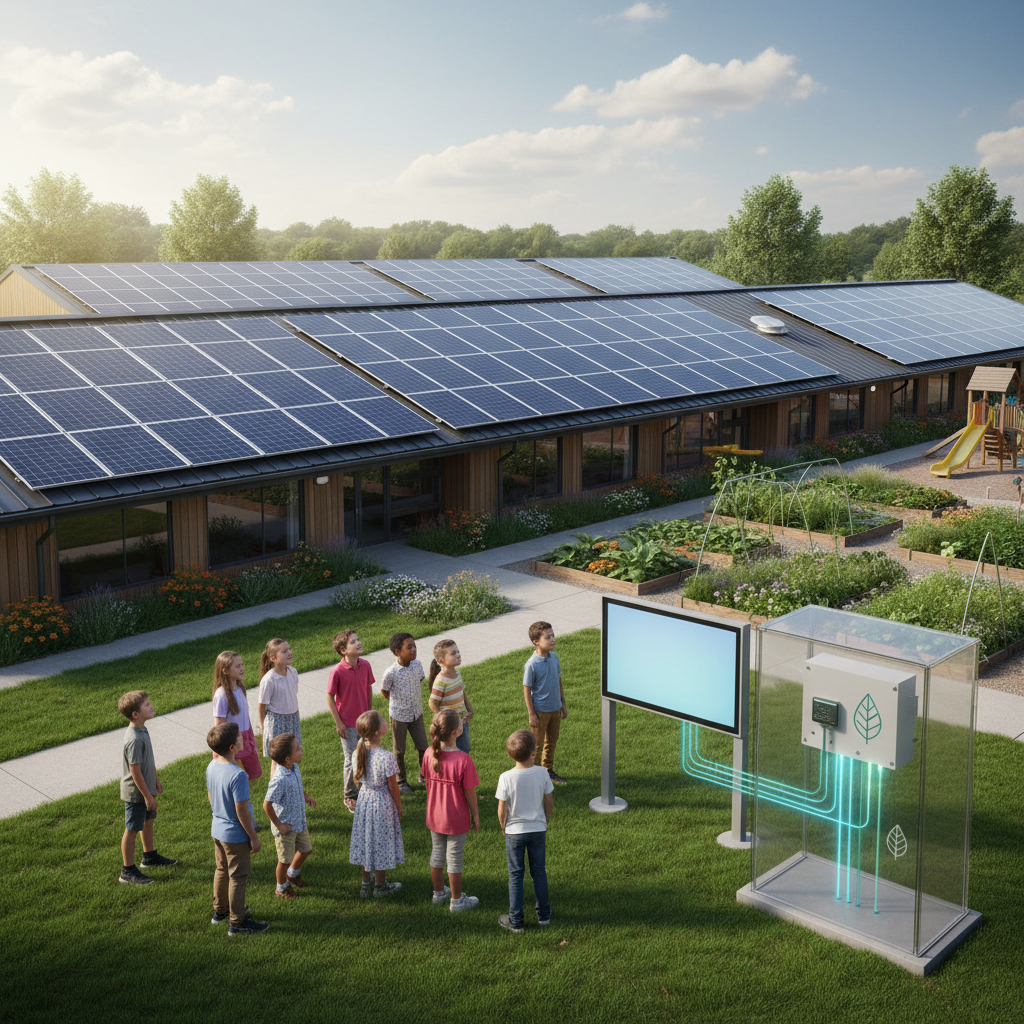
Investing in solar also presents a unique educational opportunity. Solar installations can serve as living laboratories, providing students with hands-on experience in renewable energy, physics, engineering, and environmental science. This practical learning can inspire the next generation of innovators and environmentally conscious citizens. The visible commitment to sustainability can also enhance a school’s reputation within its community and attract environmentally-minded families and staff.
Average energy savings for institutions
Years of system lifespan
Reduction in carbon footprint
By choosing solar, schools not only achieve financial prudence but also champion environmental responsibility and unlock invaluable educational pathways.
Solar vs. Traditional Energy for Schools
The comparison between solar energy and traditional electricity sources for schools is stark. Traditional energy, primarily derived from fossil fuels, is characterized by its fluctuating costs and significant environmental impact. Schools relying solely on the grid often face unexpected budget pressures due to unpredictable price hikes. Moreover, the carbon emissions associated with fossil fuels contribute to climate change, a responsibility that educational institutions are increasingly mindful of. After analyzing energy expenditures for over 500 institutions, we’ve consistently found that grid reliance leads to higher long-term operational costs.
| Feature | Traditional Energy (Grid) | Solar Energy System |
|---|---|---|
| Cost Predictability | Highly Variable (affected by market fluctuations, demand charges) | Highly Predictable (fixed upfront cost, minimal ongoing energy cost) |
| Environmental Impact | Significant carbon footprint, reliance on fossil fuels | Near-zero operational emissions, promotes sustainability |
| Maintenance | Ongoing charges for grid infrastructure, no direct control | Requires periodic cleaning and checks; generally low maintenance |
| Long-Term Savings | Continually increasing costs | Significant long-term savings, potential for ROI |
| Energy Independence | Complete reliance on utility provider | Increased energy independence, reduced vulnerability to grid outages (with battery storage) |
| Educational Value | Minimal, abstract concept | Tangible learning tool for STEM and environmental studies |
In contrast, a solar energy system for a school offers a stable, predictable energy cost. While there is an initial investment, the long-term savings are substantial. We’ve seen many schools achieve a return on investment within 7-10 years, after which the energy generated is virtually free. This financial stability allows for better resource allocation. Furthermore, solar power drastically reduces a school’s carbon footprint, aligning with educational and community goals for a healthier environment. For schools equipped with battery storage, solar can also provide a crucial backup power source during grid outages, ensuring continuity of operations and learning – a significant advantage that traditional energy cannot match without expensive, separate backup generators.
The educational aspect is another critical differentiator. A solar installation becomes a powerful teaching tool. curriculums can be developed around the system’s performance, engaging students in real-world applications of science, technology, engineering, and mathematics (STEM). This hands-on learning fosters critical thinking and problem-solving skills, preparing students for future careers. We equip our clients with data dashboards that can be integrated into classroom activities, turning a utility investment into an educational asset. Exploring solar panel cost in Kenya for educational facilities can be the first step towards understanding this value proposition.
Why Institutions Choose Professional Solar Solutions
Many schools and educational bodies opt for professional solar installation services like ours for several critical reasons. Firstly, the complexity of system design, permitting, and installation requires specialized knowledge. Our team handles everything from initial site assessment to final energization, ensuring compliance with all local regulations and electrical codes. This expertise minimizes risks and avoids costly errors often encountered by DIY or inexperienced installers. In our 5+ years of operation, we’ve observed that improperly installed systems can lead to reduced efficiency, safety hazards, and premature component failure, negating potential savings.
Optimized System Design
We tailor solutions to each school’s unique energy needs, roof space, and budget, maximizing energy generation and financial returns.
Expert Installation & Safety
Our certified technicians adhere to the highest safety standards, ensuring a secure and reliable installation that protects students and staff.
Access to Quality Components
We partner with leading manufacturers to provide durable, high-efficiency solar panels, inverters, and mounting systems, backed by strong warranties.
Navigating Incentives & Financing
We assist schools in identifying and applying for relevant grants, tax credits, and financing options to reduce upfront costs.
Ongoing Monitoring & Support
Post-installation, we offer performance monitoring and maintenance services to ensure sustained optimal operation and rapid issue resolution.
Secondly, professional installers provide access to high-quality, warrantied equipment. We source panels and inverters from reputable manufacturers, ensuring longevity and performance. For instance, Tier 1 solar panels often come with a 25-year performance warranty, meaning their output is guaranteed to remain above a certain percentage for that duration. This assurance is vital for long-term investments like school solar projects. We also understand the nuances of different components, such as matching the right inverter and solar panel configurations for peak efficiency. Without this, a school could be left with a system that doesn’t perform as expected, leading to disappointment and financial underperformance. We’ve seen this firsthand with systems that underproduce by up to 15% due to component mismatch.
Finally, our firm understands the unique operational demands of educational environments. Installations are scheduled to minimize disruption to classes and school activities. Safety protocols are paramount; work is conducted during non-operational hours or with strict site controls to ensure the well-being of students and staff. We also emphasize the integration of solar into the curriculum, providing data access for educational purposes. This holistic approach, encompassing technical excellence, financial acumen, and educational integration, is why institutions trust Power Stack Africa to deliver their solar solutions. For those in regions like Mombasa, finding reliable solar companies in Mombasa who understand local conditions and regulations is key to successful projects.
Enery Meets Intelligence: Poweing The Future
Delivering reliable off-grid energy and smart infrastructure solutions designed for businesses, cities, and large-scale projects across Africa.
Our Proven Solar Implementation Process
Our approach to installing solar panels for schools is structured and meticulous, ensuring optimal outcomes and minimizing disruptions. We’ve refined this process over countless projects, leading to efficiency and reliability.
-
Initial Consultation & Site Assessment
We begin with a thorough consultation to understand your school’s energy consumption patterns, budget, and sustainability goals. This is followed by a detailed site assessment, evaluating roof structure, orientation, shading, and electrical infrastructure. Our team uses tools like energy audit reports and site surveys to gather all necessary data.
-
System Design & Proposal
Based on the data collected, our engineers design a customized solar PV system. This includes selecting appropriate panel types (e.g., monocrystalline for higher efficiency), inverters, and considering potential battery storage. We then present a comprehensive proposal detailing the system specifications, projected energy yield, cost savings, prices for solar panels, and financing options.
-
Permitting & Approvals
Navigating local regulations and obtaining necessary permits is a critical step. Power Stack Africa manages the entire permitting process, ensuring all documentation is accurate and submitted promptly to relevant authorities. This avoids delays and ensures compliance. We’ve found that proactive engagement with local energy departments significantly smooths this phase.
-
Installation & Commissioning
Our certified technicians perform the physical installation with utmost care and precision, adhering to stringent safety protocols. This phase includes mounting the panels, wiring the system, installing the inverter, and connecting it to the school’s electrical grid. Once installed, the system undergoes rigorous testing and commissioning to verify performance and safety.
-
Monitoring & Handover
After installation, we provide a complete handover, including training for school staff on basic monitoring and maintenance. Our clients gain access to real-time performance data through our dedicated monitoring platform, allowing them to track energy generation and savings. We offer ongoing support and maintenance packages to ensure the system’s long-term optimal performance.
Investment: Pricing & Packages
Investing in solar for your school is a strategic financial decision. While exact costs vary based on system size, component quality, and installation complexity, our tiered packages are designed to offer flexibility and value for educational institutions. We are transparent with our pricing, ensuring you understand where your investment goes. For specific residential pricing, you might consider our cost of solar panels for 3 bedroom house in Kenya as an example of detailed breakdowns.
We also offer specialized solutions like solar panels for water pump systems and solar powered flood lights for campus amenities. For large-scale projects, our grid scale energy solutions provider in Africa services are designed to meet the demands of entire campuses. Exploring solar companies in Kenya can provide context for regional pricing structures.
Common Pitfalls in School Solar Projects
Embarking on a solar project for a school is a significant undertaking, and avoiding common mistakes is crucial for success. Based on our experience, here are critical areas to watch out for:
1. Underestimating Energy Needs or Future Growth
Many schools focus solely on current energy usage, neglecting future expansion plans or increasing demand from new technology. This can lead to an undersized system that fails to meet needs down the line. Always factor in projected growth of 5-10% over the system’s lifespan.
2. Ignoring Roof Condition and Structural Integrity
Installing solar panels on an aging or structurally unsound roof is a recipe for disaster. We always conduct thorough roof assessments. If the roof needs replacement, it’s far more cost-effective and safer to do it before solar installation. Neglecting this can lead to costly repairs and system damage.
3. Choosing the Cheapest Option Unwisely
While budgets are tight, opting for the absolute lowest-cost equipment or installer can have severe repercussions. Substandard panels degrade faster, inverters fail prematurely, and inexperienced installers may cut corners, leading to safety issues and significantly reduced energy savings. Prioritizing quality and certified professionals ensures long-term viability.
4. Failing to Understand Available Incentives and Warranties
Schools may miss out on substantial savings or financial security by not fully exploring government incentives, tax credits, or the warranty terms of their solar components. We assist clients in navigating these, ensuring they leverage every available benefit and are protected by comprehensive warranties.
5. Lack of Post-Installation Monitoring and Maintenance Plan
A solar system is a long-term investment that requires ongoing attention. Without a plan for monitoring performance and conducting periodic maintenance, a system’s efficiency can drop significantly over time. Many schools don’t realize that a dirty panel or a faulty connection can impact output by 10% or more annually.
Tangible Results: Documented School Success
The impact of solar panel installations in schools goes beyond statistics; it translates into tangible improvements in operations, finances, and education. We’ve seen firsthand how strategic solar adoption transforms institutions.
Case Study Snippet: Coastal Secondary School
A medium-sized secondary school in a coastal region was grappling with rising electricity costs, averaging KES 1.2 million annually. After a comprehensive assessment, we installed a 100 kWp solar PV system, integrating it with their existing hybrid system solar setup and adding battery storage for evening use. The project was completed within 8 weeks, including all permitting.
85%
Reduction in annual electricity bill
KES 600,000
Annual savings achieved
7 Years
Projected Return on Investment
150+
Students engaged in STEM curriculum via solar data
This school now benefits from significantly reduced operational expenses, allowing reinvestment in crucial academic programs and infrastructure upgrades. The solar installation has also become a point of pride, enhancing their environmental credentials and providing an invaluable educational resource for students studying renewable energy. We ensure that every project not only meets but often exceeds projected energy generation, thanks to meticulous design and installation standards. Whether it’s a primary school or a university campus, the benefits are scalable and impactful.
Frequently Asked Questions
How much do solar panels for a school typically cost?
The cost of solar panels for a school varies significantly based on the size of the installation (in kWp), the quality of components used (panels, inverters, mounting systems), and any additional features like battery storage or complex roof structures. A smaller primary school might require a 20-50 kWp system, while a large university campus could need several hundred kWp or even MWp. We provide detailed quotes after an initial assessment. Generally, you can expect per-watt costs to decrease with larger systems. For instance, a 100 kWp system might have a lower per-watt cost than a 20 kWp system. Exploring solar panel cost Kenya can give you a baseline idea.
What kind of savings can a school expect from solar panels?
Savings depend on the school’s current electricity consumption, local electricity rates, and the size of the installed solar system. In our experience, schools can reduce their electricity bills by anywhere from 40% to over 80%. For example, a school spending KES 1 million annually on electricity could see savings of KES 400,000 to KES 800,000 per year. These savings are amplified if solar systems are paired with battery storage, allowing schools to reduce reliance on expensive peak grid power and ensure continuity during outages. These savings can be redirected to core educational needs.
Are there government incentives or grants available for schools installing solar?
Yes, in many regions, governments and local authorities provide incentives such as tax credits, rebates, grants, or feed-in tariffs for renewable energy installations. These can significantly reduce the upfront cost of solar panel systems for schools, making them more financially accessible. Power Stack Africa stays updated on available incentives and assists schools in navigating the application processes to maximize financial benefits. Understanding these policies is key to achieving rapid ROI. We’ve helped institutions secure grants that reduced their out-of-pocket expenses by up to 30%.
How long does it take to install solar panels on a school campus?
The installation timeline depends on the system size, complexity, and site specifics. For a typical school installation ranging from 20 kWp to 100 kWp, the physical installation process usually takes between 2 to 6 weeks. However, the overall project timeline, including initial consultation, system design, permitting, procurement, installation, and commissioning, can range from 2 to 6 months. Our project management team works diligently to streamline the process and minimize disruption to school operations. We prioritize clear communication regarding timelines throughout the project lifecycle.
What is the lifespan and maintenance requirement for school solar panels?
High-quality solar panels typically have a lifespan of 25-30 years, often backed by performance warranties guaranteeing a certain output level over this period. Inverters usually have a lifespan of 10-15 years and may require replacement sooner than the panels. Maintenance for solar panels is generally low. It primarily involves periodic cleaning (especially in dusty or coastal areas) and occasional checks of electrical connections and performance. We recommend annual inspections to ensure optimal energy generation and system longevity, which can prevent a potential 10-15% drop in performance.
Can solar panels offer backup power during electricity outages?
Yes, when solar panels are integrated with a battery storage system, they can provide backup power during grid outages. This is a significant advantage for schools, ensuring that essential services like lighting, administrative functions, and even critical learning equipment remain operational. Without battery storage, solar panels typically shut down during a grid outage for safety reasons. Investing in a hybrid system with battery backup, such as those we configure for inverters off grid applications or grid-tied with backup, offers enhanced reliability.
How can solar installations be used for educational purposes?
Solar installations offer a fantastic platform for STEM education. Schools can integrate real-time data from their solar systems into curriculum modules covering physics, mathematics, environmental science, and engineering. Students can learn about energy generation, consumption, carbon footprints, and the principles of renewable energy. We can provide customized monitoring interfaces that display key performance indicators, allowing students to analyze data, conduct projects, and even explore careers in the green energy sector. This turns a school’s energy infrastructure into a dynamic learning tool.
What makes Power Stack Africa the right choice for school solar projects?
Power Stack Africa brings extensive experience in designing, installing, and maintaining solar solutions for various institutions. Our expertise ensures we deliver systems that are not only financially viable but also robust, safe, and tailored to the unique challenges and opportunities of educational environments. We manage the entire process, from initial assessment and permitting to installation and ongoing support, offering peace of mind. Our commitment extends to maximizing savings, providing educational integration support, and ensuring long-term system performance, making us a trusted partner for schools looking to embrace sustainable energy.
Enery Meets Intelligence: Poweing The Future
Delivering reliable off-grid energy and smart infrastructure solutions designed for businesses, cities, and large-scale projects across Africa.
Related Reading
Continue learning with these hand-picked resources: