Marine Solar Panels: Powering Your Voyage Sustainably
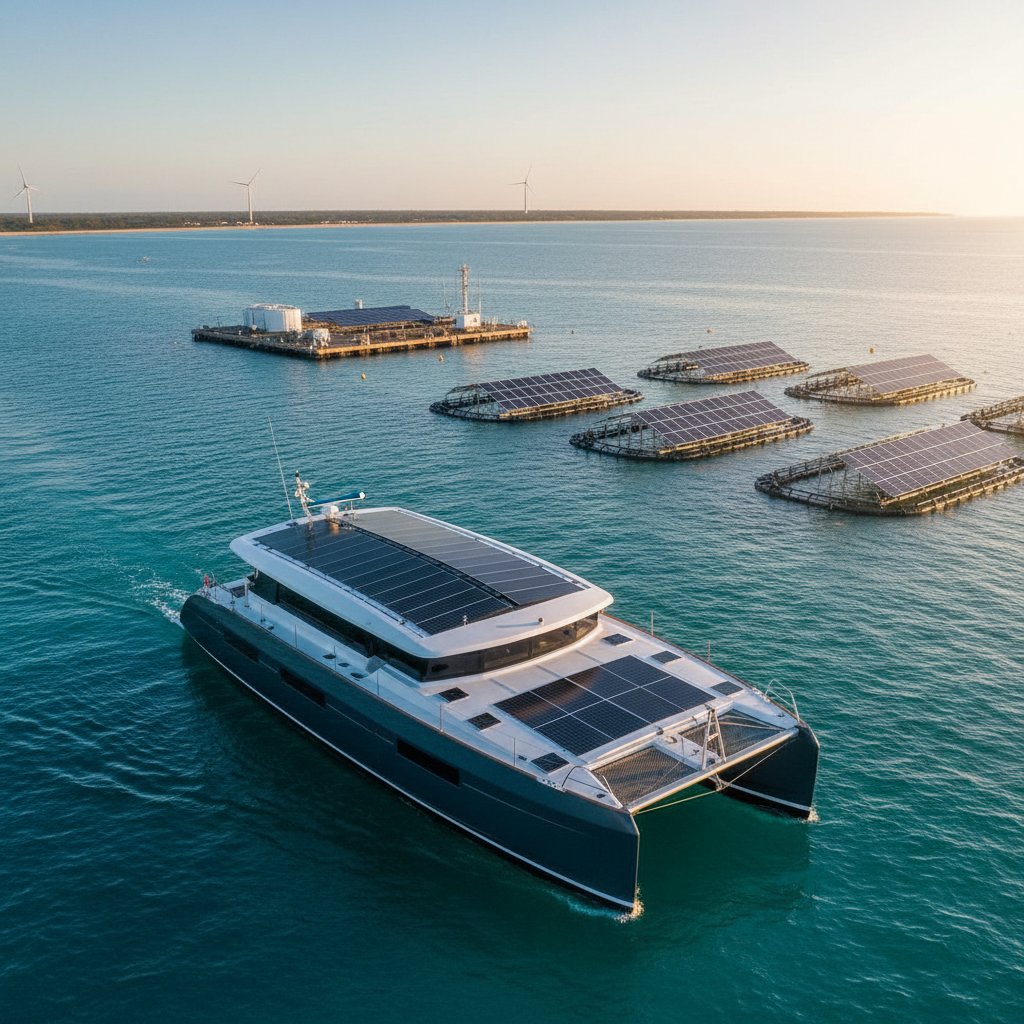
Harness the sun’s energy for your marine vessels. Power Stack Africa designs and installs robust solar solutions tailored for the demanding maritime environment, ensuring reliable power at sea.

- What are Marine Solar Panels & Why They Matter
- Why Businesses Choose Professional Marine Solar Panels
- Our Proven Marine Solar Installation Process
- Marine Solar Panel System Pricing & Packages
- Common Mistakes to Avoid with Marine Solar
- Real Results: Marine Solar Success Stories
- Frequently Asked Questions
For vessels navigating the vast waters of Africa and beyond, reliable power is not just a convenience—it’s a necessity. From essential navigation systems and communication equipment to onboard comforts like refrigeration and lighting, constant energy is paramount. Traditional power sources, especially for remote voyages or extended stays at anchor, often come with significant drawbacks: fuel costs, noise pollution, and environmental impact. This is where marine solar panels emerge as a brilliant, sustainable solution. We understand the unique challenges of integrating solar technology into the harsh marine environment, offering robust and efficient systems that empower your maritime operations.
What are Marine Solar Panels & Why They Matter
Marine solar panels are specifically designed photovoltaic (PV) modules engineered to withstand the rigorous conditions of a marine environment. Unlike standard land-based panels, they feature enhanced durability against saltwater corrosion, constant vibration, UV exposure, and the physical stresses of wind and waves. Their construction often includes marine-grade aluminum frames, robust weatherproofing, and high-efficiency cells capable of performing well even under indirect sunlight or partial shading—common scenarios at sea.
In our experience at Power Stack Africa, the importance of reliable energy at sea cannot be overstated. For recreational boaters, it means uninterrupted power for amenities, charging devices, and running navigation lights independently. For commercial vessels like fishing boats, cargo ships, or ferries, it translates to reduced reliance on auxiliary generators, saving considerable sums on fuel and maintenance. Furthermore, the environmental benefits are significant; replacing fossil fuel-powered generators with clean solar energy drastically cuts down emissions and noise pollution, contributing to healthier marine ecosystems. This shift is not just about cost savings; it’s about operational resilience and environmental stewardship.
The core of their importance lies in providing a consistent, renewable energy source that directly powers onboard systems or charges battery banks. This stored energy can then be used whenever needed, ensuring critical equipment remains operational and comfort levels are maintained. We’ve seen firsthand how integrating these systems can transform a vessel’s autonomy and operational efficiency.
50%
Fuel Cost Reduction
15+ Years
Average Lifespan in Marine Settings
60%
Reduction in Carbon Footprint
Considering a solar system rent to own plan for your marine application? Let’s discuss how predictable monthly payments can secure your long-term energy independence at sea.
Old vs. New Approach: Marine Power Solutions
| Feature | Traditional Approach (e.g., Generators, Alternators) | Modern Marine Solar Approach |
|---|---|---|
| Energy Source | Fossil Fuels (Diesel/Gas), Engine Alternator | Renewable Solar Energy |
| Operational Cost | High (Fuel purchase, frequent maintenance) | Very Low (Minimal maintenance, no fuel cost) |
| Environmental Impact | High (Emissions, noise pollution) | Minimal (Zero emissions, silent operation) |
| Dependence | Reliant on fuel availability and engine running time | Reliant on sunlight; energy stored in batteries for 24/7 use |
| Maintenance | Frequent (Oil changes, filter replacements, engine overhauls) | Minimal (Panel cleaning, occasional battery checks) |
| System Complexity | Can be complex and bulky (engines, tanks, exhausts) | Modular and adaptable; panels have no moving parts |
| Scalability | Adding capacity can be costly and space-intensive | Easier to scale by adding more panels and battery storage |
Why Businesses Choose Professional Marine Solar Panels
Integrating solar power onto a vessel is far more than just bolting panels to the deck. It requires specialized knowledge of marine engineering, electrical systems, and the unique environmental factors at play. Many businesses, from charter companies to cargo operators, opt for professional installation for several critical reasons. Firstly, safety and compliance are paramount. Marine environments demand robust electrical connections and mounting systems that can withstand extreme conditions, preventing short circuits or structural damage. Professionals ensure all installations meet maritime safety standards.
Secondly, maximizing energy generation is key. A professional installer, like our team at Power Stack Africa, understands how to optimally position panels to capture the most sunlight throughout the day and across different seasons, considering obstructions like sails, masts, or superstructures. They also know how to size the system correctly—balancing panel output, battery storage capacity (best lithium battery for solar solutions are often preferred for their efficiency and longevity), and energy consumption needs. Incorrect sizing is a common pitfall that leads to underperformance or over-expenditure.
Finally, ensuring the system’s longevity and reliability is crucial for business operations. Marine-grade components are essential to prevent premature corrosion and failure. Our experts rigorously select materials and components proven to endure saltwater spray, UV radiation, and constant motion. Investing in professional installation not only guarantees peak performance but also protects the vessel and its crew by providing a dependable, long-term power source.
Enhanced Durability
Marine-grade materials resist corrosion and vibration.
Optimized Performance
Strategic panel placement for maximum solar capture.
System Integration Expertise
Seamless connection to existing electrical systems and battery banks.
Safety & Compliance
Adherence to strict maritime electrical and safety standards.
Longevity & Reliability
Designed for years of trouble-free operation at sea.
Our Proven Marine Solar Installation Process
At Power Stack Africa, we’ve refined our installation process to ensure efficiency, safety, and optimal performance for every marine solar project. Whether it’s a small fishing boat or a large commercial vessel, our phased approach guarantees a seamless integration of your new energy system.
-
Site Assessment & Consultation:
We begin with a comprehensive on-site evaluation of your vessel. This includes assessing available deck space, potential shading from existing structures, electrical system architecture, and your specific power requirements. We engage in detailed discussions to understand your operational needs and energy consumption patterns. -
System Design & Component Selection:
Based on the assessment, our engineers design a bespoke solar power system. This involves calculating the optimal wattage, selecting the right type of marine-grade solar panels (e.g., flexible vs. rigid), appropriate charge controllers, robust battery solutions (best solar battery technology is crucial), and all necessary marine-grade wiring and mounting hardware. -
Professional Installation:
Our certified technicians meticulously install the solar panels, ensuring secure, watertight mounting that withstands the marine environment. We expertly integrate the system with your vessel’s existing electrical infrastructure, including battery banks and inverter systems, paying close attention to wiring integrity and safety protocols. -
System Testing & Commissioning:
Once installed, we conduct thorough testing to verify system functionality. This includes checking voltage and current outputs, ensuring charge controllers are efficiently managing battery charging, and confirming that all connected appliances operate correctly. We commission the system, ensuring it performs to design specifications. -
Client Training & Handover:
We provide comprehensive training to your crew or designated personnel on system operation, basic maintenance (like panel cleaning), and monitoring. Detailed documentation and warranties are provided, ensuring you have all the information needed to manage your new, sustainable power source effectively.
Marine Solar Panel System Pricing & Packages
The cost of a marine solar panel system varies significantly based on vessel size, power needs, complexity of installation, and the quality of components chosen. At Power Stack Africa, we offer transparent pricing and flexible packages to suit different budgets and operational requirements. Below is a general guide; a precise quote requires a detailed assessment.
| Feature / Package | Basic Recreational Pack | Extended Voyage Pro | Commercial Fleet Solution |
|---|---|---|---|
| Ideal For | Day sailers, small fishing boats, auxiliary power | Cruising yachts, liveaboards, charter vessels | Fishing trawlers, cargo ships, ferries |
| Typical System Size | 200W – 400W | 500W – 1.5kW | 2kW – 10kW+ |
| Panel Type | Lightweight, flexible marine panels | High-efficiency rigid or semi-flexible marine panels | Robust, high-output rigid marine-grade panels |
| Battery Integration | Standard lead-acid or entry-level Lithium | Advanced Lithium Iron Phosphate (LiFePO4) batteries | High-capacity Lithium battery banks, potentially Victron Lynx integration |
| Charge Controller | MPPT controller sized for system wattage | High-performance MPPT controller with monitoring | Smart, networked MPPT controllers for multi-bank systems |
| Inverter (Optional) | Basic pure sine wave inverter (if needed) | Mid-range pure sine wave inverter for essential AC loads | Heavy-duty inverters for continuous AC power, redundant systems |
| Mounting Hardware | Standard marine-grade rails/adhesive | Custom-engineered secure mounting solutions | Structural reinforcements, heavy-duty custom framing |
| Installation & Commissioning | Standard installation service | Advanced installation, system integration & testing | Full project management, certified marine electricians, commissioning |
| Warranty | 2-year parts & labor | 3-5 year parts & labor, 10-year panel efficiency | 5+ year comprehensive warranty, service agreements available |
| Estimated Investment | KES 150,000 – 400,000 | KES 450,000 – 1,500,000 | KES 1,800,000+ (Custom Quote) |
We also offer specialized services such as Power Africa solar system integrations for larger projects and ongoing support.
Common Mistakes to Avoid with Marine Solar
Mistake 1: Using Standard Land-Based Panels.
These panels are not built to withstand saltwater corrosion, constant moisture, and vibration. They will degrade rapidly, leading to premature failure and potential electrical hazards. Always opt for panels specifically rated and designed for marine environments.
Mistake 2: Inadequate Wire Gauge & Protection.
Undersized wiring leads to voltage drop, reducing efficiency and potentially overheating. Furthermore, improper sealing of connections and conduit in a damp environment invites corrosion and short circuits. We ensure all wiring is marine-grade, correctly sized, and meticulously protected.
Mistake 3: Incorrect System Sizing.
Underestimating your energy needs results in insufficient power, leaving you reliant on generators or engine alternators. Overestimating leads to unnecessary costs and wasted space. Accurate load calculation, considering peak usage and auxiliary systems, is vital. We help you calculate your exact needs, ensuring your 1000 watt solar panel or larger system is perfectly calibrated.
Mistake 4: Neglecting Battery Maintenance & Type.
Choosing the wrong battery type (e.g., standard car battery) or failing to maintain them leads to reduced lifespan and performance. Deep-cycle marine batteries, particularly advanced lithium options, are essential for sustained power delivery without damage. Proper charge management is also critical.
Mistake 5: Improper Mounting & Structural Integrity.
Solar panels need to be securely mounted to withstand high winds, wave impacts, and constant vessel motion. Inadequate mounting can lead to panel detachment, damage to the vessel, or dangerous projectiles. Professional installation ensures structural integrity and compliance with safety standards.
Real Results: Marine Solar Success Stories
We pride ourselves on delivering tangible benefits to our clients. Here are a few examples of how Power Stack Africa’s marine solar solutions have empowered maritime operations:
20%
Increase in charter booking potential due to enhanced onboard amenities.
KES 300,000+
Annual fuel savings for a medium-sized fishing vessel.
100%
Reduction in generator runtime for a luxury yacht, enhancing peace and quiet.
Case Study Anecdote 1: A popular East African charter company was struggling with the high operating costs and noise pollution from their auxiliary generators. After installing a custom marine solar system on their flagship catamaran, they reported a 70% reduction in generator usage, significantly lowering fuel expenses and creating a more serene experience for their guests. The improved power reliability also meant all onboard amenities, from charging stations to sophisticated entertainment systems, ran seamlessly.
Case Study Anecdote 2: A long-distance cargo vessel operating between African ports faced increasing challenges with generator maintenance and the fluctuating cost of diesel. We designed and deployed a robust, high-capacity solar array with advanced battery storage. This system now handles a significant portion of their baseline power needs, reducing their reliance on fossil fuels by over 40% and providing critical backup power for navigation and communication systems, enhancing operational safety.
Frequently Asked Questions
Are marine solar panels worth the investment for my boat?
In most cases, yes. While the upfront cost is higher than standard panels, marine-grade solar panels offer superior durability and longevity in harsh conditions. The long-term savings on fuel, reduced maintenance, and increased vessel autonomy often provide a strong return on investment. We analyze your specific usage to determine the optimal payback period and efficiency gains. Consider also that with options like solar system rent to own, the financial barrier can be significantly lowered.
How much power can marine solar panels generate?
The power output depends on several factors: the total wattage of the panels installed, the intensity and duration of sunlight, the angle of the sun, and the efficiency of your charge controller. A typical 400W system on a sunny day could generate around 1.6 kWh of energy, sufficient to charge batteries or directly power essential systems like navigation lights, pumps, and communication equipment. We engineer systems to meet your specific energy demands.
Can I install marine solar panels myself?
While DIY installation is possible for technically proficient individuals, we strongly recommend professional installation for marine applications. Unlike land-based systems, marine environments require specialized knowledge of waterproofing, vibration resistance, and adherence to strict maritime electrical safety codes. Incorrect installation can lead to system failure, damage to the vessel, or safety hazards. Our expert solar power consultant can guide you.
What kind of batteries are best for marine solar systems?
Deep-cycle batteries are essential. For optimal performance and longevity, Lithium Iron Phosphate (LiFePO4) batteries are increasingly the preferred choice due to their lighter weight, longer cycle life, faster charging capabilities, and deeper depth of discharge compared to traditional lead-acid batteries. The best lithium battery for solar solutions significantly enhance system efficiency and reduce overall system weight.
How do I clean and maintain marine solar panels?
Maintenance is generally minimal. Regular cleaning with fresh water and a soft cloth is usually sufficient to remove salt spray, dust, and bird droppings that can reduce efficiency. Avoid abrasive cleaners or harsh chemicals. Inspect wiring connections periodically for corrosion. Ensure any deck-mounted panels are securely fastened. For advanced systems, monitoring battery health via a dedicated app or display is also recommended.
Will marine solar panels work on cloudy days?
Yes, but with reduced output. Solar panels generate electricity from sunlight, not just direct heat. Even on cloudy days, they can still produce a significant percentage of their rated power. The key is to have a robust battery bank charged by an efficient charge controller to store energy generated during sunny periods for use when sunlight is limited. Flexible panels foldable solar panels can also offer some portability.
Can solar panels power my entire boat’s needs?
For many recreational and smaller commercial vessels, solar can cover a substantial portion or even all of their average daily energy needs, especially for auxiliary systems, lighting, and charging. However, for vessels with very high power demands (e.g., air conditioning, large galleys, specialized equipment), solar might supplement other power sources like generators or shore power. A detailed energy audit is crucial for accurate system sizing and expectation setting.
Related Reading
Continue learning with these hand-picked resources: