Solar Powered Flood Lights: Illuminating Your World Sustainably
Experience powerful, eco-friendly illumination for any application with our advanced solar flood light solutions. Reliable, cost-effective lighting, anywhere you need it.

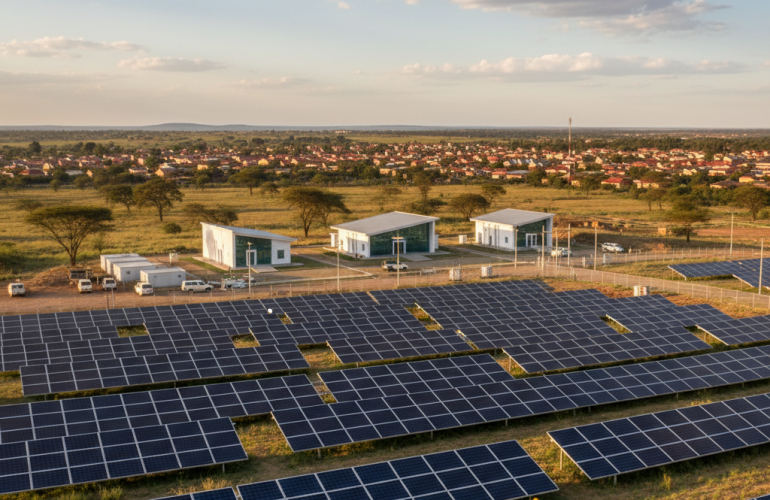
In our experience implementing advanced lighting solutions across Africa, the demand for reliable, cost-effective, and sustainable outdoor illumination has never been higher. Traditional flood lighting often comes with significant drawbacks: high energy bills, complex wiring, and reliance on an inconsistent grid. Solar powered flood lights offer a powerful alternative, leveraging renewable energy to provide bright, dependable light where it’s needed most. We’ve seen firsthand how these systems transform security, enhance operational visibility, and unlock possibilities for remote locations.
Enery Meets Intelligence: Poweing The Future
Delivering reliable off-grid energy and smart infrastructure solutions designed for businesses, cities, and large-scale projects across Africa.
What Are Solar Powered Flood Lights and Why They Matter
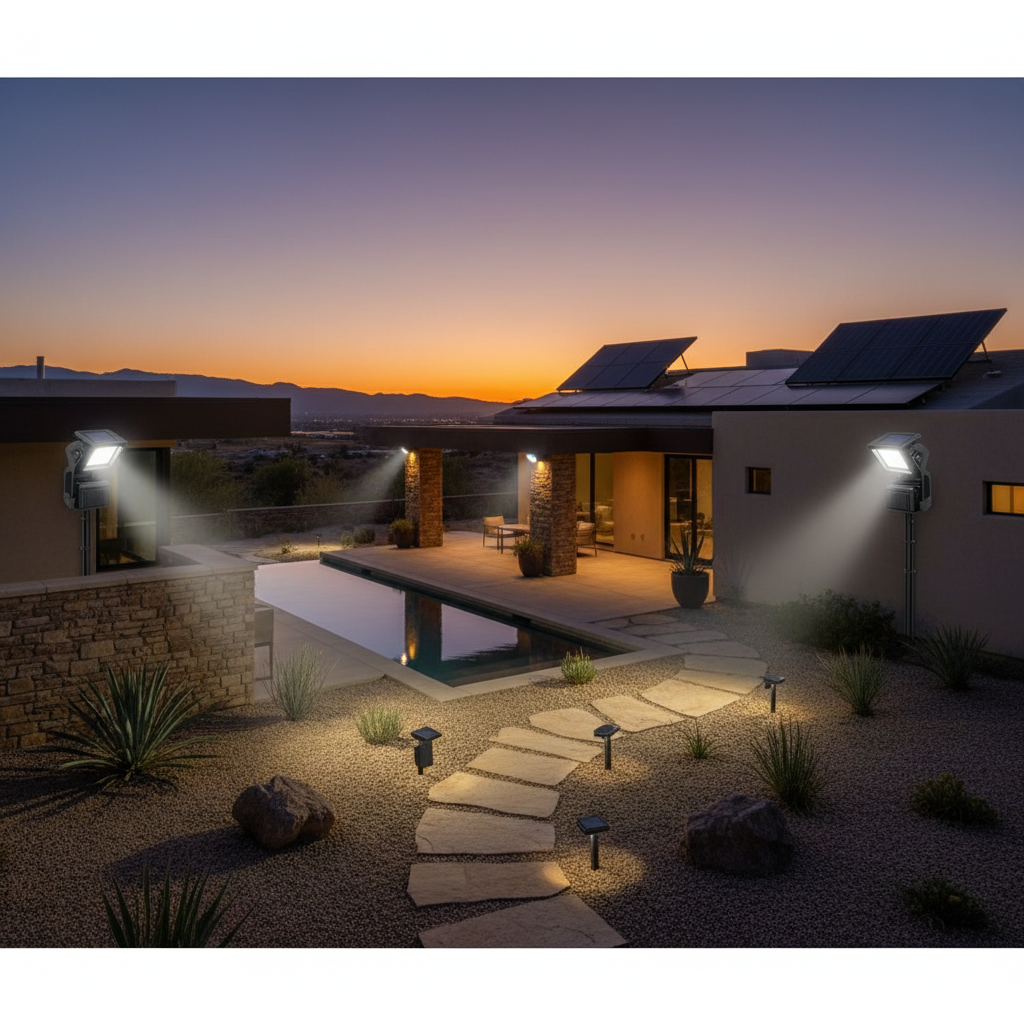
Solar powered flood lights are advanced outdoor lighting fixtures that utilize photovoltaic (PV) panels to capture solar energy during the day and store it in rechargeable batteries. This stored energy then powers high-intensity LED lamps at night, providing bright, wide-beam illumination without the need for grid electricity or extensive wiring. They typically consist of a solar panel (often integrated or mounted separately), a battery, an LED light source, and a controller that manages charging and discharging.
For businesses and municipalities, especially in regions with unreliable power infrastructure, these lights are a game-changer. They provide a critical layer of security for premises, illuminate remote work sites, enhance public spaces, and can even support events in areas without existing power. The independence from the grid means lower operational costs and greater flexibility in deployment. We’ve found that initial investment quickly pays for itself through energy savings and reduced maintenance, making them a smart, long-term choice.
Old Approach vs. New: The Solar Flood Light Revolution
| Feature | Traditional Flood Lights | Solar Powered Flood Lights |
|---|---|---|
| Power Source | Grid electricity (mains power) | Solar energy (photovoltaic panels) |
| Installation Complexity | Requires trenching for cables, licensed electricians, potential permits. High labor costs. | Minimal wiring, no trenching needed, self-contained unit. Faster and cheaper installation. |
| Operating Costs | Ongoing electricity bills, potential for price increases. | Zero electricity costs after installation. Battery replacement every 3-7 years. |
| Reliability (Grid Dependent) | Vulnerable to power outages, voltage fluctuations, and grid instability. | Independent of the grid; powered by stored solar energy. Works during power cuts. |
| Environmental Impact | Contributes to carbon emissions if powered by fossil fuels. | 100% renewable energy, zero emissions during operation. |
| Maintenance | Regular checks for bulb replacement, wiring integrity, ballast issues. | Primarily panel cleaning and occasional battery checks. Significantly lower maintenance. |
| Placement Flexibility | Limited by proximity to power outlets or existing electrical infrastructure. | Can be installed virtually anywhere with sufficient sunlight exposure. Ideal for remote or off-grid locations. |
Why Businesses Choose Professional Solar Powered Flood Lights
Businesses gravitate towards solar flood lights for a confluence of compelling reasons, extending far beyond mere environmental consciousness. The immediate benefit is a significant reduction in operational expenditure. We’ve found that for many of our commercial clients, the elimination of electricity bills for lighting can unlock substantial savings, often recouping the initial investment within 3-5 years. This predictability in costs is invaluable for budgeting and financial planning.
Beyond cost savings, the enhanced security these lights provide is often a primary driver. Bright, reliable illumination deters potential intruders, reduces vandalism, and improves safety for employees and visitors during nighttime hours. This is particularly crucial for areas like construction sites, agricultural plots, industrial yards, and large parking facilities where continuous, high-intensity lighting is paramount. For remote sites that lack grid access, solar flood lights are not just a convenience but a necessity, enabling operations and ensuring safety without the prohibitive cost of extending power lines.
Furthermore, the ease of deployment and scalability are significant advantages. Unlike traditional lighting systems that require extensive groundwork and electrical contracting, solar flood lights can be installed relatively quickly with minimal disruption. This rapid deployment is a boon for projects with tight deadlines. We’ve also observed that businesses increasingly leverage these solutions as part of their broader renewable solutions strategy. It demonstrates a commitment to sustainability, which can enhance brand reputation and appeal to environmentally conscious consumers and stakeholders. Implementing these systems showcases a forward-thinking approach to resource management.
Significant Cost Savings
Eliminate electricity bills for outdoor lighting, leading to substantial long-term financial benefits.
Enhanced Security & Safety
Deter crime and improve visibility in areas prone to accidents, ensuring a safer environment.
Grid Independence
Operate reliably even during power outages, crucial for critical infrastructure and remote locations.
Rapid Deployment
Quick and easy installation reduces setup time and minimizes disruption to operations.
Environmental Responsibility
Utilize clean, renewable solar energy, reducing carbon footprint and supporting sustainability goals.
Versatile Application
Ideal for construction sites, farms, remote facilities, parking lots, security perimeters, and public spaces.
Enery Meets Intelligence: Poweing The Future
Delivering reliable off-grid energy and smart infrastructure solutions designed for businesses, cities, and large-scale projects across Africa.
Our Process: Seamless Solar Flood Light Installation
At Power Stack Africa, our approach to implementing solar powered flood lights is structured for efficiency, reliability, and client satisfaction. We ensure every project, whether a single unit for a remote outpost or a comprehensive lighting scheme for an industrial complex, is executed with precision. Our process is designed to be transparent and data-driven:
Phase 1: Site Assessment & Consultation
We begin with an in-depth evaluation of your site’s specific needs. This includes analyzing sunlight exposure, identifying illumination zones, assessing security requirements, and understanding any unique environmental factors. We consult closely with you to define performance expectations and budget considerations.
Phase 2: System Design & Proposal
Based on the assessment, our engineers design a tailored solar flood lighting system. This involves selecting the optimal solar panel size, battery capacity, LED wattage, and fixture type. We use tools like dialux for lighting simulation and calculate energy yields comprehensively. You receive a detailed proposal outlining the recommended system, expected performance, and a clear cost breakdown.
Phase 3: Professional Installation
Our certified technicians handle every aspect of the installation, ensuring all components are mounted securely and optimally positioned for maximum solar gain and light distribution. We adhere to strict safety protocols and best practices, minimizing disruption to your site’s ongoing operations. This phase is critical for long-term performance.
Phase 4: System Commissioning & Training
Once installed, we meticulously commission the system, verifying correct operation, battery charging cycles, and light activation. We provide thorough testing and documentation. You’ll receive clear instruction on system monitoring and basic maintenance, ensuring you can confidently manage your new lighting solution.
Phase 5: Ongoing Support & Monitoring
Our commitment doesn’t end at installation. We offer ongoing support, including performance monitoring services and proactive maintenance checks. This ensures your solar flood lights continue to operate at peak efficiency for years to come, safeguarding your investment.
Pricing & Packages: Invest in Sustainable Illumination
We understand that every project has unique budgetary and performance requirements. Power Stack Africa offers flexible solar flood lighting packages designed to cater to a range of needs, from small-scale security to large commercial installations. Our pricing reflects high-quality components, robust engineering, and professional installation services.
| Feature / Package | ‘Security Basic’ | ‘Commercial Bright’ | ‘Industrial Pro’ |
|---|---|---|---|
| Ideal For | Small yards, pathways, entrances | Parking lots, building perimeters, construction sites | Large industrial areas, remote facilities, security perimeters |
| Lumens Output (Typical) | 1,000 – 3,000 lm | 5,000 – 15,000 lm | 20,000 – 50,000 lm+ |
| Battery & Solar Panel | Optimized for 8-10 hours runtime | High-capacity, 12-14 hours runtime, larger panel | Extended runtime (12-16+ hrs), durable panels, deep-cycle batteries |
| Smart Features | Motion Sensor | Dusk-to-Dawn, Optional Motion Sensor | Advanced Dusk-to-Dawn, Programmable Timers, Remote Monitoring |
| Installation Focus | Simple, quick setup | Detailed site planning, secure mounting | Comprehensive design, robust anchoring, multi-fixture coordination |
| Starting Price (Example) | KES 25,000 | KES 70,000 | KES 150,000+ |
| Warranty | 1 Year (Panels & Battery) | 2 Years (Panels & Battery) | 3 Years (Panels & Battery) |
Note: Prices are indicative and may vary based on site specifics, project scope, and current component costs. Contact us for a personalized quote.
Common Mistakes to Avoid with Solar Flood Lights
Implementing solar lighting solutions is straightforward, but certain oversights can significantly impact performance and longevity. Having installed hundreds of these systems, we’ve identified key pitfalls to steer clear of:
1. Insufficient Sunlight Exposure
Placing panels in shaded areas (e.g., behind trees, buildings) dramatically reduces their charging efficiency. Even partial shading on a solar panel can disproportionately reduce its output. Always conduct a thorough sun-path analysis for the chosen mounting location.
2. Undersized Battery or Panel
Opting for a cheaper, smaller battery or panel to cut initial costs often leads to insufficient power storage and short light runtimes, especially during cloudy days or longer nights. We calculate required capacity based on daily energy consumption and local solar irradiance data, ensuring adequate reserves.
3. Neglecting Environmental Factors
In coastal or industrial areas, corrosive elements can degrade components. Choosing vandal-proof fixtures and corrosion-resistant materials is crucial for longevity. For areas with extreme temperatures, battery performance must be considered.
4. Poor Quality Components
The market is flooded with low-quality solar products. Investing in reputable brands ensures better efficiency, longer lifespan, and reliable performance. We exclusively source from trusted manufacturers, guaranteeing the quality of every inverter and solar panel and fixture.
5. Incorrect Light Placement for Coverage
Flood lights need careful positioning to maximize coverage and avoid dark spots or glare. Relying solely on the fixture’s beam angle without considering the terrain and potential obstructions is a common error. Our design process utilizes lighting simulation software for optimal placement.
Enery Meets Intelligence: Poweing The Future
Delivering reliable off-grid energy and smart infrastructure solutions designed for businesses, cities, and large-scale projects across Africa.
Real Impact: Transforming Operations with Solar Flood Lights
We take pride in delivering tangible results for our clients. Here are anonymized examples demonstrating the power of professional solar flood light solutions:
Client: A large agricultural cooperative in a region with frequent power cuts.
Challenge: Inadequate lighting at nighttime for security patrols and worker safety during early morning harvests. Reliance on expensive diesel generators.
Solution: Power Stack Africa installed a network of high-lumen solar flood lights across key operational areas and perimeter fences. This included motion-sensing units for enhanced security without constant light pollution.
Outcome: Reduced security incidents by over 40% within three months. Eliminated generator fuel costs for lighting, saving an estimated KES 20,000 per week. Improved worker morale due to safer working conditions.
40%
Reduction in security incidents
85%
Reduction in outdoor lighting energy costs
3x
Increase in operational hours during dark periods
Under 5 years
Average ROI period
Client: A rapidly expanding logistics company establishing a new distribution hub.
Challenge: The remote site lacked grid connection, making traditional lighting prohibitively expensive and time-consuming to install. Needed reliable illumination for 24/7 operations.
Solution: We deployed a comprehensive ‘Industrial Pro’ solar flood light system, including strategically placed units for yard illumination, loading docks, and access roads, coupled with remote monitoring capabilities.
Outcome: Enabled the hub’s immediate operational launch without waiting for grid connection. Provided consistent, powerful lighting, preventing delays and ensuring efficient cargo handling. The system’s scalability allowed for future expansion with ease.
Frequently Asked Questions About Solar Flood Lights
How long do solar flood lights last?
The lifespan of solar flood lights varies by component quality and environmental conditions. High-quality LED lights typically last 50,000 hours or more. The solar panel’s efficiency degrades slowly over 20-25 years. The battery is usually the component with the shortest lifespan, typically lasting 3-7 years depending on type (e.g., LiFePO4 batteries last longer than lead-acid) and depth of discharge. We focus on using durable components to maximize system longevity.
Can solar flood lights work on cloudy days?
Yes, solar flood lights can work on cloudy days, but their performance will be affected. The solar panel will still generate some power from indirect sunlight, but at a reduced rate compared to a sunny day. The system’s ability to operate depends on the battery’s charge level from previous sunny days and the light’s energy consumption. Our systems are designed with adequate battery storage to buffer against several days of low sunlight.
What is the typical installation time for solar flood lights?
Installation time is significantly shorter than traditional flood lights. A single unit can often be installed in under an hour. For larger projects involving multiple lights, the entire process—from site preparation to commissioning—can range from a few days to a couple of weeks, depending on the scale and complexity. This rapid deployment is a major advantage for businesses needing quick solutions.
How do I choose the right brightness (lumens) for my needs?
Brightness selection depends on the application. For basic security lighting on pathways, 1,000-3,000 lumens might suffice. For larger areas like parking lots or construction sites, 5,000-15,000 lumens or more are typically required. We use lighting design principles and software to recommend the appropriate lumen output and fixture placement to ensure effective illumination without excessive glare.
Are solar flood lights suitable for very remote locations?
Absolutely. Solar powered flood lights are ideal for remote locations that lack grid access. They offer a self-sufficient lighting solution without the need for expensive grid extension or reliance on fuel-guzzling generators. This makes them perfect for rural infrastructure, off-grid farms, and isolated security posts. We specialize in designing robust systems for these challenging environments.
What maintenance is required for solar flood lights?
Maintenance is minimal compared to traditional lighting. The primary tasks involve periodically cleaning the solar panels to remove dust, dirt, or debris that can reduce efficiency. Checking battery connections and ensuring the light fixture is free of obstructions are also recommended. Most modern systems are designed for long service life with very low upkeep.
Can solar flood lights be integrated with existing systems like an hybrid system solar setup?
Yes, in many cases. While standalone solar flood lights are common, they can sometimes be integrated into larger solar power systems, especially if the system has a robust inverters off grid setup or a solar power home inverter. This requires careful system design to ensure compatibility between the flood light controller, battery, and the main inverter/charge controller. We assess these possibilities during the design phase for comprehensive energy solutions.
Enery Meets Intelligence: Poweing The Future
Delivering reliable off-grid energy and smart infrastructure solutions designed for businesses, cities, and large-scale projects across Africa.
Related Reading
Continue learning with these hand-picked resources: