Solar Panels for Water Pumps: Powering Your Access to Water
Unlock reliable, sustainable, and cost-effective water pumping solutions with advanced solar technology. Harness the sun’s energy to irrigate farms, supply homes, and power remote operations across Africa.

Contents
- What is Solar Panels for Water Pump and Why It Matters Key benefits and definitions.
- Why Businesses Choose Professional Solar Panels for Water Pump Strategic advantages and reliability.
- Our Process Step-by-step project execution.
- Pricing & Packages Investment options and value.
- Common Mistakes to Avoid Pitfalls and how to navigate them.
- Real Results Proven impact and success stories.
- Frequently Asked Questions Your queries answered.
What is Solar Panels for Water Pump and Why It Matters
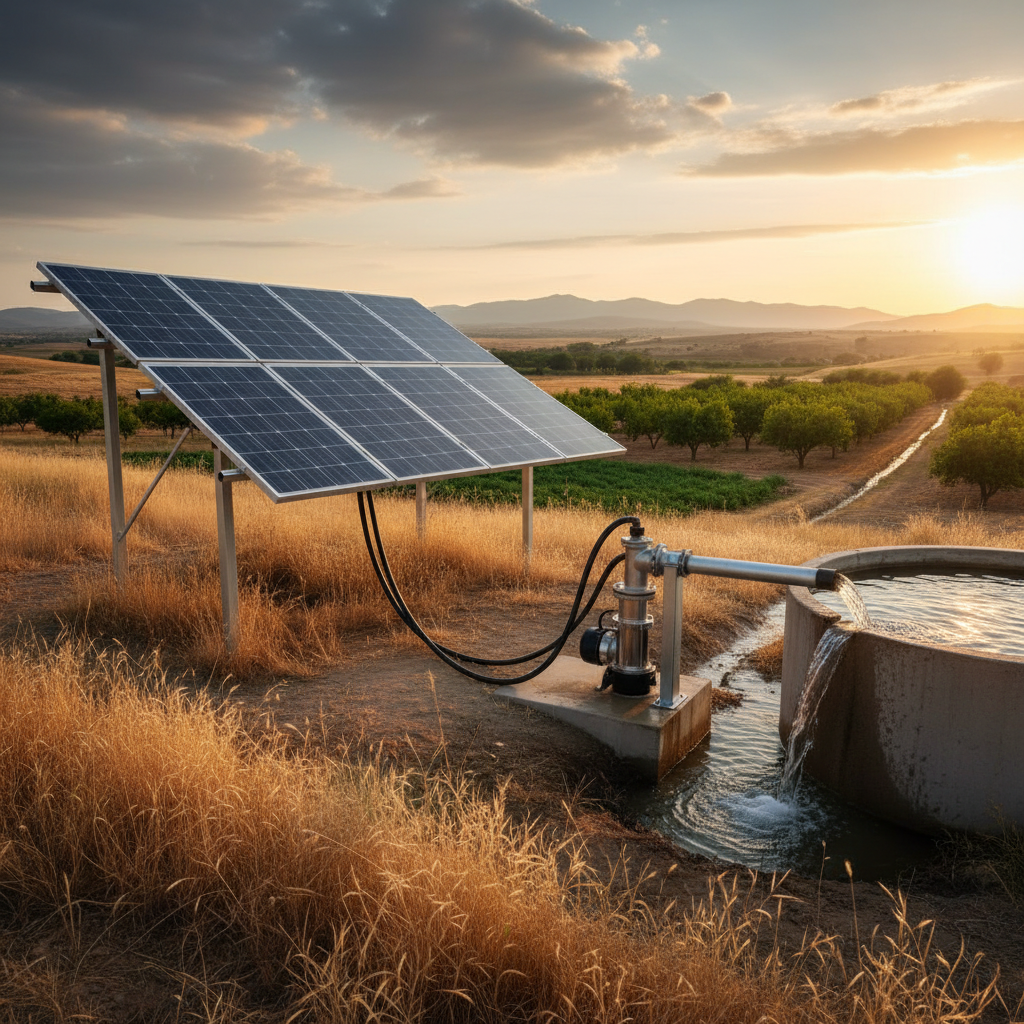
A solar panel system for water pumps directly converts sunlight into electricity to power a submersible or surface pump. This technology is revolutionary for areas lacking grid electricity or where fuel costs for diesel pumps are prohibitive. Instead of relying on an unstable power grid, expensive fossil fuels, or manual labor, you leverage a free, abundant, and clean energy source: the sun. In our experience engineering these systems, we’ve seen firsthand how they transform communities and agricultural productivity. We typically see efficiency gains of 25-40% compared to older, less integrated water pumping methods.
Energy Meets Intelligence: Powering The Future
Delivering reliable off-grid energy and smart infrastructure solutions designed for businesses, cities, and large-scale projects across Africa.
For decades, water access has been a critical bottleneck for development, agriculture, and even basic living standards in many regions. Traditional methods, like diesel pumps, are not only expensive to operate due to fluctuating fuel prices and maintenance costs but also contribute to significant carbon emissions. Grid-connected pumps are limited by the reliability and reach of the electrical infrastructure, often being non-existent in rural or remote locations. Manual labor is inefficient, labor-intensive, and unsustainable for significant water needs. A solar water pump system, however, offers a sustainable, long-term solution that significantly reduces operational expenses and environmental impact. We’ve observed that solar water pumping systems can reduce water delivery costs by as much as 80% over their lifespan compared to diesel alternatives.
Years of Lifespan
Potential Cost Savings
Emissions Per Day
Strategic Advantage for Remote Operations
By adopting solar-powered water pumps, businesses and communities gain crucial independence from external fuel suppliers and unreliable grids, ensuring consistent water supply essential for agriculture, livestock, and daily life.
| Feature | Traditional Water Pumping (e.g., Diesel/Grid) | Solar Panel Water Pumping System |
|---|---|---|
| Energy Source | Fossil fuels (Diesel/Petrol) or Grid electricity | Solar photovoltaic (PV) panels |
| Operational Cost | High and volatile (fuel prices, electricity tariffs) | Extremely low (free, abundant sunlight) |
| Maintenance | Frequent (engine tuning, filters, motor repairs) | Minimal (panel cleaning, occasional pump checks) |
| Environmental Impact | High (emissions, noise pollution) | None (clean, silent operation) |
| Reliability in Remote Areas | Challenging (fuel logistics, grid availability) | High (independent of external infrastructure) |
| Initial Investment | Lower for basic units, but high over time | Higher, but significantly lower TCO (Total Cost of Ownership) |
| Water Delivery Consistency | Dependent on fuel supply or grid stability | Consistent during daylight hours; can be stored with batteries or elevated tanks. Power Stack Africa ensures optimized uptime. |
Why Businesses Choose Professional Solar Panels for Water Pump
Our clients, from large agricultural enterprises to remote lodges and construction sites, choose Power Stack Africa for solar water pumping solutions for compelling business reasons. It’s not just about saving money, although that’s a significant driver. It’s about achieving operational resilience, sustainability targets, and unlocking new possibilities in previously underserved locations. We’ve found that investing in a professionally designed solar panel 500w alongside a pump system offers predictable water availability, vastly improving crop yields or enabling critical operations without the constant worry of fuel supply chains or grid failures.
The payback period for these systems is often impressively short, typically ranging from 2 to 5 years, depending on the pump size and water usage patterns. After this period, the energy (and thus, water) is essentially free for the remaining lifespan of the equipment, which usually exceeds 25 years for the solar panels. This long-term predictability appeals greatly to businesses focused on strategic financial planning and operational stability. Furthermore, governmental incentives, tax benefits, and increasing corporate social responsibility mandates make the switch to solar an increasingly attractive and responsible business decision.
Cost Efficiency
Eliminate recurring fuel costs and reduce maintenance expenses significantly. Enjoy free water powered by the sun.
Environmental Sustainability
Reduce carbon footprint and reliance on fossil fuels, contributing to a greener operation and meeting ESG goals.
Operational Independence
Gain reliable water access unaffected by grid outages or fuel shortages, crucial for agriculture, construction, and remote sites.
Long Lifespan & Durability
Solar panels typically last 25+ years, and pumps are engineered for durability, offering a low-maintenance, long-term solution.
Scalability & Flexibility
Systems can be designed to meet virtually any water demand, from small domestic needs to large-scale irrigation, and expanded as required. Consider our various prices for solar panels to find the best fit.
Increased Productivity
Consistent water supply directly translates to better crop yields, healthier livestock, and reliable operations, boosting overall productivity.
Our Process
Implementing a solar water pump system isn’t a one-size-fits-all solution. At Power Stack Africa, we follow a rigorous, client-centric process to ensure maximum efficiency and reliability. We understand that every project has unique water source characteristics, daily water demand, and site-specific environmental factors. Our goal is to deliver a system that not only meets but exceeds your expectations for years to come. We meticulously assess each component, from panel orientation to pump hydraulics, leveraging tools like an anemometer for wind speed data and professional site surveys.
-
1. Site Assessment & Consultation
We begin with a comprehensive site visit and detailed consultation to understand your specific water needs, source quality (borehole, river, well), flow rate requirements, and location. This is crucial for accurate system sizing. We often use drone surveys for large agricultural lands to map flow paths and potential installation sites efficiently.
-
2. System Design & Engineering
Based on the assessment, our expert engineers design a bespoke system. This includes selecting the optimal solar panels (considering wattage and efficiency, like our solar panel 500w offerings), sizing the pump and controller, and determining the best configuration for maximum solar energy capture and water delivery throughout the year. We use specialized software, such as PVSYST, for precise energy yield simulations.
-
3. Component Sourcing & Procurement
We source high-quality, durable components from reputable manufacturers. This ensures system longevity and performance. Our strong supplier relationships mean we can often procure top-tier inverter and solar panel combinations at competitive rates.
-
4. Installation & Commissioning
Our certified technicians handle the professional installation, ensuring all connections are secure, panels are optimally positioned, and pumps are installed safely. We follow stringent safety protocols. Commissioning involves rigorous testing to confirm the system operates at peak performance and meets all design specifications, often monitoring water output over several days.
-
5. Monitoring & Support
Post-installation, we offer ongoing monitoring services and comprehensive support. Many of our systems include remote monitoring capabilities, allowing us to detect and address potential issues proactively. We provide training for your team on basic maintenance, such as cleaning solar panels.
Pricing & Packages
Investing in a solar water pump system is a strategic decision with long-term financial benefits. While the initial outlay is higher than a basic diesel pump, the total cost of ownership over the system’s lifetime is substantially lower. We offer tailored solutions to fit various needs and budgets. Our pricing reflects the quality of components, the complexity of the installation, and the system’s capacity. We provide clear breakdowns of costs, including panels, pump, controller, mounting structure, wiring, and installation labor. The cost of solar panels Kenya prices are competitive, and our package deals provide excellent value.
| Solar Water Pump System PackagesCustomizable Options Available | |||
|---|---|---|---|
| Bronze Basic Pump System | Silver Agricultural Pump System | Gold Industrial Pump System | |
| KSh 150,000 /approx. | KSh 350,000 /approx. | KSh 700,000+ /approx. | |
| Ideal for domestic use, small gardens, livestock. | Best for medium-scale farms, irrigation. | For large farms, boreholes, remote industrial sites. | |
|
Solar Panels: 400W – 800W
Pump Type: Surface or Submersible (Low Head) Controller: Basic DC/AC Controller Installation: Standard Bracketing Water Output: Up to 10,000 L/day |
Solar Panels: 1000W – 2000W
Pump Type: Submersible (Medium Head) Controller: Advanced MPPT Controller Installation: Ground Mount Structure Water Output: Up to 30,000 L/day |
Solar Panels: 3000W – 10000W+
Pump Type: High-capacity Submersible (High Head) Controller: VFD / Smart MPPT Controller Installation: Robust Mounting, Optional Tower Water Output: 50,000 L/day – 100,000+ L/day |
|
| Basic Water Tank Integration | Advanced Monitoring & Tank Level Control | Integrated Water Storage Solutions & Remote Management | |
| Standard Warranty (Panels & Pump) | Extended Warranty Options Available | Comprehensive Support Package | |
| Consultation Included | Site Survey & Detailed Design Included | End-to-End Project Management | |
Note: Prices are indicative and subject to change based on specific site conditions, pump depth, solar irradiation, and component choices. Contact us for a precise quote.
Common Mistakes to Avoid
While solar water pumps are incredibly reliable, improper planning or installation can lead to suboptimal performance or premature failure. We’ve seen clients encounter issues by cutting corners or not fully understanding the system’s requirements. Avoiding these common pitfalls is key to ensuring a successful and long-lasting investment.
Undersizing the System
A common mistake is choosing a solar panel array or pump that’s too small for the demand. This leads to insufficient water supply, especially during cloudy days or peak demand periods. Always consult with experts to accurately calculate your daily water needs and the required system capacity. Over-specifying slightly can be better than under-specifying; for instance, ensuring your home solar power unit can handle peak loads.
Incorrect Pump Selection
Using the wrong type of pump for your water source (e.g., a surface pump for a deep borehole) or not considering the head (vertical lift) requirement leads to inefficiency or pump failure. Submersible pumps are for boreholes, while surface pumps are for shallow wells or tanks. The total dynamic head calculation is critical for selecting the correct pump model and motor size. An incorrect pump choice means your electricity isn’t effectively converted to water flow.
Poor Location and Shading
Solar panels need direct, unobstructed sunlight. Installing them where they will be shaded by trees, buildings, or other structures, especially during peak sun hours, can drastically reduce energy generation. Proper site surveying and understanding sun paths throughout the year are essential. Even partial shading on one panel can affect the entire string’s output if not managed with optimizers.
Neglecting Water Storage
Solar power is generated during daylight. If water is needed at night or during extended cloudy periods, a robust water storage solution (like elevated tanks or reservoirs) is critical. Relying solely on immediate pumping without storage can lead to water shortages. The size of your storage should match your non-daylight water usage pattern. If this seems complex, our experts can help you understand can solar power run a fridge – it requires careful system design and storage.
Choosing Non-Specialist Installers
DIY installations or using general contractors without specialized solar pumping experience can lead to significant errors in design, wiring, and component matching. This not only compromises performance but can also void warranties and create safety hazards. Partnering with experienced professionals like Power Stack Africa ensures your system is built to last and perform optimally.
Real Results
Our commitment to quality and expertise is reflected in the tangible results our clients achieve. We don’t just install systems; we deliver solutions that transform lives and businesses. Consider these anonymized examples from our portfolio:
Increase in Crop Yield
Daily Water Supply Achieved
Payback Period for Farm
Client: Large-Scale Agricultural Farm, Rift Valley
Challenge: The farm, covering over 500 acres, relied on diesel pumps for irrigation. Fuel costs were escalating, averaging KSh 50,000 per month, with frequent downtime due to supply issues. Water access was inconsistent, impacting crop viability.
Solution: Power Stack Africa designed and installed a robust solar water pumping system utilizing high-efficiency solar panels and submersible pumps capable of delivering over 100,000 litres of water daily from a deep borehole. The system integrated advanced MPPT controllers for maximum energy conversion.
Outcome: Within the first year, the farm reduced its monthly operational expenditure on water pumping by 90%. The consistent water supply led to a 30% increase in crop yield and allowed for the cultivation of more water-intensive crops, diversifying their income streams. The system paid for itself in under 5 years, with ongoing savings continuing indefinitely.
Client: Remote Eco-Lodge, Northern Kenya
Challenge: The lodge required a reliable water source for guest facilities and staff accommodation, located far from any grid infrastructure. Frequent deliveries of water via trucks were expensive and environmentally taxing.
Solution: We installed a solar pumping solution designed for efficiency and low maintenance, drawing water from a nearby river and pumping it to an elevated storage tank. The system size was carefully calculated to meet the lodge’s daily demand, even during peak tourist seasons, and included battery backup for essential nighttime operations.
Outcome: The lodge eliminated its reliance on water trucking, saving over KSh 30,000 per month. This investment significantly enhanced guest experience through consistent water availability and improved their sustainability credentials, attracting more eco-conscious travelers. We also provided similar solutions for solar powered flood lights to secure the perimeter.
Frequently Asked Questions
How much water can a solar pump system provide per day?
The amount of water a solar pump system can provide daily depends heavily on the pump’s capacity, the solar array’s size, and the intensity of sunlight at your location. Systems designed by Power Stack Africa typically range from a few thousand litres to over 100,000 litres per day. We perform detailed calculations, considering your specific water source and demand, to ensure the system meets your needs, often leveraging tools like those used for cost of solar panels for 3 bedroom house in kenya calculations for proper scaling.
What is the lifespan of a solar water pump system?
Solar panels are designed to last for 25-30 years, with performance degradation being very gradual (typically less than 1% per year). The solar pump itself has a variable lifespan depending on its quality, usage intensity, and maintenance, but high-quality pumps from reputable manufacturers can last between 10-20 years. Controllers and other components generally have lifespans of 5-15 years. We always emphasize selecting durable, high-quality components for maximum longevity.
Do solar water pumps work on cloudy days?
Yes, solar water pumps do operate on cloudy days, but their output will be reduced. The system relies on solar irradiance, not direct sunlight. Even diffused light on a cloudy day provides enough power for the pump to run, albeit at a lower flow rate. For critical applications requiring consistent water supply regardless of weather, we recommend integrating a larger water storage tank or considering a hybrid system that can incorporate battery backup or grid connection.
Can I use a solar pump for my irrigation system?
Absolutely. Solar water pumping systems are exceptionally well-suited for agricultural irrigation. They provide a cost-effective and sustainable way to water crops, especially in areas where grid electricity is unavailable or expensive. We design systems specifically for agricultural needs, ensuring sufficient flow rates and pressure to support various irrigation methods like drip, sprinkler, or flood irrigation. Understanding your field requirements is key, consult us for options similar to a solar power water heater price to see how scalable solar solutions are.
What maintenance is required for a solar water pump?
Solar water pump systems are generally low-maintenance. The primary tasks involve:
- Regularly cleaning the solar panels to remove dust, dirt, or bird droppings that can reduce efficiency.
- Checking the pump’s intake screen for obstructions.
- Visually inspecting wiring and connections for any signs of damage or corrosion.
We provide clients with maintenance guidelines, and our remote monitoring service allows us to often detect issues before they become critical.
What is the difference between DC and AC solar pumps?
DC (Direct Current) solar pumps are generally more efficient for smaller to medium-sized applications because they can run directly from solar panels without an inverter, reducing energy loss. AC (Alternating Current) pumps are often used for larger, higher-power applications and require an inverter to convert the DC power from the panels into AC power. The choice between DC and AC depends on the required pump power, head, flow rate, and overall system design. The integration of a quality inverters off grid is vital for AC systems.
Can Power Stack Africa help with solar pumps in remote locations?
Yes, absolutely. Remote locations are precisely where our solar water pumping solutions shine. Since they don’t rely on grid electricity or fuel deliveries, they are ideal for off-grid farms, boreholes, remote villages, and construction sites. Our expertise in designing resilient systems ensures reliable water access even in the most challenging environments. We are one of the leading solar companies in mombasa and serve clients across East Africa, providing robust off-grid solutions.
Energy Meets Intelligence: Powering The Future
Delivering reliable off-grid energy and smart infrastructure solutions designed for businesses, cities, and large-scale projects across Africa.
Related Reading
Continue learning with these hand-picked resources: