A residential solar inverter and battery system converts the direct current (DC) generated by solar panels into alternating current (AC) for household appliances, while the battery stores surplus solar electricity for later use. This lets a home use solar power as it is generated, store excess production, then draw on that energy when demand rises in the evening. During a grid outage, a grid-connected system needs suitable backup hardware and safe grid isolation to supply power. This guide explains how the inverter manages power, what professionals assess when matching an inverter with a battery, and how storage can align solar production with household consumption, so you can understand the system before planning an installation.
Key Takeaways
- Understand how a hybrid inverter manages solar, battery, and grid power, and how low-frequency and high-frequency models differ in typical efficiency.
- See which electrical and system factors professionals assess to determine whether an inverter and battery can work together.
- Learn how stored daytime solar can support household electricity use when demand rises later in the day.
- Identify when Powerstack Energy’s hybrid inverter and power conversion solutions may fit your home energy system.
What Does a Solar Inverter Do?
A solar inverter converts the direct current generated by photovoltaic panels into alternating current for household appliances. A hybrid inverter also manages battery storage and can draw power from the grid or a generator when needed.
Inverter Types and System Configurations
String inverters connect a group of panels to one inverter, while microinverters convert power at individual panels. A hybrid inverter combines solar conversion with battery charging and discharging. The choice matters when roof shading or different panel orientations affect how much power the system generates.
A grid-tied inverter connects a solar system to the utility grid. An off-grid inverter operates without that connection, using stored energy or another power source. A hybrid system can manage solar, batteries, and grid or generator power. In practice, grid-tied systems depend on the grid, while off-grid systems are designed to operate independently.
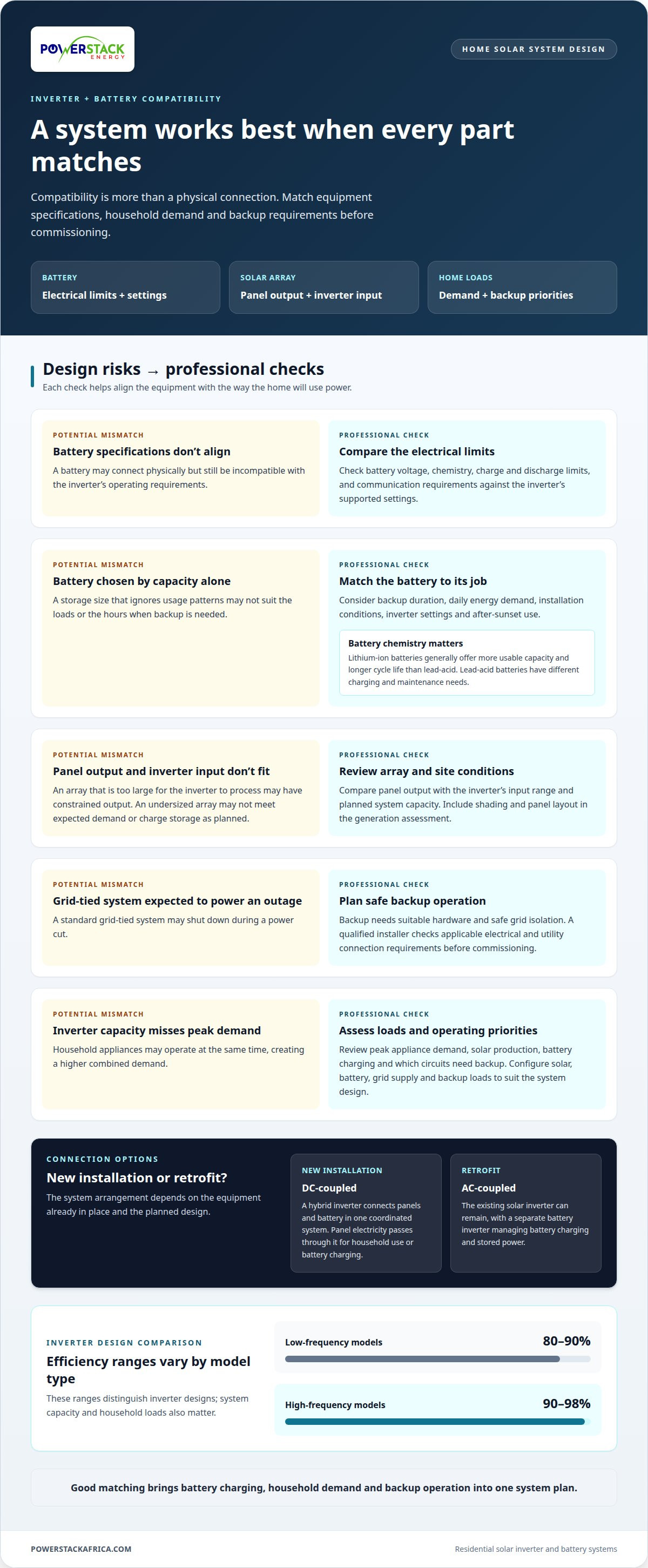
Hybrid inverter efficiency also varies by design: low-frequency models are described at 80-90%, while high-frequency models are described at 90-98%. These figures help distinguish inverter types, but system capacity and the way the equipment serves household loads also matter.
Hybrid Inverters for New and Retrofit Systems
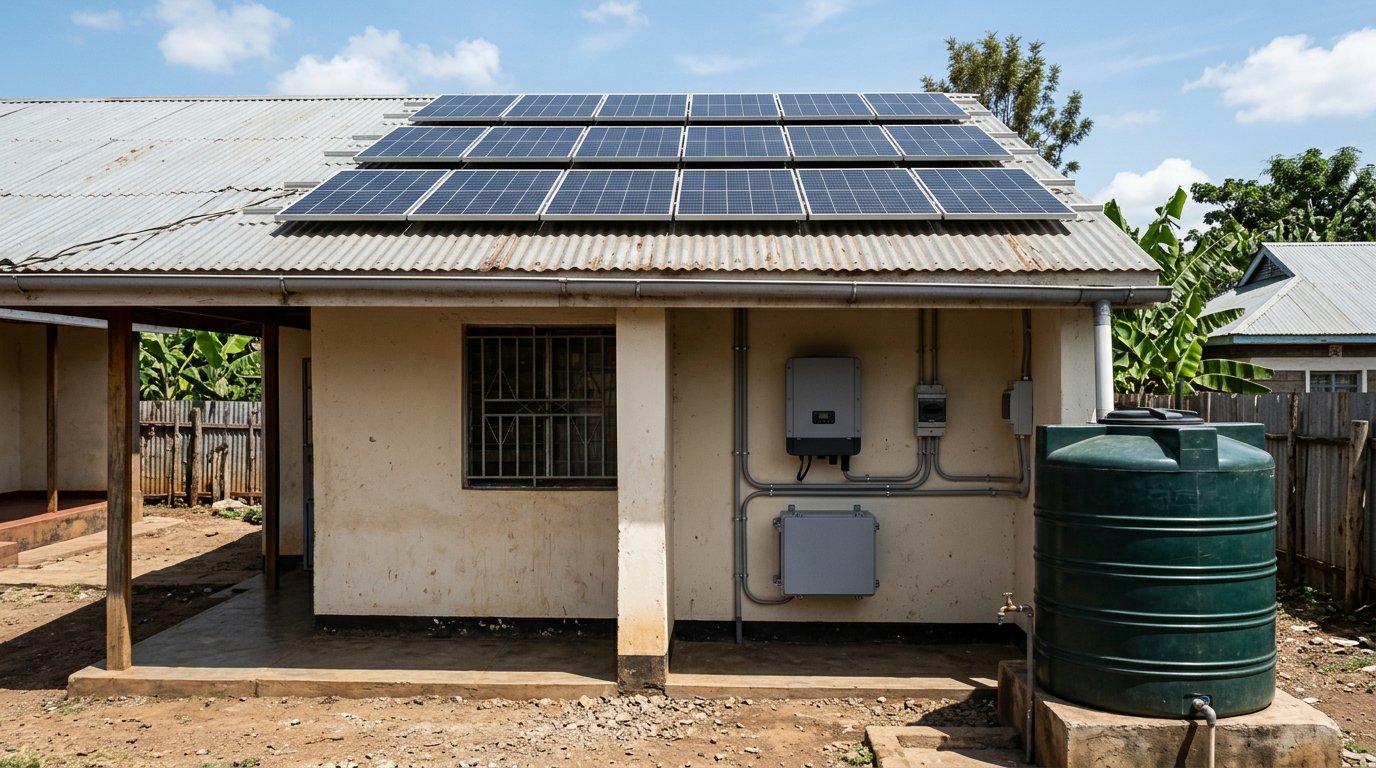
For a new installation, a hybrid inverter can connect the panels and battery through one coordinated system. In this DC-coupled arrangement, panel electricity passes through the hybrid inverter for household use or battery charging. The inverter’s capacity therefore matters for both solar generation and storage.
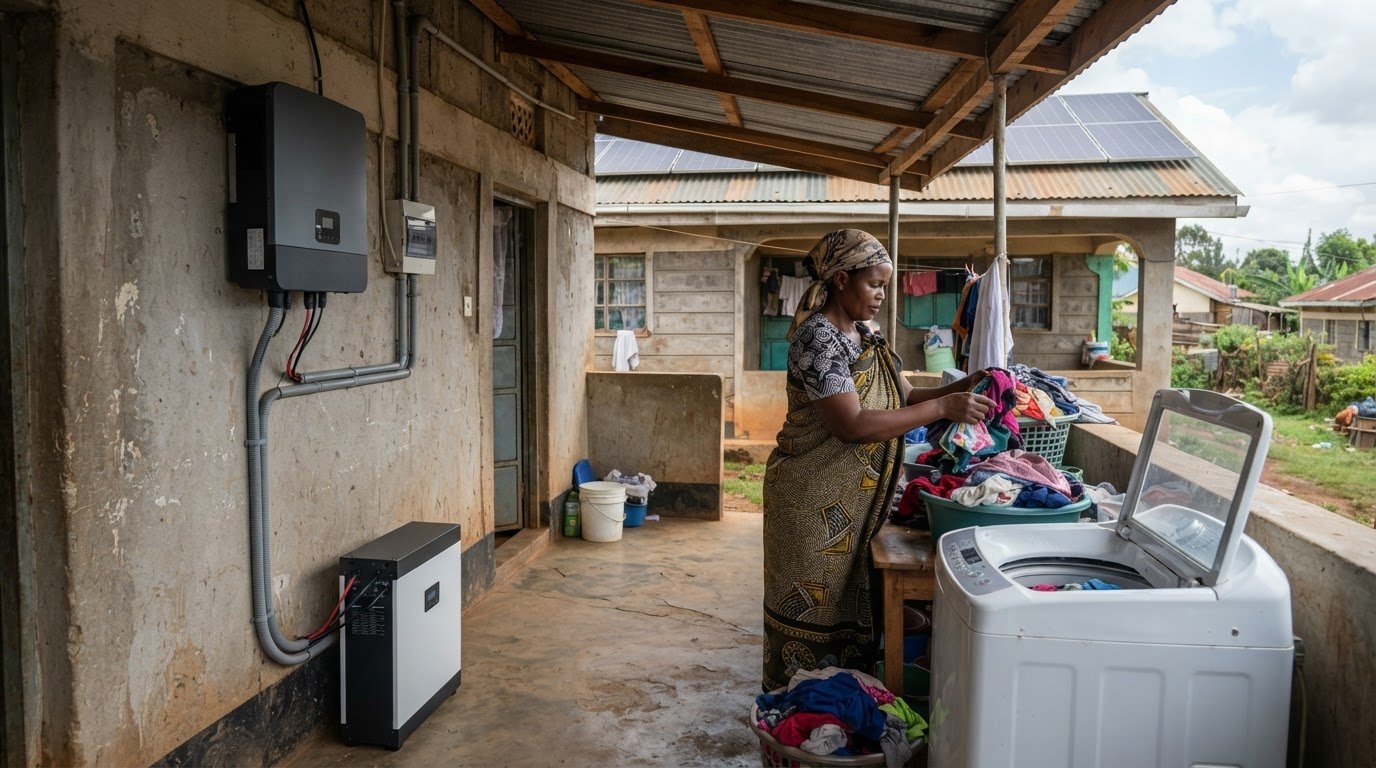
For a retrofit, an AC-coupled setup can retain an existing solar inverter and add a separate battery inverter. The original inverter converts panel output to AC, while the battery inverter manages charging and stored power. Professionals assess the existing equipment and system design to determine which arrangement fits.
Inverter and battery compatibility
A residential solar inverter and battery setup must match the battery’s electrical limits and the solar panels. Professionals compare battery voltage, chemistry, charge and discharge limits, and communication requirements with the inverter’s supported settings. Compatibility depends on more than whether the components can be physically connected; their specifications and operating requirements also need to match. This matching supports charging, household demand, and backup operation.
Lithium-ion batteries generally offer more usable capacity and longer cycle life than lead-acid batteries, while lead-acid batteries have different charging and maintenance needs. The right option depends on backup duration, daily energy demand, installation conditions, and inverter settings. Professionals assess these factors together rather than selecting a battery by capacity alone. This assessment is central to designing a residential solar inverter and battery system for the household’s intended loads.
Panel compatibility matters, too. The installer compares panel output with the inverter’s input range and planned system capacity. If the panels can generate more power than the inverter can process, some output may be constrained. If the array is undersized, it may not meet expected demand or charge storage as planned. Shading and panel layout also affect generation.
For a grid-connected home in Kenya, the design must account for applicable electrical and utility connection requirements. A qualified installer checks local electrical requirements before commissioning. Safe grid isolation is essential for backup operation during an outage. A standard grid-tied system may shut down during a power cut, so backup requires suitable hardware.
Export settings, charging limits, and household load priorities also shape system operation. During commissioning, the professional configures solar generation, battery charging, grid supply, and backup loads to suit the system design. These checks help ensure a residential solar inverter and battery installation meets the home’s intended demand.
Solar energy production and household consumption
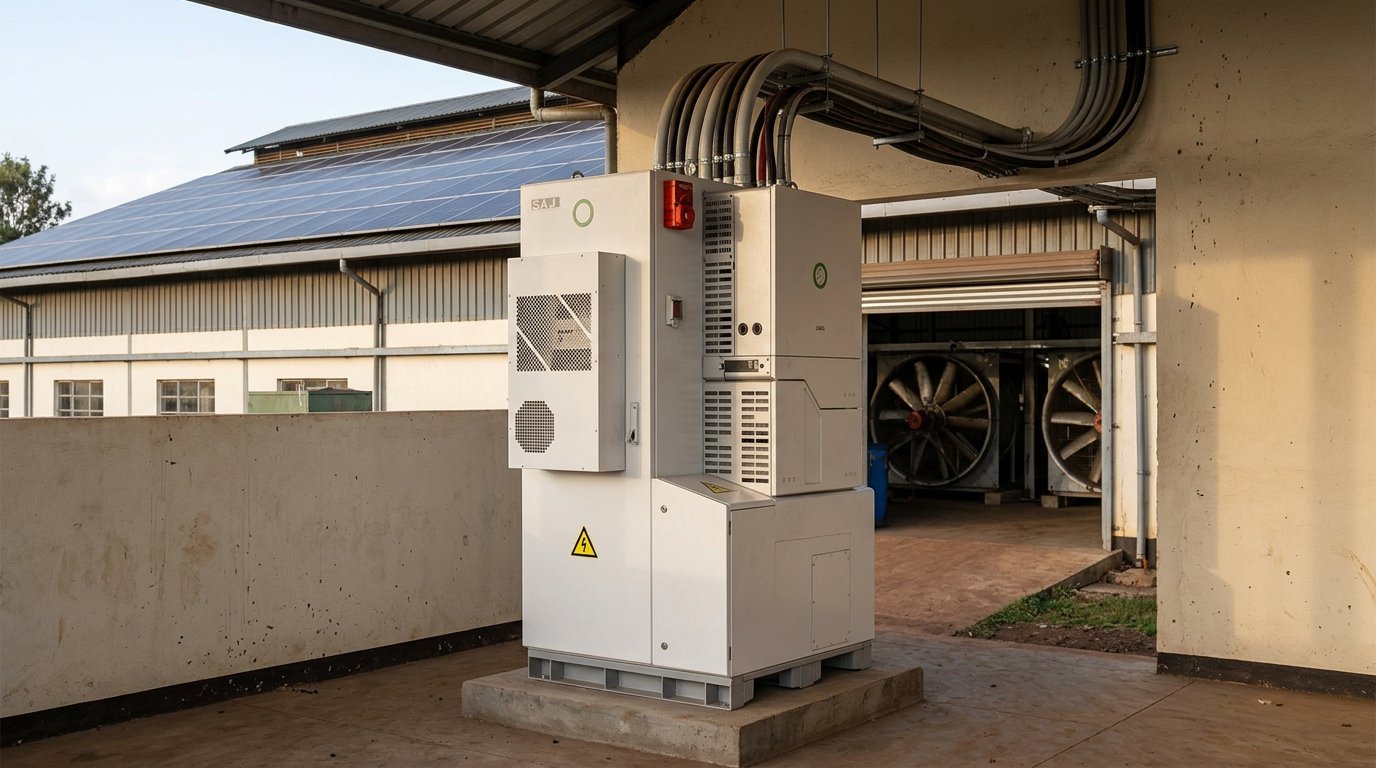
Solar panels generate direct-current electricity, which an inverter converts into AC for household appliances. A residential solar inverter and battery system coordinates that conversion with storage. In Kenya, inverter and battery brands include Deye, Dyness, SAJ, and KET; compatibility depends on the specific equipment and system design.
Increasing Household Solar Self-Consumption
Self-consumption means using more solar energy at home as it is generated instead of exporting surplus electricity. Typically, solar power supplies household demand first, charges the battery next, then any remaining surplus can be exported to the grid.
For example, running electricity-intensive appliances during strong daytime production can use solar energy directly. Battery storage can shift some excess generation to later hours. The balance depends on panel output, household demand, and inverter settings within the system.
Battery Capacity and Household Energy Use
Battery capacity, measured in kilowatt-hours (kWh), indicates how much energy can be stored. It should reflect which household loads need support and when they use electricity. A battery for evening lighting and communication equipment serves a different load profile from one intended to supply several major appliances.
Professionals compare expected solar generation with household consumption throughout the day. They also account for after-sunset energy needs and the battery’s permitted operating range. This helps match storage to actual use, rather than choosing capacity based on household size alone.
Sizing Inverters to Household Loads
Inverter capacity must support peak household demand, including appliances that may operate together. One market recommendation places many home inverters between 3 kW and 10 kW, depending on household size and usage patterns. Another recommends capacity 20-25% above peak load.
These figures are starting points, not a substitute for a load assessment. Professionals review appliance demand, panel output, battery charging, and backup priorities. A home prioritising essential circuits may need a different capacity from one designed to supply most household appliances.
Benefits of adding battery storage to home solar
Battery storage changes when you can use solar electricity, not how much your panels generate. Instead of sending all surplus daytime production to the grid, a household can store some for evening use. The inverter manages this flow: solar panels produce direct current, and the system makes stored energy available as household electricity when needed. This can reduce reliance on grid supply after sunset.
The main benefit is better alignment between solar production and household consumption. If daytime generation exceeds the home’s immediate demand, for example, a battery can retain some excess energy for later use. Without storage, the household may draw grid electricity in the evening after exporting surplus solar power earlier. The practical value depends on when power is generated and used, as well as storage capacity.
Operating modes can prioritise different needs. In Auto Mode, the system supplies household demand first, charges the battery next, then exports remaining solar power. At night, the battery can supply the home; if its stored energy is insufficient, the system switches to grid power. Battery Reserve Mode keeps the battery charged for critical household loads during a grid failure.
Storage also lets you manage backup priorities. A system configured for essential appliances can reserve energy for lighting or communication equipment rather than using it across every household circuit. Monitoring production, storage, and consumption helps show whether the system is meeting those priorities. Scheduled charging can reflect household consumption habits, while system settings determine when stored energy is used.
A battery does not eliminate grid dependence or guarantee uninterrupted power. Its value lies in using more of the solar energy generated when your household needs it. Backup operation depends on suitable system hardware and configuration.
Powerstack Energy: Hybrid Inverters & PCS
Powerstack Energy Ltd provides residential solar installation for households planning a new system or adding solar to an existing property. Its hybrid inverters and power conversion systems are relevant when a design needs coordinated conversion and battery storage. The right configuration depends on your panels, household loads, battery requirements, and whether the system connects to the grid.
For a home installation, the design brings these components together as one operating system. The inverter must suit the solar array and household demand, while battery compatibility determines how stored energy is managed. Intended backup loads also shape the design. A system prioritising essential household circuits, for example, has different operating requirements from one intended to supply a wider range of appliances.
Powerstack Energy also offers Commercial Solar EPC for business projects. Its IESP 60kW HV C&I Storage Inverter is a commercial and industrial product, not a residential system specification. Keeping that distinction clear helps you assess solutions according to their intended application rather than assuming that equipment designed for larger facilities fits a home.
Useful design inputs for a residential project include your electricity consumption patterns, the appliances you want to support, and whether you need backup during grid outages. These details help define the system’s operating priorities and guide the selection of inverter and battery components. For an existing installation, the current system configuration matters, too.
Powerstack Energy’s residential installation work is the appropriate next step when you want a professionally designed home solar system, rather than equipment selected without considering the full setup. Contact Powerstack Energy to discuss your residential solar requirements.
Frequently Asked Questions
Can a solar battery run a house overnight?
Yes, a solar battery can supply a home overnight if its stored energy covers household electricity use. The result depends on battery capacity, usable stored energy, and which appliances run after sunset. A home powering a refrigerator, lights, and router has different overnight demand from one also running cooking or heating appliances. The inverter can draw grid power if stored energy runs low.
What size solar inverter and battery does a Kenyan home need?
The required sizes depend on your household’s peak power demand and how much energy you want stored for later use. Inverter capacity, measured in kilowatts, must support appliances running at the same time. Battery capacity, measured in kilowatt-hours, relates to energy use over time. A home seeking evening backup for lighting and refrigeration, for example, has different storage needs from one covering most household loads.
How long can a home battery power essential appliances?
A battery’s runtime depends on its usable stored energy and the combined consumption of connected appliances. A refrigerator cycling alongside lights and a router draws a different load from equipment running continuously. Backup duration falls as more appliances are added or used for longer periods. System monitoring data can help show how quickly essential loads use stored energy during an outage.
What solar inverter and battery warranties and lifespans are typical in Kenya?
Quality solar inverters in Kenya typically last between 8 and 15 years. Warranty coverage is a separate matter: it depends on the specific model and manufacturer terms, so read the warranty document for duration, covered components, and exclusions. Keep installation and maintenance records with that document. Battery life also varies by chemistry, operating conditions, and use, so avoid treating an inverter’s expected lifespan as a battery-life estimate.
What maintenance, safety risks, and installation requirements should homeowners consider?
Plan annual maintenance to inspect the system and address wear, connections, and operating performance. Battery and inverter installation requires correct electrical sizing, compatible components, and safe grid isolation where backup is designed. A qualified installer should check local electrical requirements before commissioning. Keep equipment accessible for inspection, and follow the system’s operating guidance to manage loads without exceeding its designed capacity.