The tariff date to anchor your planning is already established: Kenya Power says its new tariffs took effect on 1st April 2023, so businesses should distinguish that implemented change from any future tariff proposal.
Your electricity bill depends on more than the energy tariff. Your commercial tariff category, demand charges, operating hours and the share of electricity supplied directly by solar all matter. KPLC time of use tariff optimization with solar therefore starts with matching the system design to your facility’s load patterns, not simply adding panels.
This article explains Kenya Power’s commercial and industrial tariff structures, how time-of-use pricing affects business electricity use, and how solar and battery storage can shape grid consumption around facility demand. It also explains how tariff timing, an energy audit and system design inform a commercial solar assessment.
Key Takeaways
- Separate Kenya Power’s tariffs that took effect on 1st April 2023 from any future tariff proposals when planning your energy strategy.
- Assess your commercial tariff category, demand profile and operating hours to understand how grid electricity affects your bill.
- Match rooftop solar generation to daytime facility loads, then assess whether battery storage can shift energy use around demand peaks.
- An energy audit and system design can help identify how solar, storage and tariff structures fit your facility’s requirements.
Behind-the-meter commercial and industrial solar
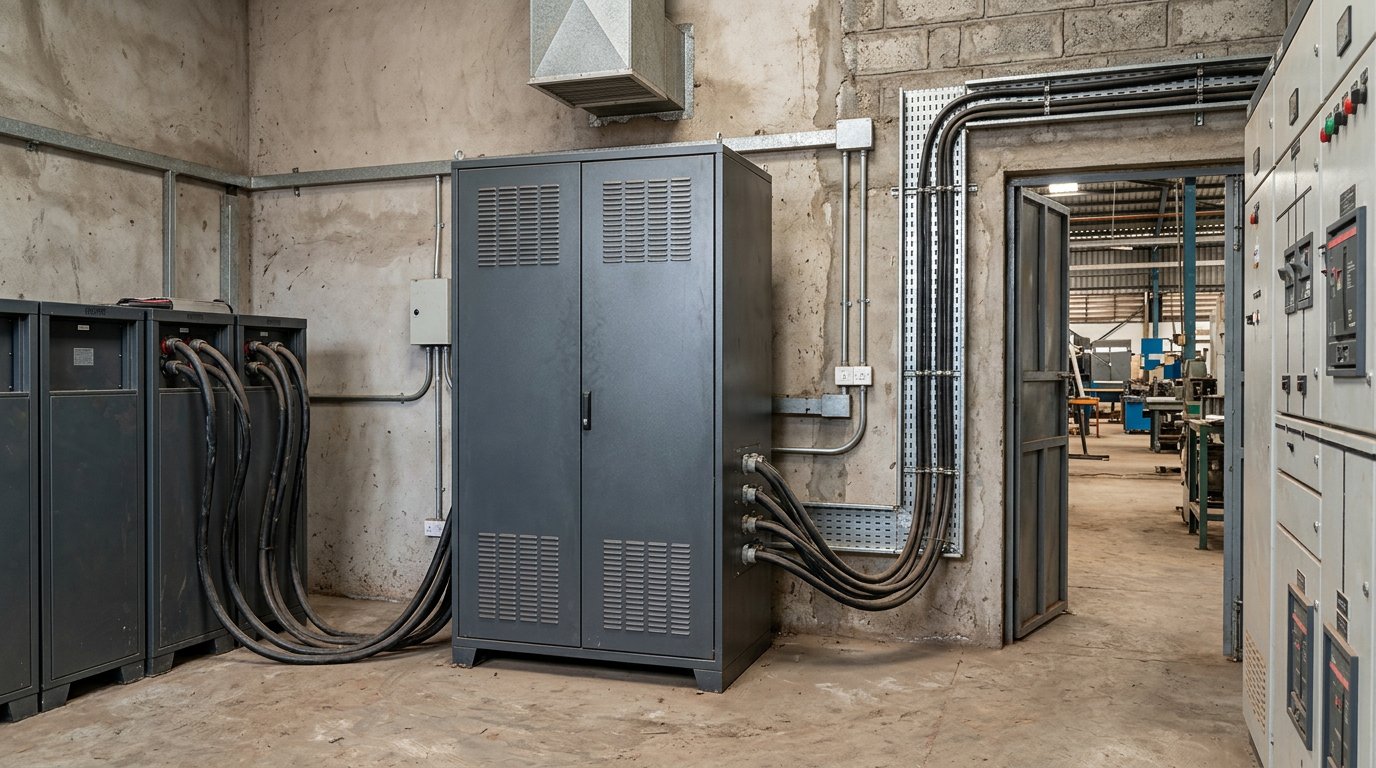
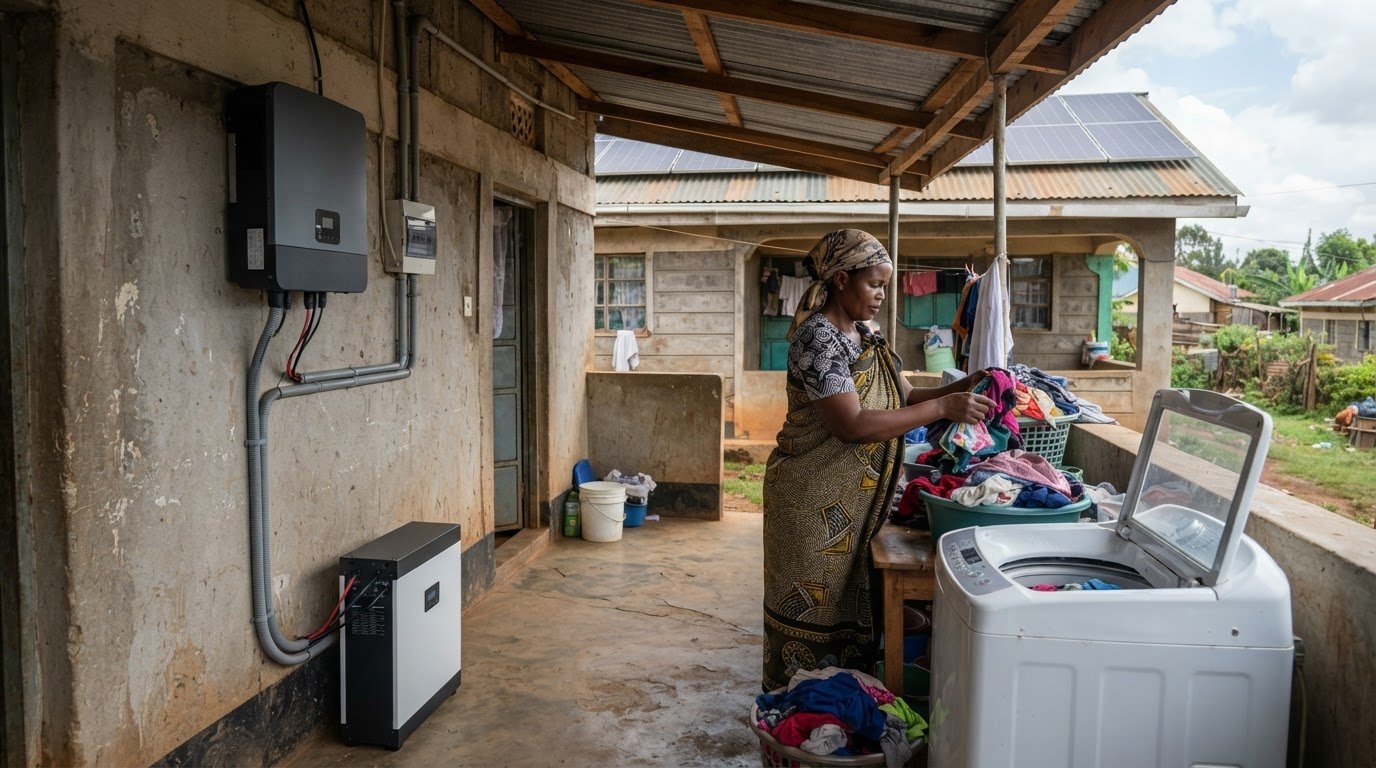
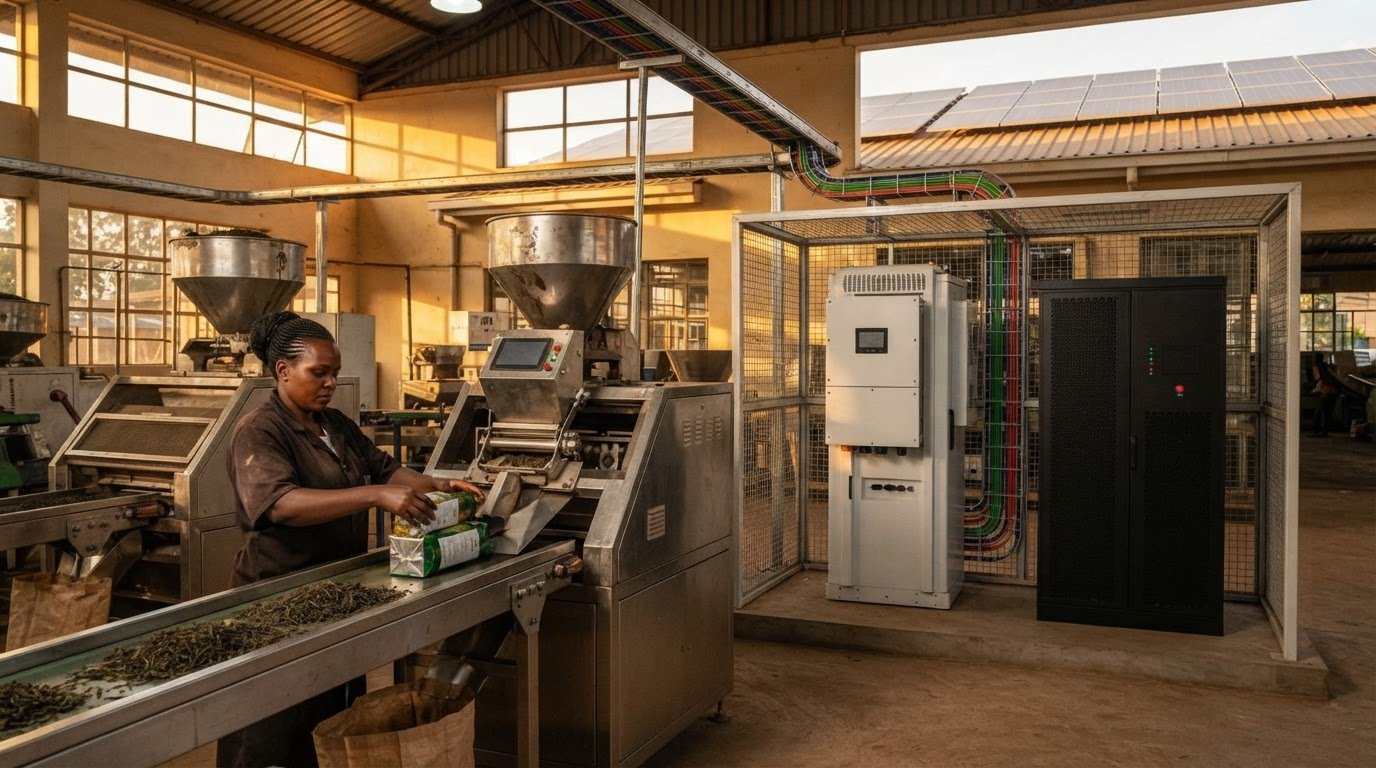
Behind-the-meter solar supplies electricity on the customer’s side of the Kenya Power meter. At a factory, for example, onsite generation can power operating equipment before the facility draws electricity from the grid.
Solar Self-Consumption and Excess Electricity
Solar self-consumption means using electricity generated onsite instead of importing it from Kenya Power. Net metering is the regulatory framework for accounting for eligible electricity exported to the grid; EPRA’s Net Metering Regulations date from 2012 and have since been revised. Excess electricity is therefore not automatically exported or credited under every solar installation.
For permits, licences and technical standards, review the installation design and intended grid connection against the applicable approval requirements. For a proposed net-metered system, EPRA regulations provide the relevant framework. Specific requirements depend on the system and export arrangement.
KPLC Bill and Load Profile Analysis
A load profile shows how a facility uses electricity over time, while a KPLC bill records billed consumption and tariff details. Analysing both helps identify when the facility imports electricity and when solar generation could serve its demand.
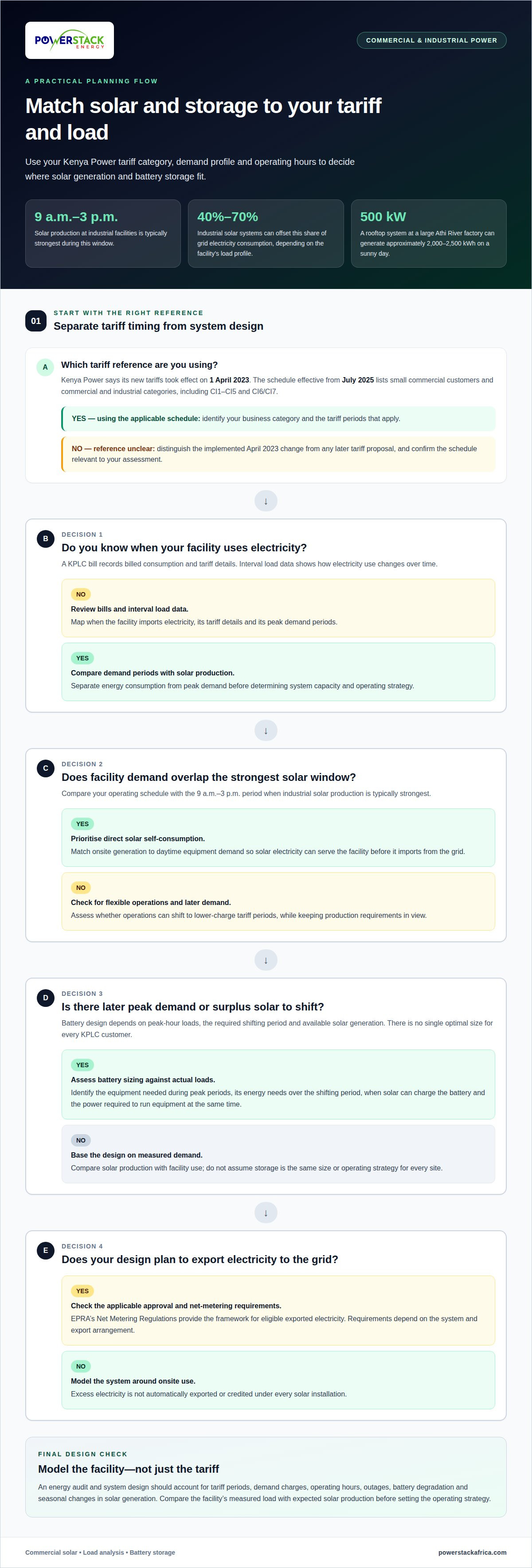
An assessment reviews electricity bills and interval load data, then compares demand periods with solar production. For example, a food-processing facility can compare its production schedule with equipment loads to identify operations that solar could serve directly. Separating energy consumption from peak demand helps determine system capacity and operating strategy. This grounds the design in measured usage rather than monthly totals alone.
Industrial solar systems can offset 40% to 70% of grid electricity consumption, depending on a facility’s load profile. Solar production at industrial facilities is typically strongest between 9 a.m. and 3 p.m., so comparing that window with operating demand can help assess how much onsite generation serves the facility. A 500 kW rooftop solar system at a large factory in Athi River can generate approximately 2,000 to 2,500 kWh on a sunny day.
For a cost benchmark, a 400 kW commercial solar system in Kenya costs approximately KES 20 million to KES 25 million to install. Such a system typically pays for itself within 2.0 to 2.5 years when monthly savings are around KES 1 million. Demand charges can also matter: the example factory’s CI2 demand charge is calculated at KES 800 per kVA. These figures provide context for evaluating system size, expected savings and the facility’s load profile.
Kenya Power commercial and industrial tariff structures
A commercial tariff category defines how Kenya Power classifies a business’s electricity use. Kenya Power’s schedule effective from July 2025 separates small commercial customers from commercial and industrial categories, including CI1 through CI5 and CI6/CI7.
An energy charge applies to electricity consumed; a demand charge relates to recorded power demand. Time-of-use tariffs set different charges for electricity consumed at different times. KPLC time-of-use optimisation with solar means aligning solar generation and operating schedules with the applicable tariff periods, while also accounting for demand charges.
Kenya Power says its new tariffs took effect on 1st April 2023. The July 2025 schedule provides a later reference for listed commercial categories. Eligible businesses can assess whether shifting flexible operations to lower-charge periods fits production requirements. A cold-storage facility, for example, may have less flexibility than a business that can reschedule some equipment use.
Demand charges can influence solar system operation because a facility’s highest demand may still be recorded when solar supplies daytime electricity. Under the July 2025 schedule, CI2 and CI3 have distinct demand-charge structures. A professional assessment separates energy consumption from peak demand, then models each against the facility’s operating profile.
Tariff changes can affect how a solar system operates, while outages influence grid supply and system operation. Battery degradation can reduce available storage over time, and seasonal changes can affect solar generation. Effective KPLC time-of-use optimisation with solar accounts for these factors and tariff periods, rather than relying on a single tariff assumption or solar-yield estimate.
Battery energy storage for demand peak shifting
Battery energy storage holds electricity for later use, helping a facility shift when it draws power from the grid. There is no single optimal system size for every KPLC customer: design depends on peak-hour loads, the required shifting period and available solar generation.
Solar and Battery Grid Import Management
Solar and batteries can change a facility’s grid imports by using onsite generation and stored electricity. Solar can power daytime equipment directly, while a battery can store surplus generation for use when solar output falls or demand peaks.
Under a time-of-use tariff, the operating strategy should reflect the facility’s consumption in each applicable tariff period. A warehouse with daytime refrigeration, for example, may use solar directly and reserve stored energy for later operations. The amount of grid electricity displaced depends on the facility’s energy use and when it uses it.
Battery Sizing for Peak-Hour Shifting
Battery sizing matches storage capacity and inverter power to a facility’s load profile. A professional assessment identifies the loads that need to run during peak periods, then calculates their energy needs over the intended shifting period.
The assessment also considers how much solar generation can charge the battery, when charging can take place and how much power is needed to run equipment at the same time. A factory with short, high-power production bursts may need a different configuration from an office with steady evening consumption.
System design must account for operating schedules, backup priorities and battery operating limits. A professional models these factors against KPLC tariff periods and assesses whether shifting selected loads can reduce grid imports without disrupting operations. Size a solar and battery system for measured facility demand, not monthly consumption alone.
How can solar panels and battery storage reduce grid imports under KPLC’s time-of-use tariff?
Reducing grid imports means meeting part of a facility’s electricity demand without drawing that energy from Kenya Power. A solar photovoltaic system can serve compatible daytime loads directly, reducing imported electricity during those operating periods.
Battery shifting means storing available electricity for later use. At a hotel, solar can power daytime refrigeration and water pumping, while a battery can support selected evening loads. Under time-of-use scheduling, the applicable time band helps determine when grid electricity is used, so the operating schedule affects how much consumption can be shifted.
Start by mapping each major load against the facility’s operating schedule and Kenya Power tariff category. Separate flexible equipment, such as water pumps, from critical processes that must run continuously. Then assess whether solar generation matches those loads and whether storage can cover remaining demand during relevant tariff periods.
Assess imported kilowatt-hours and peak demand separately. Solar can reduce imported electricity, but a short, high-power load may still contribute to recorded peak demand. Whether a battery can reduce that peak depends on its power output, available stored energy and the timing of the load.
Finally, compare operating scenarios using the facility’s actual consumption data and Kenya Power’s applicable tariff schedule. The schedule effective from July 2025 lists time-of-use periods by customer category. Model solar-only operation against solar-plus-storage operation, including charging needs and priority loads. This process shows which configuration aligns with the site’s demand without assuming that shifting every load will improve grid-use patterns.
Off-peak energy is supplied during hours when electricity demand is usually low; on-peak energy is supplied during periods of relatively high system demand.
Powerstack Energy
Powerstack Energy Ltd helps businesses assess how solar, battery storage and Kenya Power tariffs relate to their operations. Its energy audits review electricity bills, load profiles, operating hours and major equipment. This assessment helps facilities understand grid consumption and how tariff periods relate to their energy demand.
The findings inform system design. Commercial Solar EPC integrates solar generation with facility loads, while Battery Energy Storage Systems store electricity for later use. Hybrid Inverters & PCS support power conversion within the designed system. The appropriate configuration depends on the site’s consumption patterns, operating priorities and electrical infrastructure.
A facility with daytime production and later shifts can assess which loads solar can serve directly and whether storage meets its remaining needs. Powerstack Energy Ltd evaluates the load profile, tariff category and equipment requirements together, grounding the design in actual facility demand.
Consider a professional assessment when you need to evaluate commercial solar, storage or tariff-related energy use. An energy audit and system design can clarify how these options fit your operations. Contact Powerstack Energy Ltd to discuss your facility’s requirements.
Frequently Asked Questions
Which hours are Time of Use (TOU) tariff applicable?
Time-of-use tariff periods are the hours assigned to each rate band in Kenya Power’s schedule for your tariff category. The listed weekday off-peak entries are 00:00 to 22:00 and 06:00 to 00:00. Use the schedule applying to your account to interpret the applicable periods; do not assume the same time bands apply to every customer category.
What are KPLC’s current time-of-use tariff rates and peak, off-peak, and shoulder hours in Kenya?
Kenya Power’s tariff schedule effective from July 2025 lists commercial time-of-use energy charges of KSh 6.72 per kWh for CI1, KSh 6.08 for CI2, KSh 5.84 for CI3, KSh 5.71 for CI4, KSh 5.58 for CI5, and KSh 7.42 for CI6/CI7. Off-peak periods can vary by tariff category, so check the schedule that applies to your account.
Which KPLC customer categories are eligible for time-of-use tariffs, and what are the application requirements?
Time-of-use tariffs are available to eligible Kenya Power customers, with commercial categories including CI1 to CI5 and CI6/CI7 appearing in the tariff schedule. Eligibility is not established by category name alone. For an application, Kenya Power needs the customer’s account details and information relevant to the connection and consumption category to assess the tariff arrangement.
How are KPLC time-of-use bills calculated, including energy, demand, fuel, and other charges?
A time-of-use bill applies the relevant energy charge to consumption recorded in each tariff period, then adds applicable demand charges and other bill components. Demand charges follow the customer’s tariff and recorded demand. The fuel cost charge reflects fuel-price changes one month after the actual fuel price; VAT is 16% on demand charges and fuel and non-fuel energy costs.