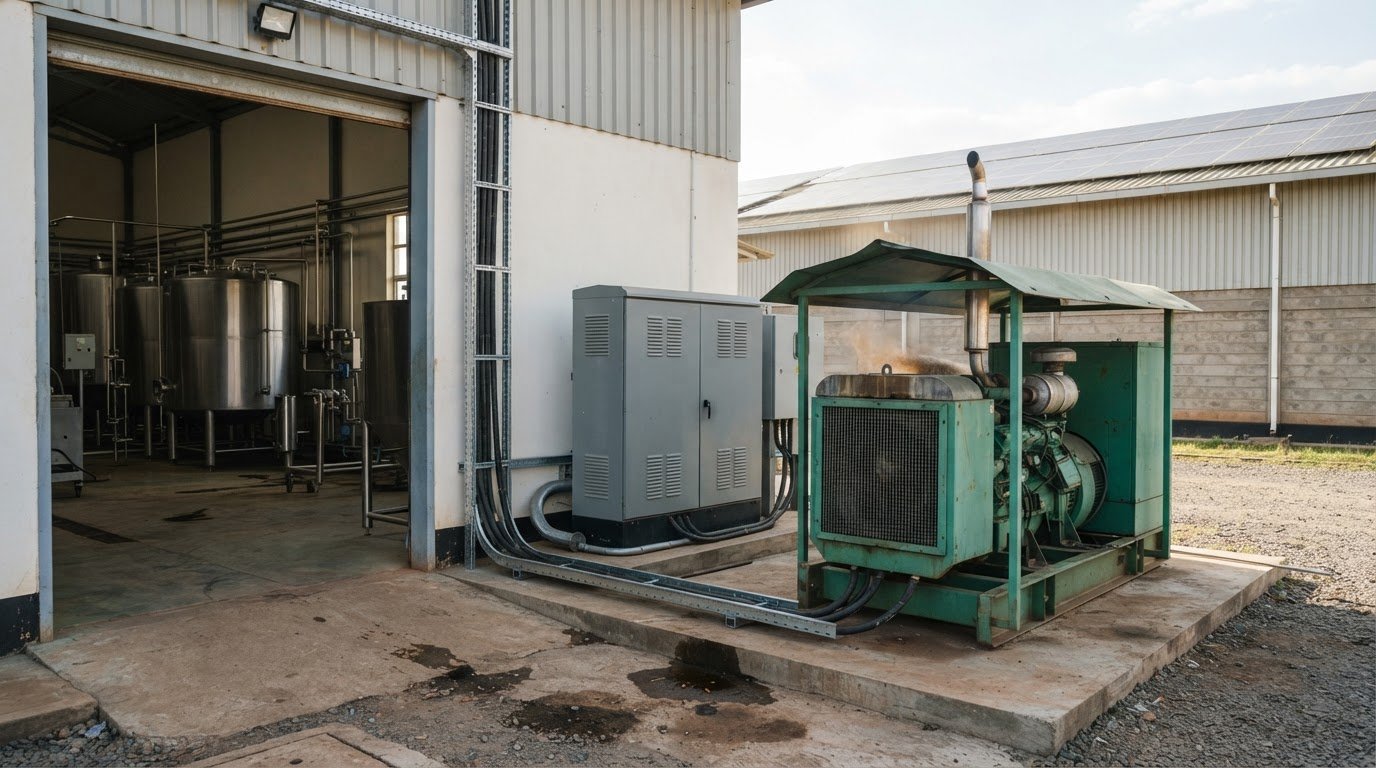

A commercial energy audit in Kenya examines how your facility uses electricity and fuel, reviews equipment and operating processes, and identifies practical ways to reduce avoidable demand. Before a solar installation, it clarifies your load profile and helps determine how solar generation, storage and grid supply can work together.
Sound operational decisions require more than a list of equipment readings. Audit findings should connect energy use to facility operations, identify potential improvements and give you a clear basis for prioritising action.
This guide explains what an audit involves, how equipment and process reviews can reveal opportunities to save energy, and how the findings can inform solar system design. It also covers how bill reviews and site inspections contribute to the assessment, so you can understand what the audit evaluates and how its results support your next energy decision.
Key Takeaways
- Use energy balances and performance benchmarks to identify where a facility falls short and when a remedial plan is needed.
- Prioritize efficiency measures by their expected savings, implementation requirements and payback, then track results after installation.
- Bring utility bills, operating records and facility conditions together to build a clearer picture of energy-use patterns.
- Use audit findings to shape solar and storage investment decisions, with energy audits and related system solutions available from Powerstack Africa Energy.
What is an energy audit?
A commercial energy audit assesses how a facility uses electricity and fuel, then identifies opportunities to improve energy efficiency. Auditors review operating data, equipment and processes before preparing an energy balance, which compares the energy entering the facility with the energy used by its systems. This helps explain consumption patterns and locate losses that might otherwise go unnoticed. For a plant-focused overview, see this industrial energy consumption audit.
Energy performance benchmarks compare a facility’s energy use with relevant operational measures. In manufacturing, for example, consumption can be measured against production output or other sector indicators. The Centre for Energy Efficiency and Conservation develops sector-specific benchmarking tools and reports to help industries compare performance and track progress.
Audit methods reflect how each facility operates. An office review may focus on lighting, cooling and schedules; a hotel assessment may examine guest-room demand and hot water. Factory benchmarking looks at production equipment and process loads, while a shopping-centre assessment considers shared systems and tenant areas.
Kenya’s Energy Management Regulations 2012 require industries consuming more than 180,000 kWh of energy per annum to conduct energy audits every three years. Where a designated facility misses applicable energy performance benchmarks, its owner must implement the approved remedial plan within two years of approval.
A designated facility’s audit must be conducted by a licensed energy auditor, an energy audit firm or an energy service company. The owner must submit the report to the Authority within one month after the audit. The Authority reviews it and approves or rejects it, giving reasons, within thirty days of receipt.
On conviction, failure to engage an energy manager carries a fine of up to one million shillings or imprisonment for up to six months. This penalty applies to the energy-manager requirement, not specifically to failure to conduct an audit. Owners of designated facilities must retain energy-consumption records for at least five years.
Energy-saving opportunities in equipment and processes
An audit turns measured losses into prioritised actions while accounting for production and operating requirements.
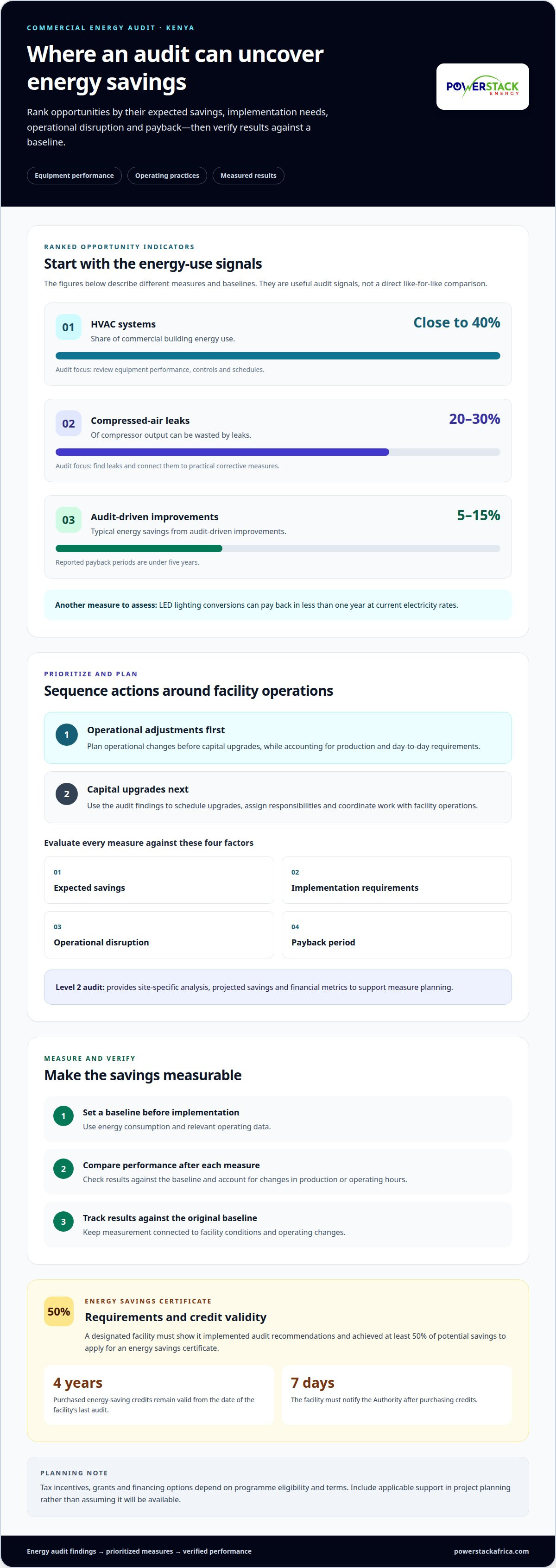
Review equipment performance and schedules to identify opportunities. HVAC systems account for close to 40% of commercial building energy use, while compressed-air leaks can waste 20-30% of compressor output. These findings point to specific energy-saving measures, such as correcting leaks, adjusting controls or replacing inefficient equipment. The audit links each action to the systems and operating practices responsible for demand.
Prioritizing and Planning Measures
Rank measures by expected savings, implementation requirements, operational disruption and payback period. A Level 2 audit provides site-specific analysis, projected savings and financial metrics. Use its findings to sequence operational adjustments before capital upgrades, then assign responsibilities and a schedule to each action. This connects energy-efficiency targets with a practical implementation plan and helps management coordinate work with facility operations.
Savings Measurement and Payback
Set a baseline before implementation using consumption and relevant operating data. After each measure, compare performance with that baseline, accounting for changes in production or operating hours. Audit-driven improvements typically deliver 5 to 15% energy savings, with payback periods under five years. LED lighting conversions can pay back in less than one year at current electricity rates. Track results against the original baseline.
To apply for an energy savings certificate, a designated facility must show it implemented audit recommendations and achieved at least 50% of potential savings. Purchased energy-saving credits remain valid for four years from the date of the facility’s last audit. The facility must notify the Authority within seven days of purchasing credits.
Tax incentives, grants and financing options depend on programme eligibility and terms. Include any applicable support in project planning rather than assuming it will be available.
For project-specific prioritization, explore audit-led energy planning.
Audit consultation, bill review and site inspection
The audit starts with your operating context and connects utility records with conditions observed on site. This sequence helps explain energy-use patterns and identify practical opportunities to save energy.
Consultation and Site Inspection
During consultation, the audit team reviews facility operations, production schedules, equipment use and known energy-management concerns. Qualified engineers inspect electrical, mechanical and process systems, collecting operational data with specialised instruments. Inspections are planned to minimise disruption, and most work takes place alongside normal operations. The site walkthrough connects measured energy use to equipment condition and actual operating practices.
Bill Review and Consumption Patterns
Provide utility bills covering at least 12 months; three years of historical data gives better insight into trends. Review electricity and fuel consumption alongside operating hours, production schedules and seasonal changes. This analysis can distinguish a persistent rise in demand from a temporary operational change. Comparing bill records with site findings helps identify where further measurements may explain unusual consumption or support a reduction plan.
Audit Information and Documents
Useful audit records include electricity and fuel bills, building drawings, equipment inventories, production schedules and maintenance records. Provide operational data that explains shifts, downtime, process changes or major equipment upgrades. Owners of designated facilities must retain energy-consumption records for at least five years. A complete document set helps the audit team connect past consumption with current conditions and prepare a well-grounded assessment.
Assessment Through Final Report
The audit moves from document review to consultation, site inspection, data analysis and reporting. Engineers assess electrical, mechanical and process systems, then compare their observations with recorded consumption. The report sets out actionable recommendations, projected energy savings, implementation priorities and operational performance metrics. For a designated facility in Kenya, the owner must submit the report to the Authority within one month after the audit.
Audits before solar installation
An audit before solar installation distinguishes avoidable demand from the load a system must serve. Review electricity and fuel use alongside operating schedules, production patterns and periods of high demand. This establishes a practical baseline for solar planning and avoids basing generation estimates on an unusual bill or a short snapshot of operations.
A site inspection links the energy profile to actual facility conditions. Engineers assess electrical and mechanical systems, operating processes and the roof suitability and costs for solar in Kenya. They also consider equipment schedules and which loads need continuous supply. For example, a factory running production lines during daylight has a different consumption profile from a facility with substantial evening demand.
Apply conservation measures before sizing generation. Adjust equipment schedules, address process inefficiencies and reduce unnecessary loads, then reassess the remaining demand. This separates persistent energy needs from consumption that operational changes may reduce. The order matters: designing for avoidable demand can affect a solar project’s scale and investment case.
Next, use the updated load profile to compare system options. Load forecasting estimates future electricity demand to guide energy-system operation and planning. It can inform the balance between solar generation, grid supply and battery storage, taking operating hours and backup requirements into account. Investment planning should also consider expected changes in production, facility use and future energy needs.
An audit therefore informs more than panel selection. It links inspection findings, saving measures and operating data to a defensible project scope. To apply that process to your facility, discuss an audit-led solar plan.
Powerstack Africa Energy: Energy Audits
Powerstack Africa Energy Ltd provides comprehensive commercial energy audit Kenya services for businesses assessing energy use, operating priorities and potential system investments. An audit gives decision-makers a structured basis for identifying energy-saving actions and evaluating whether a solar project fits the facility’s load profile. It can be useful when bills, fuel use or planned expansion prompt a closer assessment.
An audit connects consumption records, site conditions and operating schedules to recommendations tailored to your facility. Use the findings to distinguish conservation measures from investments that require system design. This establishes priorities before you commit to equipment selection or installation. Powerstack Africa Energy Ltd’s energy audits cover this assessment stage.
When solar generation is a suitable next step, Commercial Solar EPC connects audit findings with project development and installation. The load profile, operating hours and conservation measures can all inform system design. This helps commercial facilities evaluate on-site generation while keeping the project aligned with the demand it needs to serve.
Battery Energy Storage Systems may be relevant when your facility is assessing storage against its consumption profile. Hybrid Inverters & PCS can support integration decisions involving generation, storage and site electrical requirements. These options should follow the audit findings, not replace demand analysis. Powerstack Africa Energy Ltd can discuss how they fit your project scope.
Bring your facility’s energy priorities and intended project direction to the discussion. Powerstack Africa Energy Ltd’s team can help identify the appropriate next step, whether that is a commercial energy audit Kenya or a related solar and storage project. Contact the company to discuss your energy audit requirements.
Turn Audit Findings into an Investment Decision
Use the audit outcome as a decision point for your next energy investment. Separate actions that can be handled through operational changes from projects requiring equipment or system design. This gives your management team a clear basis for setting priorities, assigning responsibility and aligning implementation with business plans.
A commercial energy audit in Kenya can also help you assess a proposed solar project against actual facility demand. Powerstack Africa Energy Ltd offers Commercial Solar EPC, Battery Energy Storage Systems, and Hybrid Inverters & PCS for businesses evaluating generation, storage and power-conversion requirements. Its team can connect these options to the operational objectives identified in an audit, without treating equipment selection as a substitute for demand analysis.
Set out the facility’s priorities, relevant operational constraints and intended investment direction for a focused discussion. Powerstack Africa Energy Ltd’s technical team can help you identify a suitable next step for your project. Contact Powerstack Africa Ltd to discuss your energy requirements and move forward with a clear plan.
Frequently Asked Questions
What is a commercial energy audit in Kenya and what does it cover?
A commercial energy audit in Kenya assesses how a business uses energy and where its operating profile may be improved. Its scope can range from a walk-through identifying visible issues to an investment-grade assessment with detailed measurements and project analysis. For instance, a facility considering a major equipment upgrade may need a deeper assessment than a business seeking an initial review of obvious energy-use concerns.
What energy-saving measures commonly improve energy efficiency for Kenyan businesses?
Start with operating practices that waste energy without supporting production or service delivery. A warehouse can switch off equipment in unused areas, while a factory can align machine operating hours with its production schedule. Review control settings and maintenance practices for equipment that runs for long periods. The right measures depend on facility operations, so assess their effects on output and service requirements before changing procedures.
Which firms are licensed to perform energy audits in Kenya?
A designated facility’s audit may be conducted by a licensed energy auditor, a licensed energy audit firm or an energy service company.