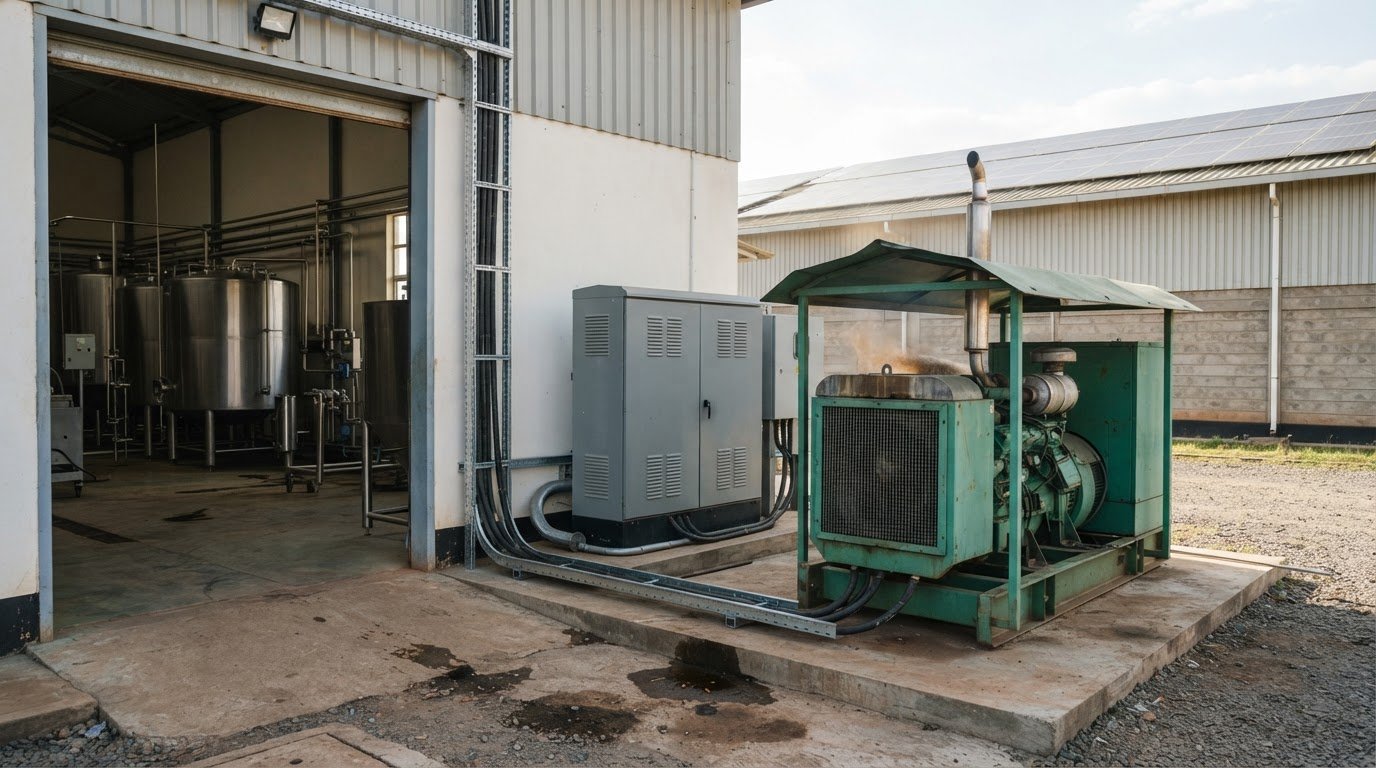
Diesel generators provide backup power for Kenyan businesses, but fuel use and maintenance requirements can affect performance. To improve fuel efficiency, start by measuring the facility’s demand and matching generator capacity and operation to its actual load profile.
Good generator management also means avoiding prolonged low-load operation, maintaining equipment and coordinating power sources. Solar and battery storage can work alongside a generator, reducing its runtime while preserving backup supply when conditions change.
This article explains practical ways to improve diesel generator performance in Kenyan facilities, including load profiling, battery integration, generator controls, preventative maintenance and solar-diesel system design.
Key Takeaways
- Use measured demand, including start-up currents and operating cycles, to guide generator sizing and avoid oversizing or overloading.
- Assess whether battery storage can manage changing loads and short demand peaks while allowing the generator to run more strategically.
- Use staged generator controls and planned load testing to manage low-demand periods and confirm operating performance.
- Review maintenance practices and solar integration to identify practical ways to support dependable operation and reduce diesel use.
Generator right-sizing and load profiling
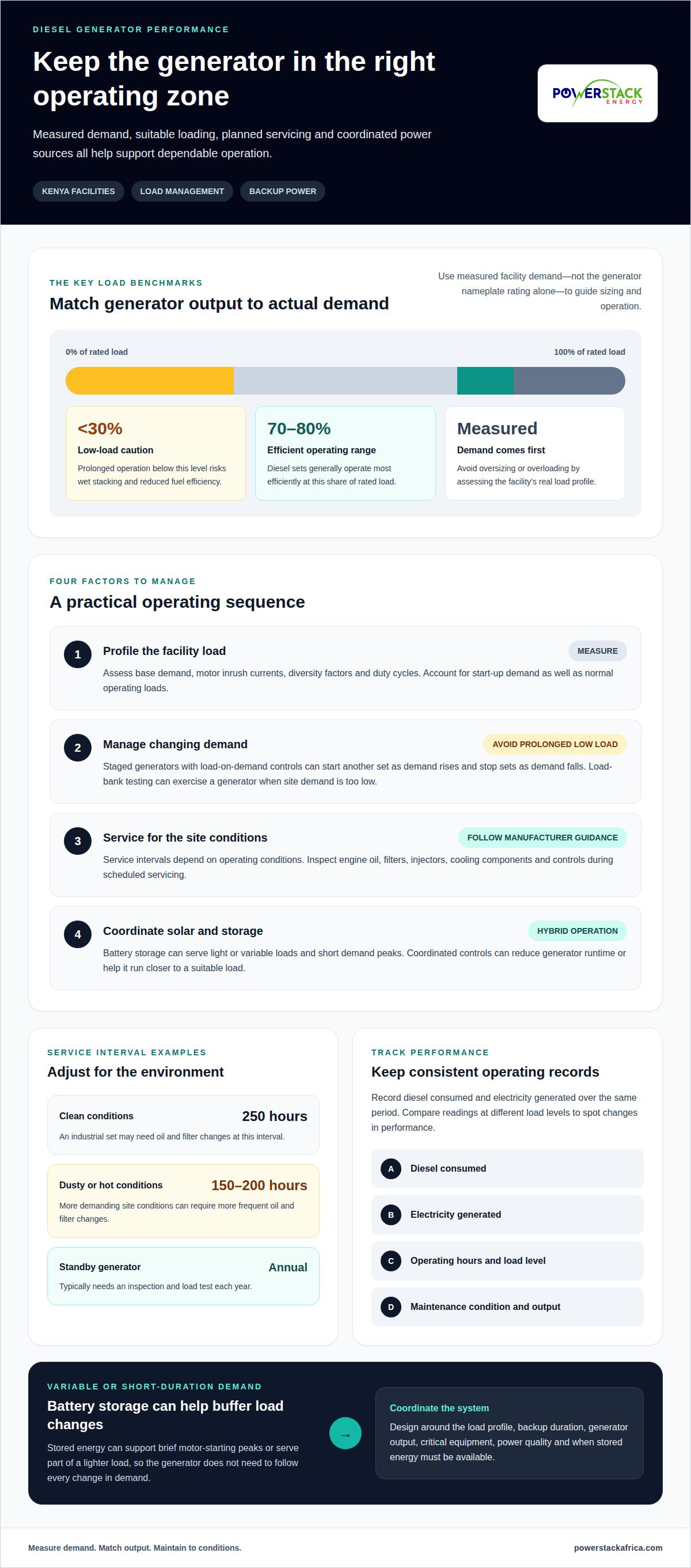
Choose generator capacity from measured demand, not its nameplate rating alone. A load study should assess base demand, motor inrush currents, diversity factors and duty cycles. Diesel sets generally operate most efficiently at 70-80% of rated load. An oversized unit running below 30% for extended periods risks wet stacking and reduced fuel efficiency.
In Kenya, regulatory and environmental requirements depend on the fuel transaction and installation context. Review which obligations apply to your facility and operations rather than assuming the same rules apply at every site.
To track fuel use per kilowatt-hour, record diesel consumed and electricity generated over the same period. Compare readings at different load levels, and note operating hours, maintenance condition and generator output. Consistent records help managers see when performance changes and assess the effect of operating adjustments.
When comparing solar or grid supply with generator power, consider the facility’s demand pattern, generator runtime, fuel consumption, grid availability and backup needs. This shows how each source could fit the site’s operating profile and reliability requirements.
Maintenance intervals should follow manufacturer instructions and operating conditions. An industrial set in clean conditions may need oil and filter changes every 250 hours; dusty or hot environments may require service every 150-200 hours. Standby generators typically need an annual inspection and load test. Inspect filters, injectors, cooling and controls during scheduled servicing.
An oversized generator may run underloaded, while an undersized one can be overworked and face greater breakdown risk. Contaminated diesel can impair combustion and contribute to carbon deposits. Track load, fuel use and service history to spot performance changes and make better-informed sizing decisions.
Pairing generators with battery energy storage systems
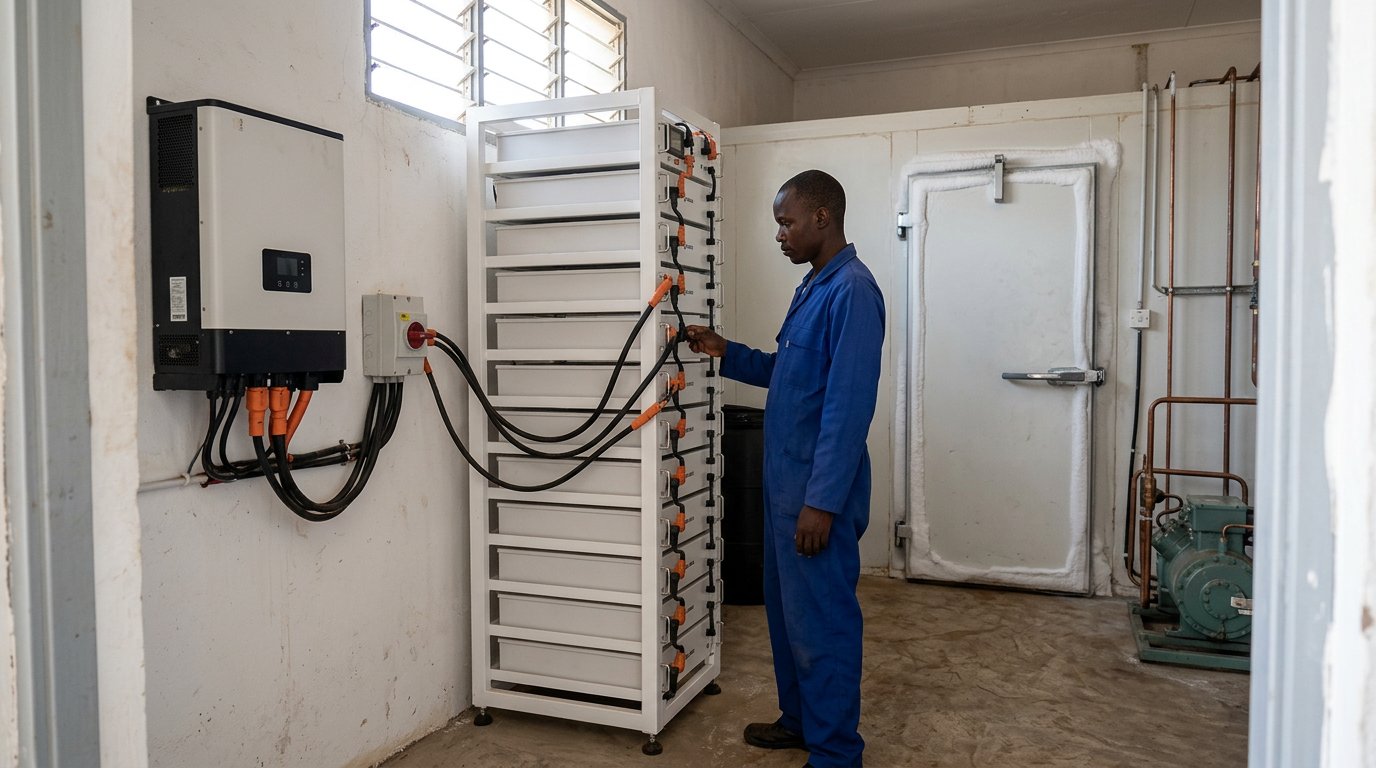
Battery storage can serve light or variable loads and respond to short demand changes. That can reduce generator runtime or help the generator run closer to a suitable load. At a Kenyan facility with fluctuating production, stored energy can cover brief peaks without requiring the generator to follow every change.
Size a system around the facility’s load profile, required backup duration, generator output and short-term demand changes. Engineers then coordinate charging, discharging and generator operation through the system controls. The design should account for critical equipment, power quality and when stored energy must be available.
For example, a factory could use stored energy to support brief motor-starting peaks while the generator supplies sustained demand. During lighter use, storage can serve part of the load, allowing the generator to shut down or run at a more appropriate output. The right operating strategy depends on the facility’s equipment and demand.
Diesel-only generation requires an ongoing fuel supply and engine servicing. Solar and storage add equipment that also needs maintenance, but can supply part of the facility’s demand and reduce generator runtime. Grid supply can serve loads when available, though backup needs may still require storage or a generator.
In Kenya, relevant service providers include generator maintenance firms, fuel-monitoring specialists and hybrid power integrators. An integrator coordinates solar, storage, controls and generator operation, while maintenance and monitoring specialists handle their respective equipment and fuel systems. Clearly assigning system responsibilities helps support consistent operation.
Battery storage can serve light or variable loads and short-term demand changes, helping generators run fewer hours or closer to a suitable load.
Avoiding operation at very low loads
Extended operation below 30% of rated load can cause wet stacking and reduce combustion efficiency. Unburned fuel may accumulate in the exhaust system, while fuel consumption remains high relative to useful power supplied. A facility with lower overnight demand than daytime demand can leave one large generator running lightly for prolonged periods.
For variable demand, staged generators with load-on-demand controls offer another option. The controls start an additional generator as demand rises and stop sets as demand falls. This helps keep operating generators at an appropriate load instead of running every set continuously. Effective staging depends on measured demand, generator capacity and the facility’s supply requirements.
Load-bank testing provides a controlled way to exercise a generator when normal site demand is too low. It can help prevent wet stacking and check performance after maintenance. Technicians can use the results to assess engine response and identify operating issues, rather than relying on minimal part-load operation during routine use.
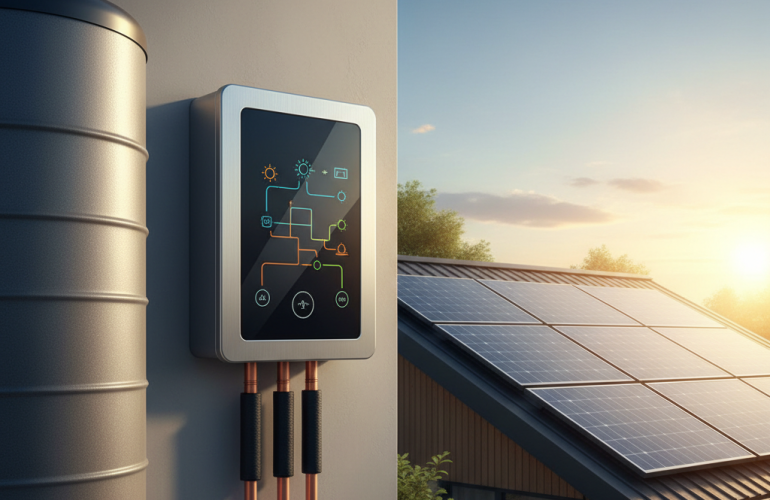
In a hybrid power system, an intelligent controller can adjust generation as demand changes, helping avoid minimal part-load operation of the diesel generator. The practical principle is to match generation to changing demand instead of making the generator absorb every fluctuation.
Reducing extended low-load operation can support fuel efficiency and equipment care, but controls must still protect the power supply. Operating rules should account for start-up demand, changing loads and the manufacturer’s recommended limits. Proper cooling matters too, since a faulty cooling system can cause overheating and unnecessary fuel use. Load management and suitable controls support dependable, more efficient generator operation.
Preventative maintenance for diesel generators
A planned maintenance schedule helps protect combustion, cooling and reliable output. For industrial sets in clean conditions, an oil and filter change may be needed every 250 hours. Dusty or high-temperature sites can require changes every 150-200 hours. The generator’s operating environment and manufacturer’s instructions should guide the service interval.
During scheduled servicing, technicians inspect engine oil, air and fuel filters, injectors, cooling components and controls. Blocked filters can restrict airflow or fuel delivery, while injector faults can disrupt combustion. A faulty cooling system can cause overheating and unnecessary fuel use. Replace faulty parts with suitable replacements to restore proper operation.
Standby generators typically require an annual inspection and load test. Testing checks performance under controlled demand, rather than relying only on an idle start-up. For continuously used sets, professional removal of engine carbon deposits every 4-6 months is recommended. The maintenance plan should distinguish standby duty from sustained prime-power operation.
Fuel handling also affects engine condition. Store diesel in clean, dry tanks to help prevent contamination. Contaminated or poor-quality fuel can lead to inefficient combustion, carbon deposits and higher fuel consumption. During scheduled maintenance, a technician can inspect the fuel system for blockages or leaks.
Maintain a service record of operating hours, inspection findings, parts replaced and test results. These records help the maintenance team schedule the next service and identify recurring faults. If your Kenyan facility has several generators, keep a separate record for each set to avoid missed service intervals and support consistent maintenance.
Integrating solar with a diesel generator
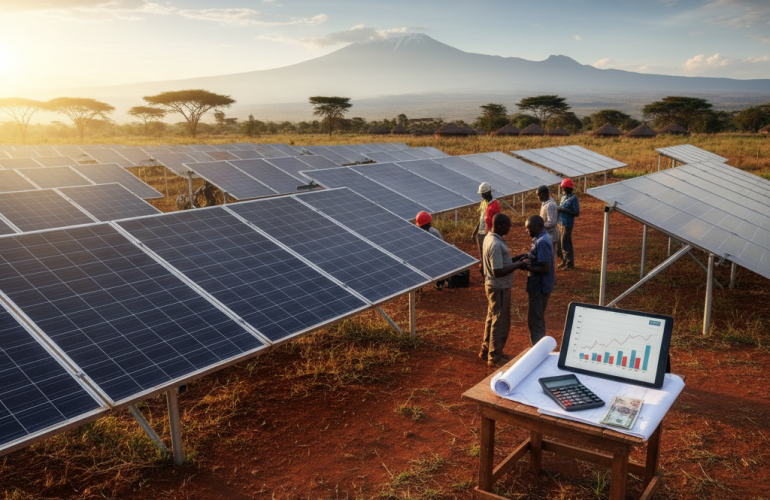
To reduce diesel use in Kenya, use solar to lower generator runtime while retaining backup capacity. During daylight, solar panels can supply part of the facility’s demand. The generator remains available when solar output falls or demand exceeds the available generation.
Start integration by assessing the facility’s demand profile. Engineers review daytime consumption, generator operation, critical loads and demand changes, then design controls to coordinate solar and generator output. For a business with daytime production, solar can serve part of the operating load while the generator supports backup needs.
The control strategy matters. When demand falls, the system needs to adjust generation to prevent the diesel generator from continuing at minimal part-load. If the design includes battery storage, it can absorb surplus solar energy or supply power as demand changes, subject to system design and operating requirements.
A professional assessment should consider compatibility between the generator and proposed solar and storage equipment, the facility’s power quality needs, and how quickly the system must respond to changing conditions. These factors shape the transitions between solar generation, stored energy and generator supply, while maintaining service to critical equipment.
When assessing how to reduce diesel use in Kenya, compare the expected solar contribution with the facility’s actual operating pattern. A well-matched design coordinates generation, controls and backup requirements to reduce diesel dependence while retaining the generator for periods when it is needed.
Assess how a hybrid system would fit your facility’s operating profile, backup requirements and future demand. This gives you a practical basis for planning system performance while protecting the power supply your operations rely on.
Powerstack Energy Ltd delivers Commercial Solar EPC, Battery Energy Storage Systems, and Hybrid Inverters & PCS for projects that combine generation and storage. The right configuration depends on how your facility uses power and how the system needs to respond to changing demand. A project assessment can translate those requirements into a practical design for your site.
Contact Powerstack Energy Ltd to discuss options for a solar, storage and generator configuration aligned with your operational needs.
Frequently Asked Questions
How much diesel does a generator consume per kWh at different load levels?
There is no single fuel-consumption rate for every generator or load level. Calculate litres per kilowatt-hour by dividing measured diesel use by electricity generated over the same period. At low output, engine overhead is spread across fewer kilowatt-hours, which can increase fuel use per unit. Compare readings across load bands using fuel records and an output meter for your generator.
How can a professional help Kenyan businesses reduce diesel generator fuel consumption and operating costs?
An energy audit can analyse generator output, fuel records, operating hours and site demand to identify opportunities to reduce diesel use. The findings can inform a design that coordinates solar generation, battery storage and generator operation. Powerstack Africa Energy Ltd provides energy audits, Commercial Solar EPC, Battery Energy Storage Systems, and Hybrid Inverters & PCS. After commissioning, performance tracking helps compare actual operation with the project baseline. Contact Powerstack Africa Energy Ltd to request an assessment for your facility.
How do solar, battery storage, and hybrid systems compare with diesel generators in Kenya on lifetime cost?
Solar and battery storage add equipment that needs maintenance, but can reduce diesel use and generator runtime. Battery storage can handle light or variable loads and short peaks; a battery-free hybrid system was described as up to 60% cheaper than battery-operated off-grid systems.
What are the main operating costs of a diesel generator in Kenya?
Fuel is the largest lifetime cost, accounting for 70%-90%. Maintenance accounts for 5%-15% and spare parts for 2%-5%; fuel use, servicing and parts are the main ongoing costs.
What does diesel generator electricity cost per kWh in Kenya, including maintenance?
Diesel generator grid generation costs in Kenya are stated to be higher than 40 KES/kWh. Maintenance accounts for 5%-15% of a generator’s lifetime cost, but no separate maintenance-inclusive cost per kWh is provided.
What are the costs and payback periods for replacing a diesel generator with solar or grid power in Kenya?
Solar power production in Kenya is stated at approximately 0,15 KES/kWh, about 60% lower than diesel generator grid production costs, which are higher than 40 KES/kWh.