Factory solar can run equipment and heavy machinery, but the system must match each load’s power demand, operating schedule and starting current. Solar power for factories in Kenya suits sites with usable roof or ground space and electrical infrastructure that can safely integrate generation. You’re right to assess more than panel area: production shifts, daytime demand, motor loads and backup requirements shape whether a grid-tied system or battery storage fits your operation, and this guide explains how to assess site suitability and plan an installation around factory needs.
Key Takeaways
- Assess roof or ground space alongside production schedules and electrical infrastructure to establish whether your factory site can support solar.
- Size battery storage around the loads you need to support, their operating hours and the backup period your operations require.
- Match solar generation and power conversion to equipment demand, including the starting requirements of heavy machinery.
- Plan the system as an integrated project so solar, storage and factory electrical systems work together with production needs.
Commercial and industrial solar solutions in Kenya
Factory solar projects in Kenya should be designed around the facility’s electricity profile, existing infrastructure and storage needs. For installation, look for a provider that delivers commercial solar engineering, procurement and construction (EPC). Treat financing as a separate project consideration: review the proposed terms alongside the system scope and your facility’s operating requirements.
Commercial and Industrial Rooftop Solar
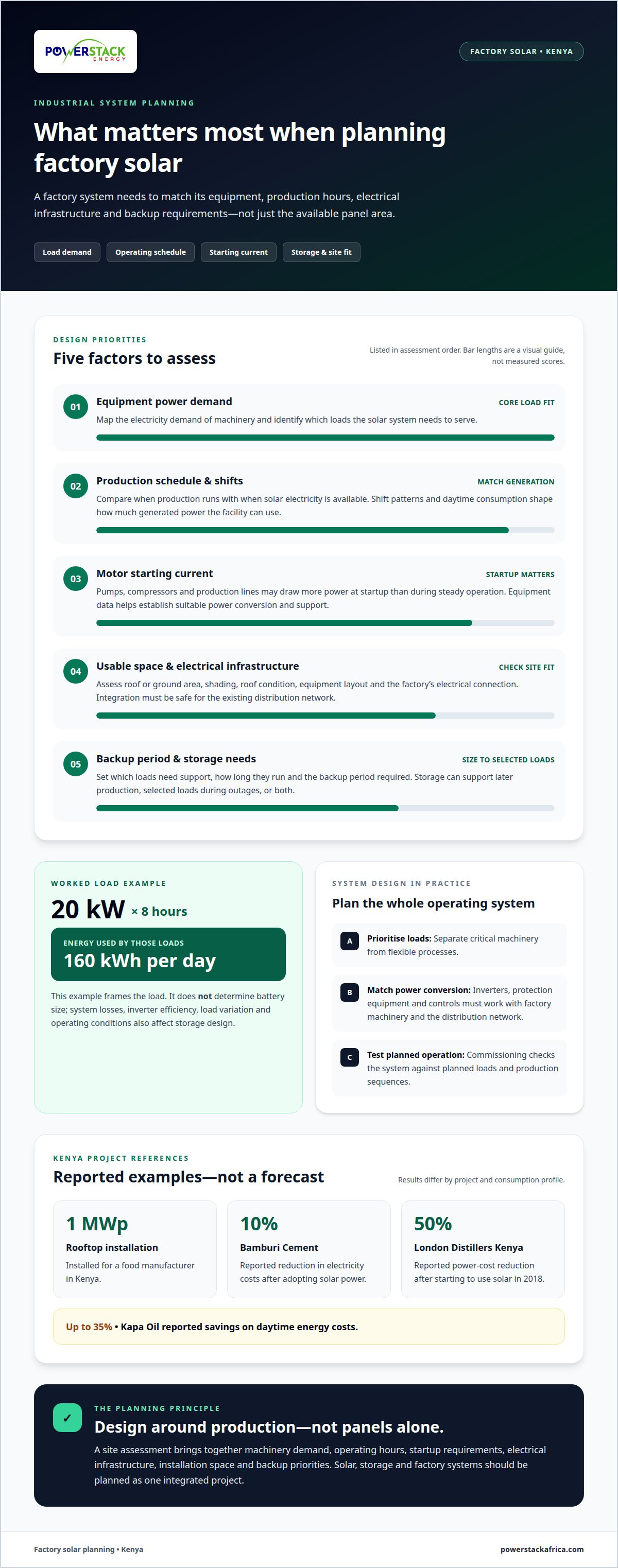
Rooftop solar converts suitable factory roof space into an on-site electricity source. A 1 MWp roof-mounted system was installed for a food manufacturer in Kenya, demonstrating the scale an industrial project can reach. Design considers usable roof area, shading, roof condition, equipment layout and electrical connection. The project team also plans panel placement and installation work around factory operations. A consumption profile helps establish how much solar electricity the facility can use during production hours.
Battery Storage for Business Projects
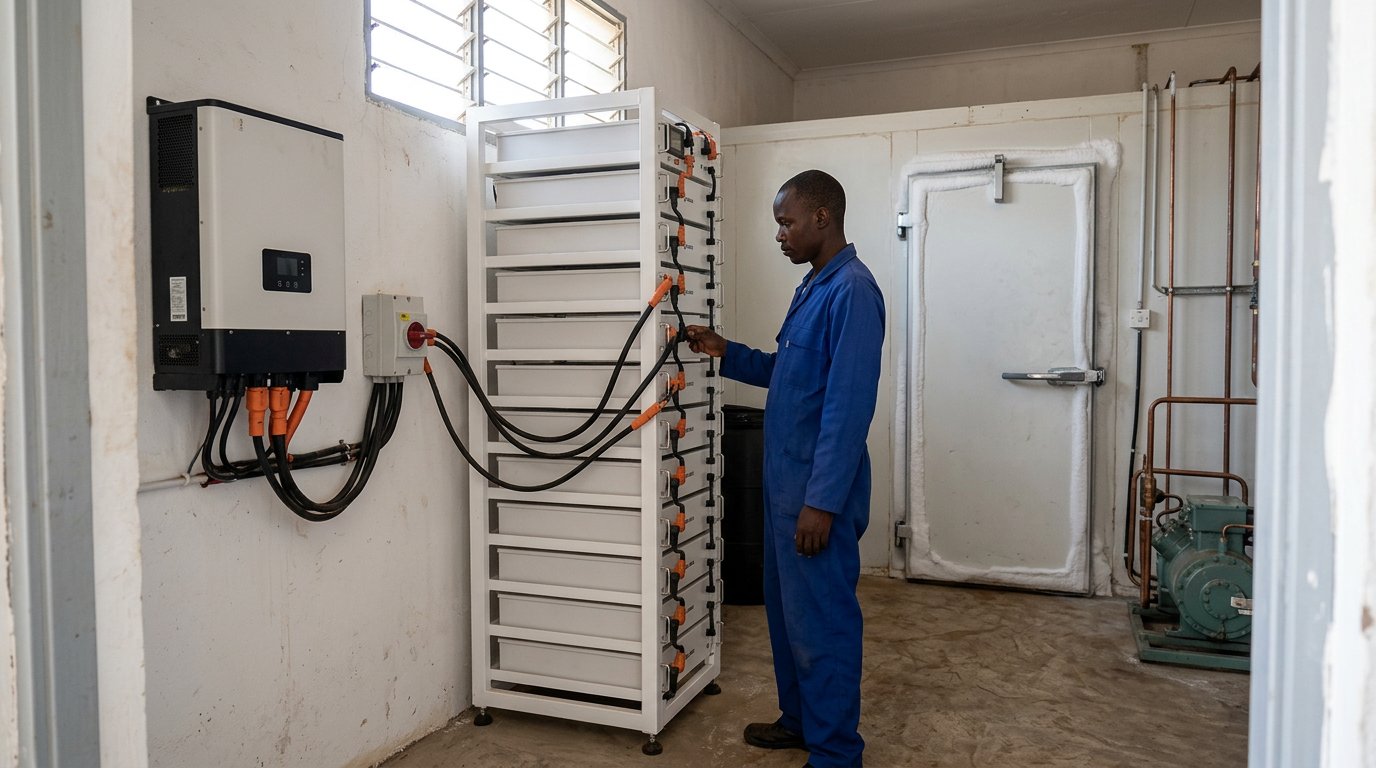
Battery storage holds surplus solar electricity for later use, including periods when production continues after generation falls. Capacity planning depends on the loads to support, their operating hours and the required backup period. For example, equipment drawing 20 kW for 8 hours consumes 160 kWh per day for those loads. That figure does not determine battery size. System losses, inverter efficiency, load variation and operating conditions also shape storage design.
Installer and Financing Options
Commercial solar installations involve engineering, procurement, construction and electrical integration. Financing is a separate consideration, so clarify how the proposed arrangement fits the project scope and your facility’s operating needs. Review the technical design and financing structure together, including how solar generation, storage and factory consumption align. This gives decision-makers a clearer basis for assessing the project as an operational investment.
Factory examples provide context, not a forecast for every site. Bamburi Cement reported a 10% reduction in electricity costs after adopting solar power. London Distillers Kenya reported cutting power costs by 50% after starting to use solar in 2018, while Kapa Oil reported savings of up to 35% of daytime energy costs. Each result reflects a different project and consumption profile.
Are LiFePO4 batteries suitable for commercial solar storage?
Yes. LiFePO4 batteries are widely used in stationary energy storage because of their cycle-life and thermal characteristics. In a Kenyan factory, their role is to shift solar energy into periods when panels produce less, support selected loads during outages, or work alongside grid electricity and diesel generation. The right configuration depends on your operating schedule and backup priorities.
To estimate the solar share of your electricity consumption, compare expected solar generation with the facility’s load profile. A business using equipment at 20 kW for 8 hours consumes 160 kWh per day for those loads. That daily figure helps frame system sizing, but it does not determine the solar share by itself. Solar irradiation, system losses, inverter efficiency, load variation and the required backup period all affect the array and battery capacity.
In Kenya, solar can reduce reliance on grid electricity during sunny operating hours, while batteries can provide stored energy later. A diesel generator offers another source of power, depending on the factory’s backup strategy and when fuel-based generation is needed. Compare each source against production schedules, critical loads and the desired continuity of operations.
Commercial storage can be configured for solar self-consumption, backup, or both. Battery performance depends on cell design, battery management, operating temperature, depth of discharge, charging conditions and installation environment. Assess usable capacity, power rating, temperature range, warranty conditions and system compatibility. LiFePO4 is a renewable energy storage option, but maintenance planning and operating conditions still matter for performance.
Kenya’s Energy Act No. 1 of 2019 recognises renewable energy as a potential source of income and employment, and as a way to diversify electricity supply and generation. The Finance Act No. 8 of 2021 amended the VAT Act to exempt specialised solar and wind energy equipment from taxation. Kenya’s 2022 Net-Metering Regulations require entities producing over 1 MW of solar electricity to sign PPAs with Kenya Power. These provisions inform commercial project planning; feed-in arrangements and incentives depend on the applicable framework and project configuration.
Can solar power run factory equipment and heavy machinery?
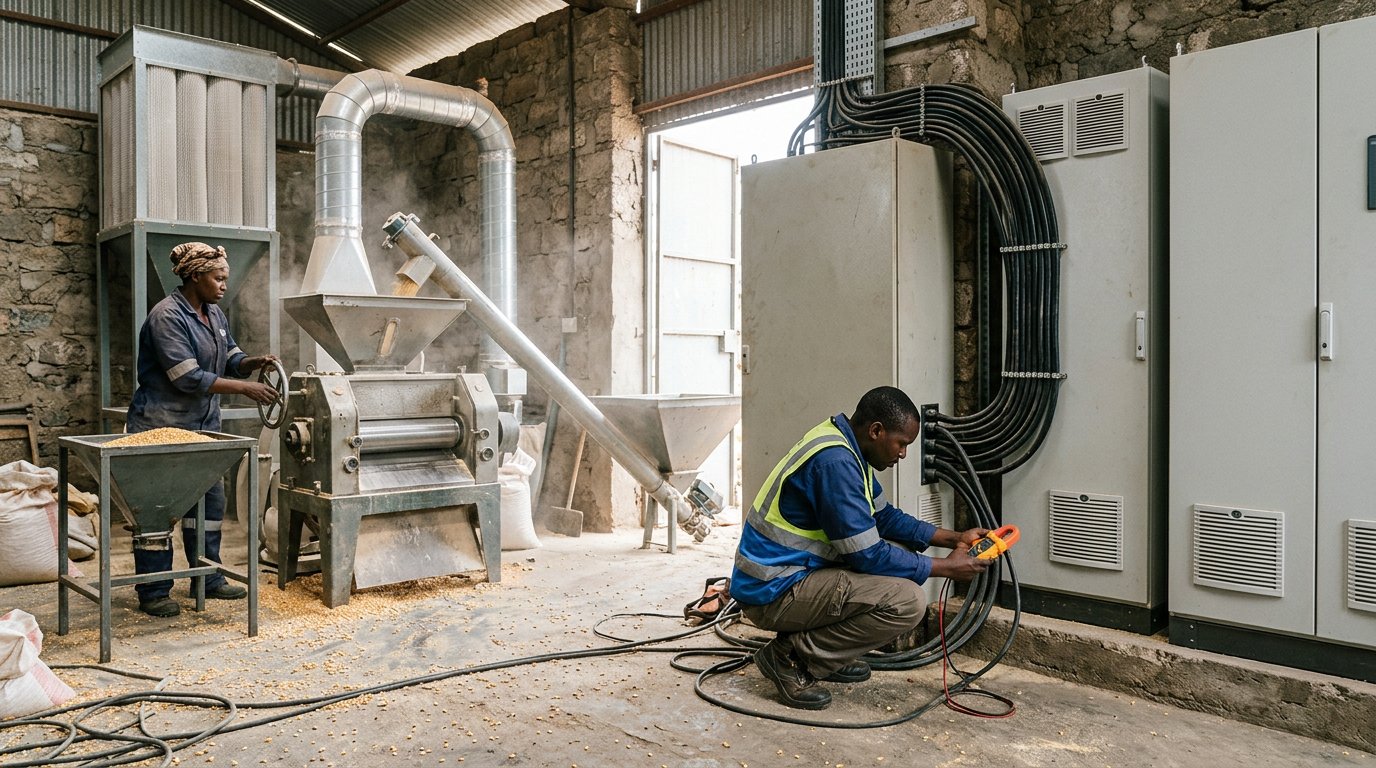
Yes. Solar can power factory machinery when the system is designed for both running demand and motor-starting current. Pumps, compressors and production lines may draw more power at startup than during steady operation. Engineers assess equipment data and production schedules to determine which machinery can run on solar and which needs grid or battery support.
Planning solar power for factories in Kenya means matching generation and conversion equipment to the facility’s electrical loads. A practical design distinguishes priority equipment from flexible processes. Critical machinery can receive a dedicated supply, while flexible operations can run when solar generation is available. This aligns the system with production needs instead of treating every factory load alike.
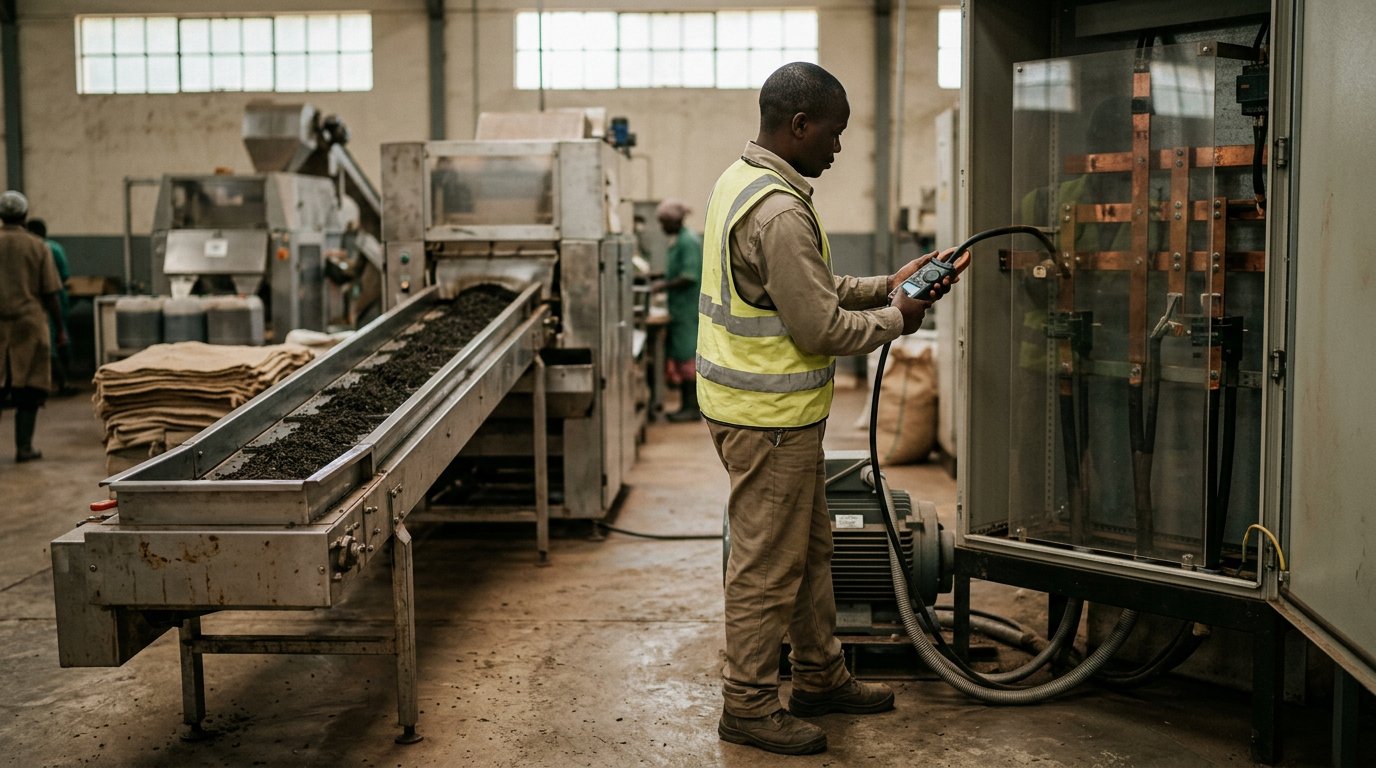
Reliable operation also depends on sound electrical integration. The inverter, protection equipment and controls must work with the factory’s distribution network and machinery. Commissioning tests the system against planned loads and production sequences. Routine maintenance covers panel condition, electrical connections, inverter performance and storage status, helping teams monitor equipment through regular checks.
Solar power for factories in Kenya should account for changes in production across shifts. A site assessment maps machinery demand, operating hours, electrical infrastructure and installation areas. Engineers use this information to determine which loads solar can serve directly, where storage can support operations, and how the system will work with the existing supply. The result is a site-specific design, not a standard package.
The key decision is whether solar should power selected equipment, support wider production loads, or work alongside grid supply and storage. A factory-specific assessment can translate those priorities into an installation scope and integration plan. For solar power for factories in Kenya, plan an industrial solar assessment around your machinery and operating requirements.
Solar power for factory equipment and heavy machinery
Solar can power factory machinery when the system is designed for both running demand and motor-starting current. Pumps, compressors and production lines may draw more power at startup than during steady operation. Engineers assess equipment data and production schedules to determine which machinery can run on solar and which needs grid or battery support.
A practical design separates priority loads from flexible ones. Critical equipment can receive a dedicated supply, while non-essential processes operate when solar generation is available. The installation plan considers usable roof or ground space, shading and connections to existing electrical infrastructure. Power conversion, protection and control systems should also be matched to the factory’s distribution network.
Reliable operation depends on more than panel output. Commissioning tests the system’s response against planned loads and production sequences. Scheduled maintenance covers panel condition, electrical connections, inverter performance and storage status. If the proposed configuration includes grid connection or electricity export, include a regulatory review in project planning.
The key decision is whether solar should power selected equipment, support wider production loads, or work alongside grid supply and storage. A site assessment maps machinery demand, operating periods, electrical infrastructure and available installation area into a project design. For a factory-specific assessment of equipment loads and system integration, plan an industrial solar assessment.
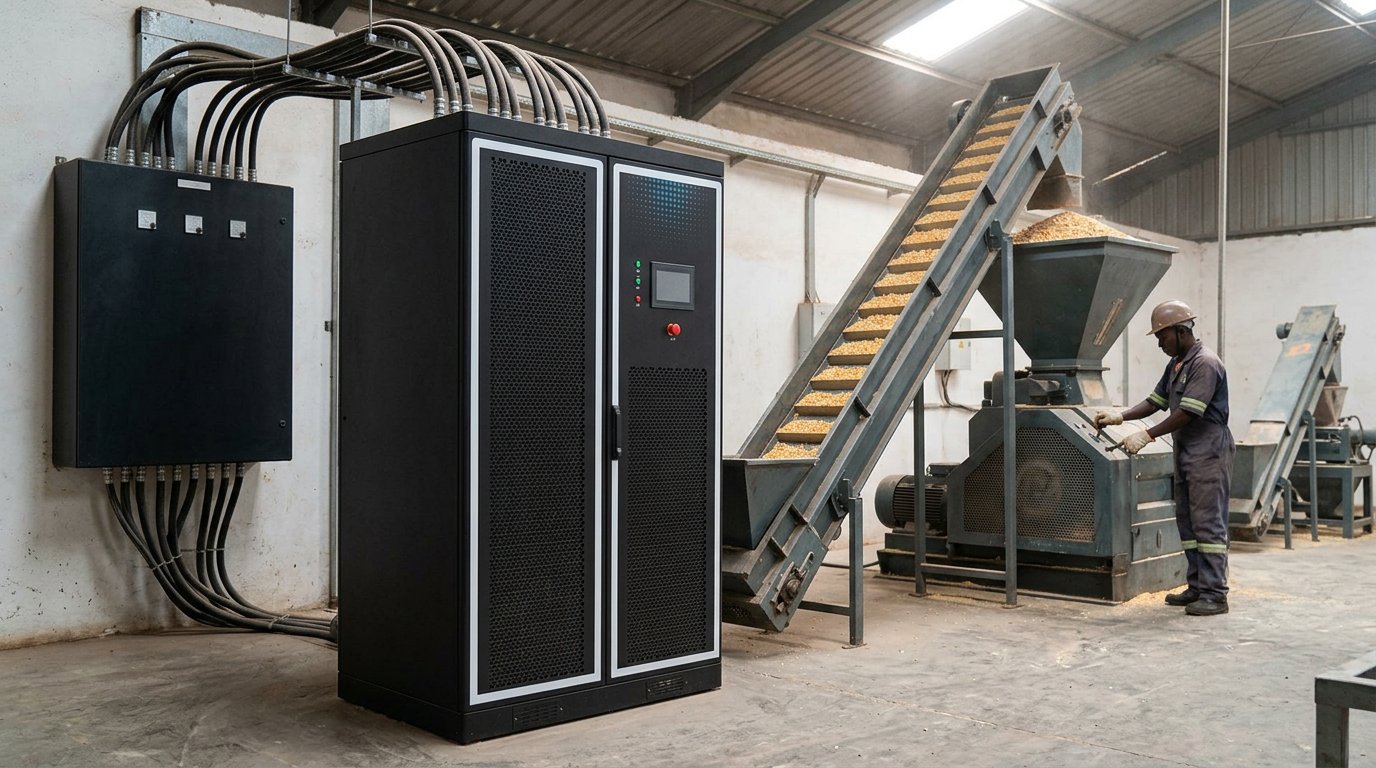
Powerstack Energy: Golen LEG-250K/500K-TT-B Commercial Power Conversion System (PCS)
The Golen LEG-250K/500K-TT-B Commercial Power Conversion System (PCS) is relevant when your factory design includes commercial power conversion alongside solar generation or battery storage. Powerstack Energy can support the wider project through Commercial Solar EPC, Battery Energy Storage Systems, and Hybrid Inverters & PCS.
Consider this solution when you need to coordinate conversion equipment with factory loads, solar supply and planned storage. The engineering design should account for your electrical infrastructure and operating requirements, ensuring the selected system fits the project rather than relying on a model name alone.
Contact Powerstack Energy to discuss your factory’s solar and storage requirements.
Set a clear direction for your factory’s energy project
Treat solar power for factories in Kenya as an operational decision, not just an equipment purchase. Define which production priorities the system should support, how it fits your electricity strategy and what role storage should play. Clear objectives help the project team develop a scope suited to your facility’s requirements.
Prepare to discuss your operating profile, electrical infrastructure and project priorities. Powerstack Energy Ltd can turn these requirements into a project scope through Commercial Solar EPC, Battery Energy Storage Systems and Hybrid Inverters & PCS. Start with a discussion about how these services can support your factory’s intended operation.
Contact Powerstack Energy Ltd to discuss the next step for your factory. A defined project objective can help move your energy plan forward with purpose.
Frequently Asked Questions
Is my site suitable for a solar power system?
Your site may suit solar if it has usable roof or ground space, safe electrical integration and a load profile that can use the generated power. A technical assessment considers roof condition, shading, drainage, installation access and factory operating patterns. For example, obstructions on a roof may make another available area a better option. The assessment should also consider how installation can proceed alongside ongoing production.
Can I sell my solar electricity back to the electricity grid?
Grid export may be possible, but it depends on the applicable regulatory framework and project configuration. Kenya’s 2022 Net-Metering Regulations require entities producing over 1 MW of solar electricity to sign PPAs with Kenya Power. A project intended to export electricity therefore needs to account for this requirement during planning. A grid-tied design can also prioritize on-site use rather than treating export as its main purpose.
How Large Should a Commercial Solar System Be?
Size the system according to how much electricity your facility can use during solar generation, not roof area alone. A factory with daytime production may use more solar directly than one whose largest loads operate outside daylight hours. The design should also consider unused generation, grid interaction and whether batteries are included. These factors guide capacity selection without assuming every site needs the same system.
How much of my energy needs can you supply with solar power?
The solar share depends on generation during operating hours and how closely it matches consumption. A continuous-process facility, for example, may use a different share of its solar output directly from a factory operating mainly during daylight. Engineers can model production schedules, load variation and storage strategy to estimate the contribution. Treat that estimate as specific to your facility, not a standard percentage for Kenyan factories.
How much solar capacity does a commercial building need?
There is no single capacity for every commercial building. A warehouse with lighting and ventilation has a different demand profile from a factory running compressors or process lines. System design relates building demand to available installation space, expected solar production and the electrical system’s operating limits. A facility with limited roof area, for example, may need a different generation plan from one with more usable space.
What Should a Commercial Solar Quotation Include?
A useful quotation defines the project scope, proposed system configuration, equipment, installation work and connection to your existing electrical infrastructure. It should explain how the design fits your operating profile and set out commissioning and maintenance responsibilities. Request a BOQ, or bill of quantities, listing the materials and work required. Clear assumptions and exclusions help technical and procurement teams assess the proposal consistently.