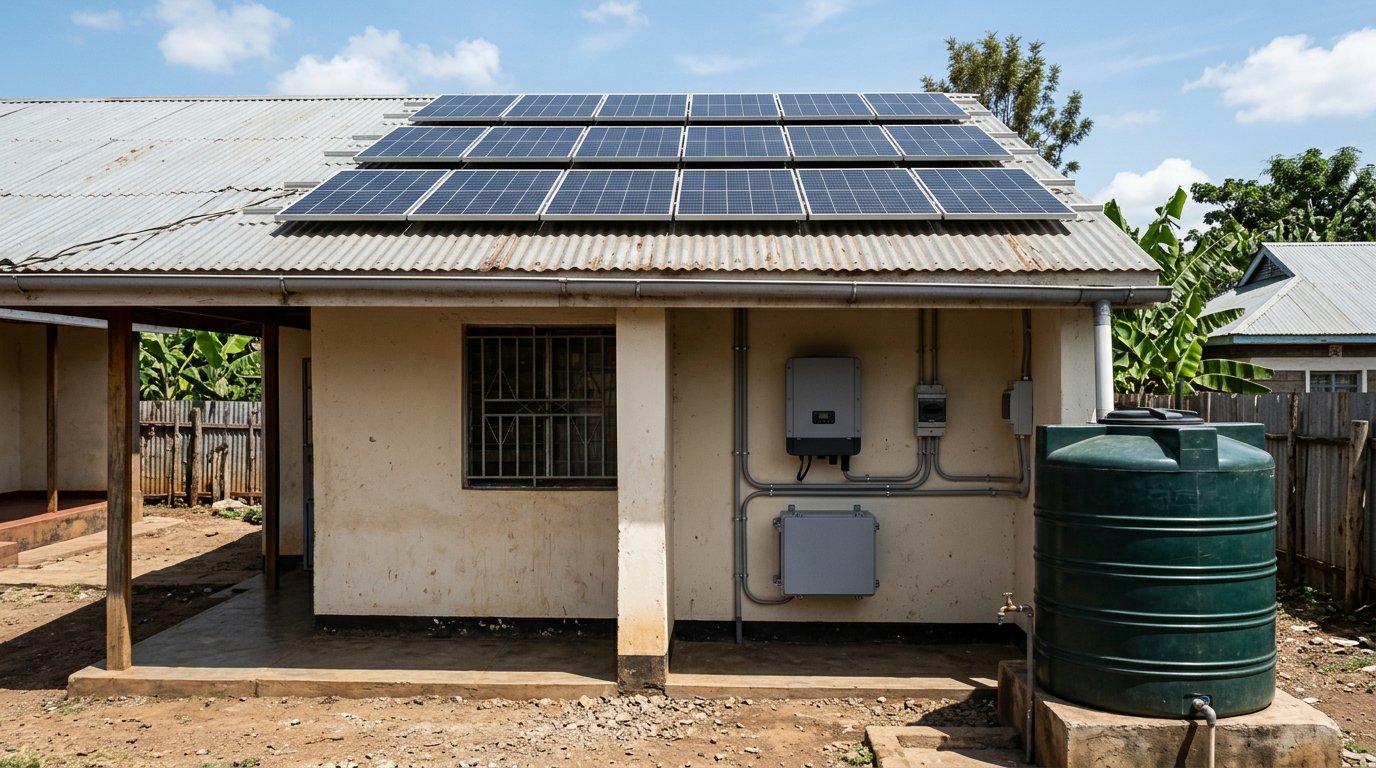
Residential solar installation in Kenya typically combines photovoltaic panels, a solar inverter, electrical protection and control equipment, and, when backup is needed, battery storage. Panels generate direct-current electricity, which the inverter converts into alternating current for household appliances.
The effect on your electricity bill depends on system capacity, appliance demand, how much electricity you use while the panels are producing, and whether you need stored energy after sunset. Solar can offset grid electricity, but the system design and your household’s usage determine how much power you continue to draw from the grid.
This guide explains what each component does, how system design matches household loads with solar generation and storage, and what affects potential bill savings. It also covers routine cleaning and annual maintenance in Kenya, and compares home systems with the larger solar installations used by commercial facilities.
Key Takeaways
- Match system design to your household’s electricity use and backup needs to set realistic expectations for grid reliance.
- Assess potential bill savings by considering when you use electricity, how much solar power the system can produce, and whether it includes battery storage.
- Understand how panels, a solar inverter, batteries and charge controllers work together, and why commissioning and routine maintenance matter.
- See how residential and commercial systems differ, and how an energy audit can guide system design for a home or facility.
What maintenance do solar systems require in Kenya?
Solar systems in Kenya need occasional panel cleaning and annual maintenance. A professional inspection checks mounting, wiring, connections, inverter operation and battery performance. Dirty panels can lose up to 30% of their efficiency, so cleaning helps maintain generation.
Component selection affects system performance and service life. Choose panels, inverters and batteries sized to household demand, backup needs and the installation design. Warranty terms vary by product, so check the manufacturer’s documentation when comparing panels and inverters. The battery’s operating requirements should also inform the maintenance plan.
System components are selected to suit household loads, expected solar production, backup duration and equipment compatibility. The inverter must match the panels and electrical demand, while battery capacity should reflect which appliances need backup. No single panel or battery configuration suits every Kenyan home. For guidance on sizing and evaluating home solar battery storage in Kenya, consider night-time demand, usable capacity and the backup duration required.
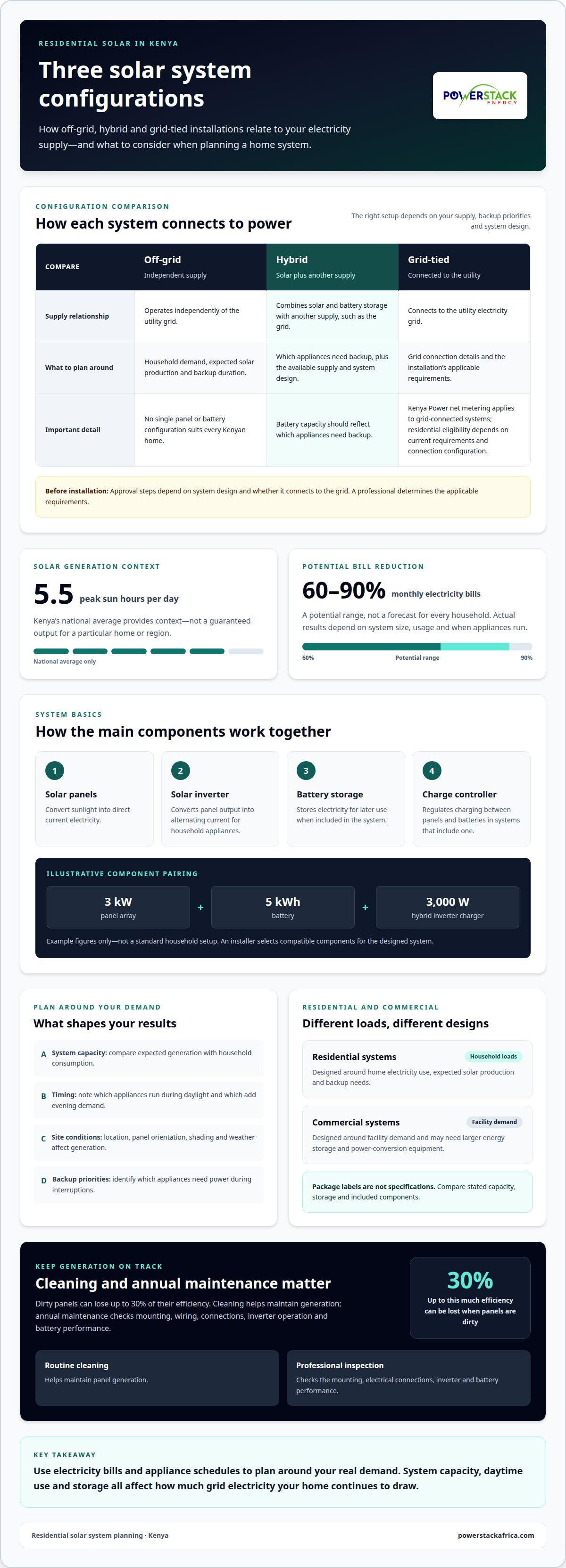
An off-grid system operates independently of the utility grid. A hybrid solar system for homes in Kenya combines solar and battery storage with another supply, such as the grid. A grid-tied installation connects to the utility grid. The right configuration depends on your supply, backup priorities and system design.
Installation rules and approval steps depend on the system design and whether it connects to the grid. A professional determines the applicable requirements before installation. Kenya Power net metering applies to grid-connected systems, and residential eligibility depends on current requirements and the connection configuration.
Generation varies with location, panel orientation, shading, weather and system capacity. Kenya receives an average of 5.5 peak sun hours per day. That national average provides context, not a guaranteed output for a particular home or region.
Starter, medium and maxi are package labels, not technical specifications. Compare the stated capacity, storage and included components. Residential systems serve household loads, while commercial systems are designed around facility demand and may need larger energy storage and power-conversion equipment.
How much does solar save on electricity bills for homes in Kenya?
Solar can reduce a household’s electricity bill by supplying some of its demand through on-site generation. The savings depend on system size, household usage and when appliances operate.
Electricity Bill Savings
Solar installations in Kenya can reduce monthly electricity bills by 60-90%, depending on system size and usage. Treat this as potential savings, not a forecast for every household. Actual results depend on how much electricity the system generates and how much your home uses directly.
Compare household consumption with expected generation to assess potential savings. Note which appliances run during daylight and which contribute to evening demand. This helps estimate how much grid electricity solar may offset and whether storage could support later use.
Reducing or Eliminating Bills
Panels reduce grid consumption when their output powers household appliances. A hybrid solar system with batteries can store surplus generation for later use. Inverters convert panel output into electricity suitable for the home. System capacity and usage patterns determine how much demand solar can serve.
Eliminating a bill depends on whether solar supplies the home’s full demand and how the system connects to the grid. If the household draws grid electricity when generation is insufficient, a bill may remain. A system serving selected appliances offsets less consumption than one designed for broader household loads.
Use electricity bills and appliance schedules to map demand throughout the day. This gives a solar company practical information for designing around your household’s actual requirements rather than relying on a generic package.
Outage support and bill reduction are separate design objectives. Battery storage can supply selected loads during interruptions, while panel capacity and daytime consumption affect grid savings. Consider both priorities rather than assuming greater capacity will automatically eliminate bills.
What Is Included in a Home Solar System?
A home solar system combines generation, conversion, storage and control equipment. Its configuration determines which household loads receive solar electricity and when stored power is available.
Solar System Components
Solar panels convert sunlight into direct-current electricity. A solar inverter changes that output into alternating current for household circuits. Batteries store electricity for later use, while a charge controller regulates charging between panels and batteries in systems that include one.
For example, a 3 kW panel array may pair with a 5 kWh battery and a 3,000 W hybrid inverter charger. These figures describe an example, not a standard household setup. The installer selects compatible components based on the designed system.
Installation and Commissioning
Installation involves mounting panels, connecting system components and integrating the equipment with household circuits. The installer also considers how the array connects to the inverter, storage and charge controls. Correct configuration allows each component to perform its intended role.
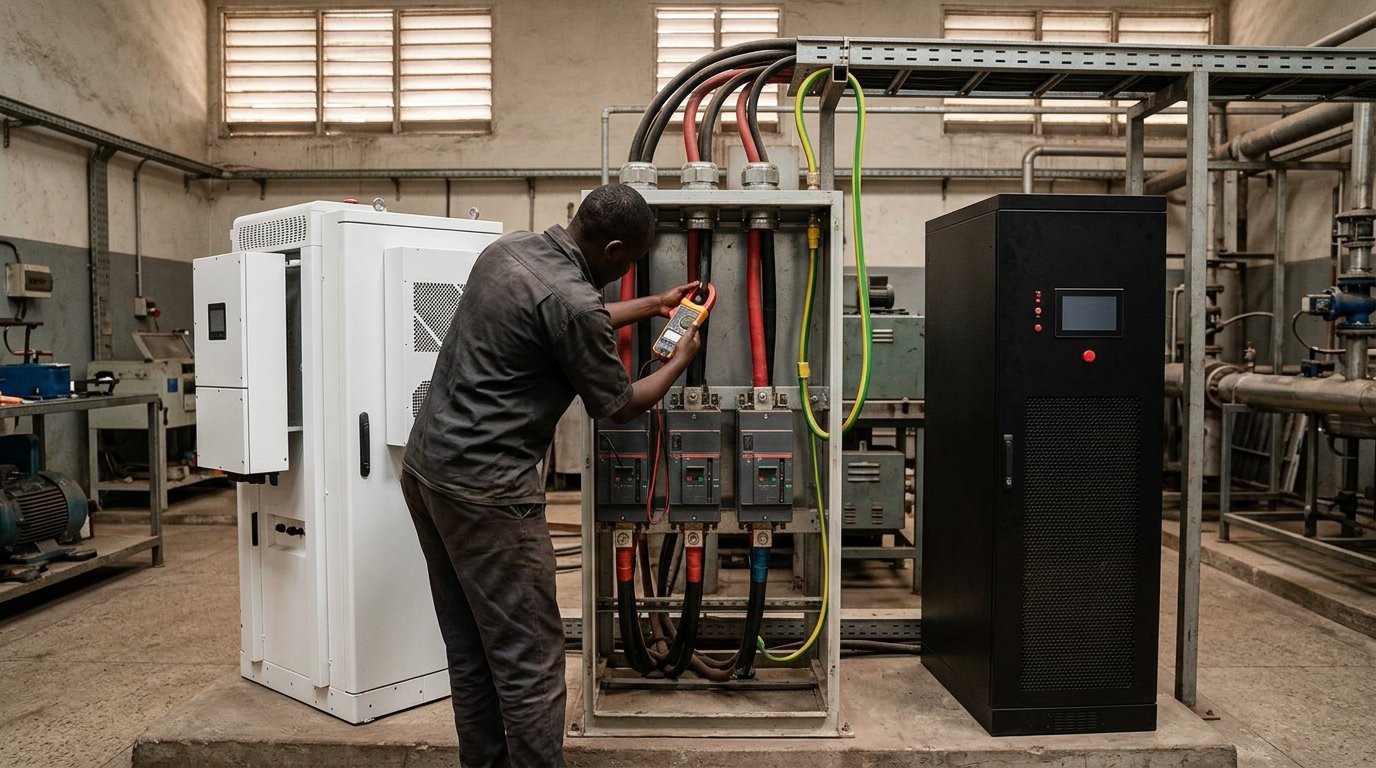
During commissioning, the installer tests electrical connections, inverter operation and battery charging. These checks assess system response and confirm that the intended circuits receive power. The installer also records initial operating information, which can help identify performance changes during later inspections.
Panel Brands and Lifespan
Solar panel brands listed for Kenyan installations include Jinko, JA Solar, Longi, Canadian Solar, Trina and SunPower. The listed panels have lifespans exceeding 25 years. Selection should consider panel specifications and compatibility with the planned array, inverter and installation conditions.
System performance depends on how much generated electricity the home uses and how much grid electricity it displaces. Financial modeling can assess projected energy use and grid reliance under different operating assumptions, without assuming the same results for every installation.
Residential and commercial solar installations
Residential and commercial solar installations start with different load profiles. A home system is designed around household appliances, occupancy patterns and backup priorities. A business system must account for operating schedules, equipment demand and the effect of interruptions on operations.
An on-site energy audit gives system design a clear starting point. It reviews electricity bills, major loads, equipment schedules and available installation space. At home, evening appliance use can shape battery needs. For a business, daytime production demand may influence solar capacity and energy storage.
System design matches solar generation to measured demand. The installer considers the panels, inverter, batteries and how they connect to the site’s electricity supply. A grid-tied installation can supplement utility power, while a hybrid system can include battery storage for selected loads. Each design should reflect the site’s operating requirements.
- The audit records electricity use and identifies priority loads.
- The design sets system capacity and selects compatible components.
- Installation connects the equipment and commissioning tests its operation.
For homeowners, the central decision is how much household demand solar should serve and whether backup is needed. Businesses may need to coordinate solar with larger or variable loads, storage and existing power equipment. A home package is therefore not simply a smaller version of a commercial design.
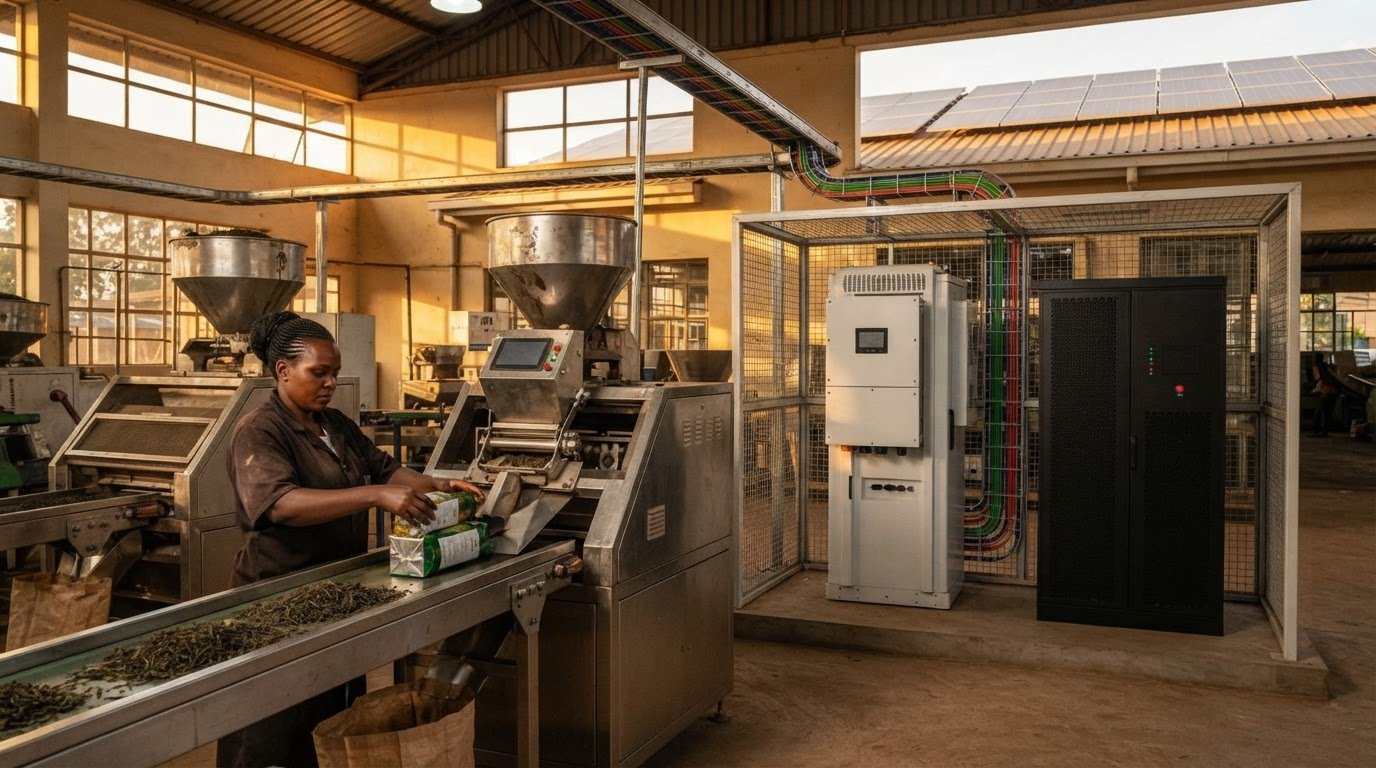
Solar energy solutions can serve homes, commercial facilities and agricultural operations across Kenya, but each site needs an assessment suited to its requirements. Base the system on actual consumption, not a generic package label. This helps align solar generation, storage and electricity use with the site’s needs.
Powerstack Energy: Residential Solar Installation
Powerstack Energy Ltd provides residential solar installation for Kenyan homes, with system design aligned to household demand, backup priorities and site conditions. If you are planning a new system, replacing an existing setup or adding storage, start by deciding how solar should work alongside your current electricity supply.
The design process can account for your appliances, usage patterns and need for stored power. These details guide the configuration of panels, a solar inverter and batteries. An energy audit can assess electricity use and inform system planning, helping ensure the components work together around your home’s actual requirements.
Installation needs also vary by property. Roof space, shading, existing electrical arrangements and the loads you want supplied all influence the design. Discussing these details helps define the system scope, including which circuits need backup and how you expect to use solar power during the day.
Powerstack Energy Ltd also provides Commercial Solar EPC, Battery Energy Storage Systems, and Hybrid Inverters & PCS. These offerings address business needs for solar generation, storage or power-conversion equipment. A household project is different: its system is planned around residential loads rather than commercial operations.
Consider professional installation when you want a system designed for your household, need battery storage integrated or are assessing how solar could fit your electricity use. Clear information about appliances, usage patterns and backup priorities gives the design process a practical starting point without assuming one configuration suits every home.
Contact Powerstack Energy to discuss your residential solar installation requirements and the system design that fits your home. Powerstack Energy Ltd’s team brings experience in residential solar design and installation across Kenya.
Frequently Asked Questions
Why Install Solar Energy?
Solar can reduce reliance on grid electricity and provide another source during supply interruptions. Its value also depends on how well generation matches your household’s daytime activities. If you work from home or run appliances during daylight, solar can serve some of that demand directly. Depending on the system design, storage can support selected needs after sunset.
What’s in it for you?
Plan solar around your household’s priorities, such as keeping essential appliances running or drawing less electricity from the grid. Start by identifying which circuits need backup and when your household uses the most power. This helps focus system design on your needs rather than adding capacity for loads you do not need to support.
What does residential solar installation cost in Kenya in 2026?
There is no standard figure for every Kenyan home. The installation quote depends on system configuration, installation requirements and project location. Panel capacity, inverter type and battery storage also shape the system specification. A home prioritising backup for selected circuits needs a different design from one aiming to supply a wider range of household loads.
What size solar system does a typical Kenyan home need?
System size depends on the appliances you want to supply, when you use them and whether you need backup. A household running a fridge, lights and a water pump has different demand from one that also uses electric cooking or other high-load appliances. A professional sizes the system based on combined demand and your supply priorities.
What steps does a professional take to install residential solar in Kenya?
The professional process follows five stages: site survey, load analysis, ROI model, installation and maintenance. The survey assesses the property and installation conditions. Load analysis maps household demand, and the ROI model assesses expected financial outcomes. Installation puts the designed system in place. Maintenance supports ongoing performance through planned inspection and servicing.
How much can homeowners in Kenya save with solar, and what is the payback period?
A family in Machakos County saved 70% on electricity bills in the first year after switching to solar. Payback is the time required for accumulated bill savings to equal the system investment. It depends on the installation specification and the household’s actual savings over time. Your usage patterns affect those savings, so the Machakos result is an example, not a standard outcome.