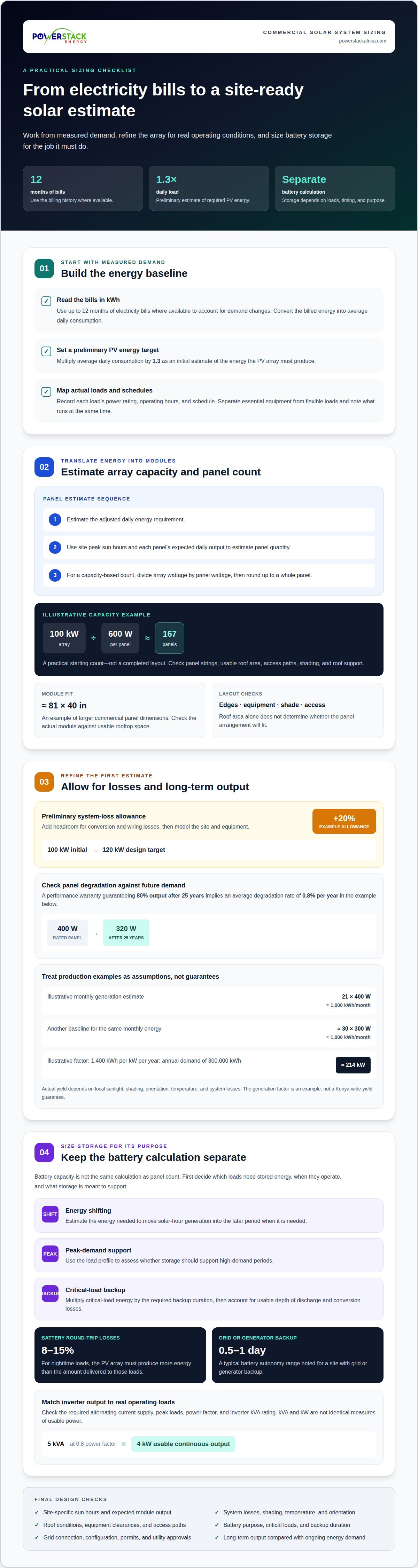
Commercial solar system sizing starts with your electricity use, not an assumed panel count: convert the kWh on your bills into average daily consumption, then use 1.3 times that daily load as a preliminary estimate of the energy the PV array must produce. Use 12 months of bills where available to account for changes in demand, and estimate panel numbers by dividing the adjusted daily energy requirement by the site’s peak sun hours and each panel’s expected daily output. Refine the estimate for system losses, roof conditions, shading, and panel degradation so the array reflects your site in Kenya rather than a generic example. Battery capacity requires a separate calculation: identify which loads need stored energy, when they operate, and whether storage is intended to shift energy use, reduce peak demand, or provide backup. The steps that follow show how to work from your bills to an initial panel estimate, account for system performance over time, and size storage around your operational requirements.
Key Takeaways
- Translate your site’s energy demand into an initial array capacity, then convert that capacity into a practical panel count.
- Allow for operating losses and gradual panel degradation when estimating long-term solar output.
- Size battery storage around its job: shifting energy, managing peak demand, or supporting critical loads during an outage.
- Use billing history to identify consumption patterns and establish a sound basis for system design.
How many solar panels do I need?
Estimate the panel count from the target array capacity and selected module rating, then check the roof layout and electrical design. For commercial solar system sizing in Kenya, include the project’s grid connection and configuration when identifying applicable permits and utility approvals.
-
Calculate Array Capacity from Daily Demand
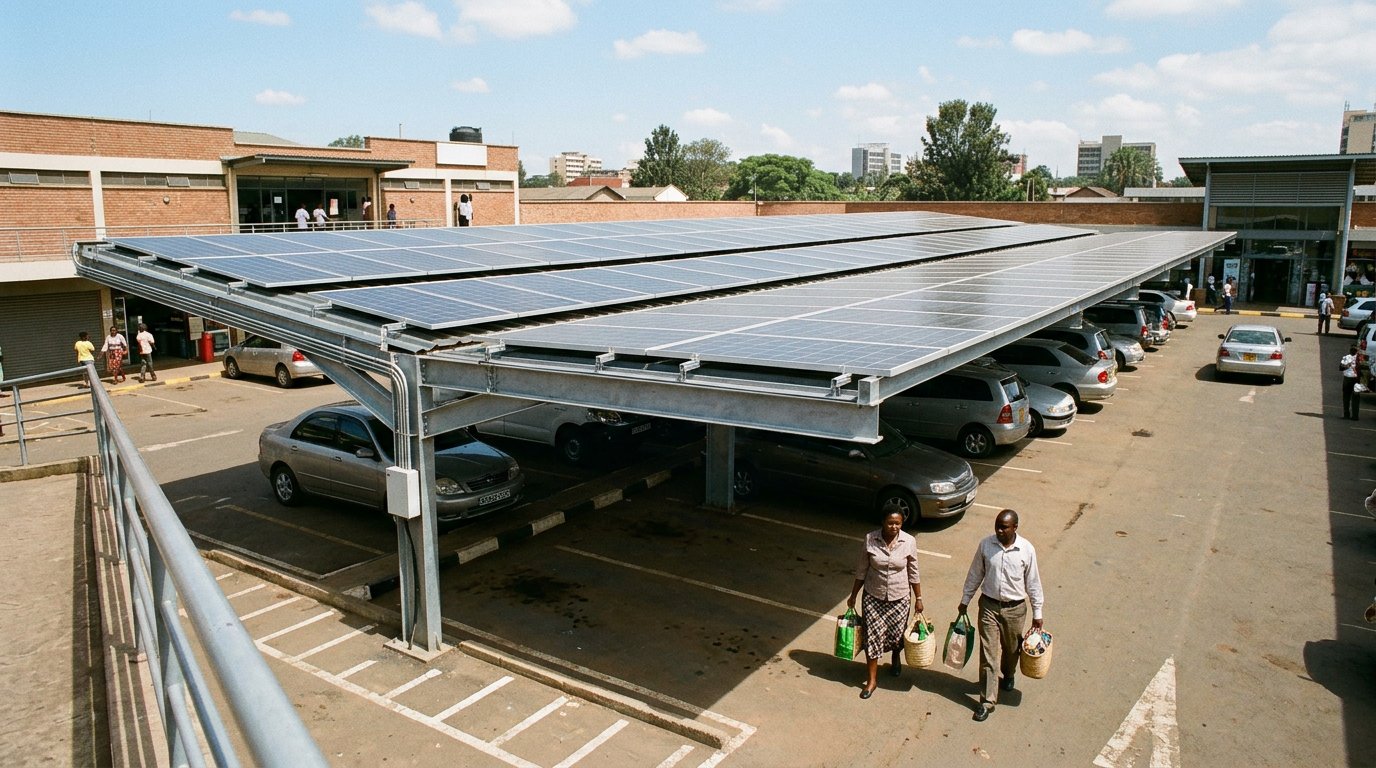
Translate your required PV capacity into a module count by dividing array wattage by panel wattage, then round up to a whole panel. For example, a 100 kW array using 600 W panels requires approximately 167 panels. This gives a practical starting count, not a completed layout. Check that panel strings and available roof area can accommodate the resulting arrangement without obstructing access.
- Check the actual module dimensions against usable rooftop space. A larger commercial panel may measure around 81 inches by 40 inches, so the total roof area alone does not determine fit. Account for roof edges, equipment, shading, and access paths in the layout. Confirm the roof can support the installed equipment before finalizing the panel arrangement for commercial solar system sizing.
-
Select Inverter Capacity and DC/AC Ratio
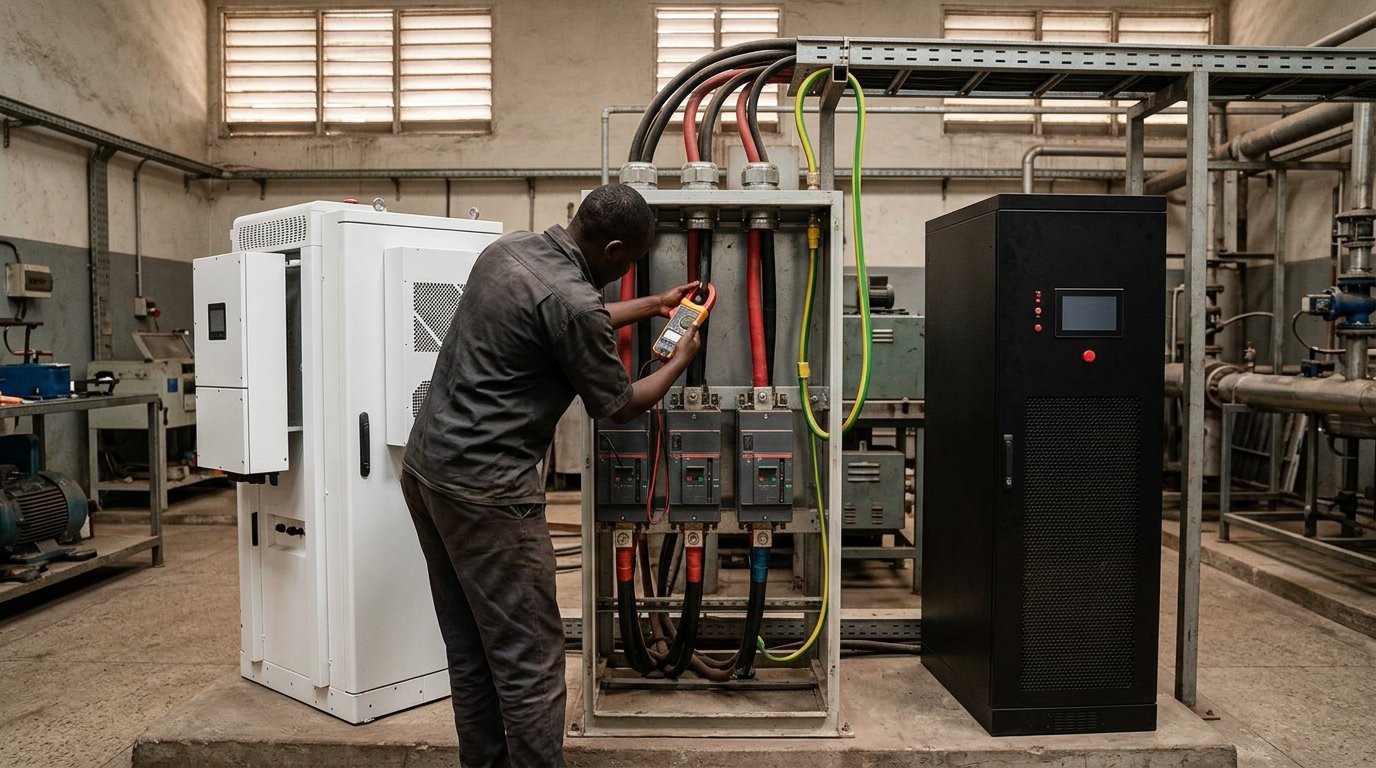
Set inverter output against the facility’s required alternating-current supply and its peak operating loads. Check power factor as well as the inverter’s kVA rating: a 5 kVA inverter operating at a 0.8 power factor delivers 4 kW of usable continuous output. This distinction matters when matching equipment to actual loads, since kVA and kW do not represent identical usable power.
- Define battery autonomy by the loads that must remain supported when solar generation is unavailable. For a site with grid or generator backup, a typical battery autonomy range is 0.5 to 1 day. Use critical-load energy and the required duration to inform storage capacity, then assess usable battery output and reserve requirements. Keep this calculation separate from panel count; the two components serve different operating needs.
Accounting for system inefficiencies and panel degradation
- Add a loss allowance before fixing the installed array capacity. A preliminary design can add 20% headroom for system inefficiencies, including conversion and wiring losses. For example, if the initial calculation indicates 100 kW, applying that allowance gives a 120 kW design target. Treat this as an estimate, not a substitute for modelling the site’s operating conditions and equipment.
- Factor panel degradation into expected output over the system’s operating life. A performance warranty guaranteeing 80% output after 25 years implies an average degradation rate of 0.8% per year. In that example, a 400 W-rated panel would produce 320 watts by the end of its lifecycle. Compare the expected long-term output with the business’s continuing energy demand, not only first-year generation.
- Estimate panel quantities from monthly electricity use and expected production. One illustrative calculation estimates that 21 commercial rooftop panels rated at 400 W can generate 1,000 kWh monthly. Another baseline estimates about 30 standard 300 W panels for the same monthly energy. The different counts show why panel rating and production assumptions matter. Use the selected module’s capacity and a site-specific yield estimate to determine the required quantity.
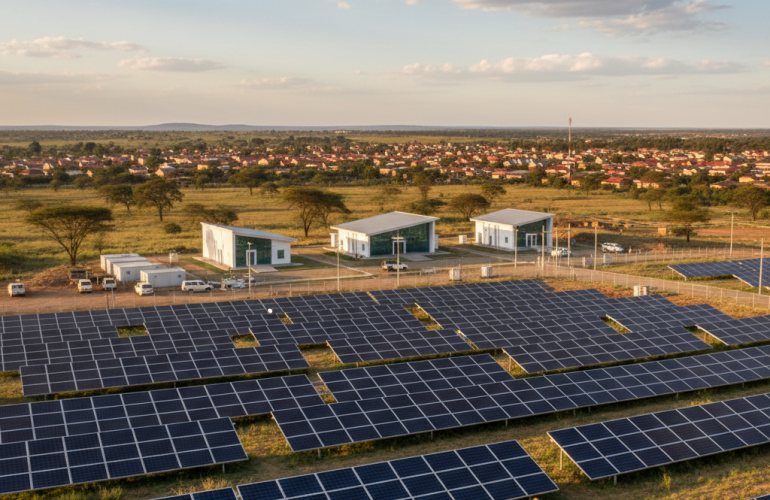
- Apply a generation factor to connect annual demand with PV capacity. An illustrative commercial factor of 1,400 kWh per kW per year gives roughly 214 kW for annual consumption of 300,000 kWh. This factor is an example, not a Kenya-wide yield guarantee. Local sunlight, shading, orientation, temperature, and system losses all affect how much solar power installed panels generate.
- Account for operating conditions and the timing of demand. Excessive heat can reduce panel efficiency, while panels still generate electricity in winter because sunlight exposure drives output. If time-of-use rates rise around 5-9PM, west-facing panels can produce more power later in the day. Compare that generation profile with your facility’s load before choosing panel orientation.
Sizing batteries for energy shifting, peak demand or backup
A grid-tied system serves loads alongside the utility, while a hybrid system adds battery storage. An off-grid system relies on on-site generation and storage. Battery capacity, inverter rating, and installation design determine system specifications. Calculate the system size from billed energy and load timing, then account for losses, solar output, and backup requirements.
-
Audit Loads and Calculate Daily Energy
Record each commercial load, its power rating, operating hours, and schedule. Multiply each load’s power by its daily operating hours, then add the results to estimate daily energy demand. Separate essential equipment from flexible loads, and note which operations run at the same time. This load profile helps establish whether the design should target full or partial energy offset, peak-demand support, or backup for critical equipment.
-
Include System Losses in Load Estimates
Adjust the energy requirement for losses between generation, storage, and consumption. Battery round-trip losses for nighttime loads are estimated at 8 to 15 percent, so the PV array must produce more than the energy delivered to those loads. Include inverter conversion and site conditions in the design. Shading, for example, reduces solar output and can affect the expected contribution from the array.
- Match battery capacity to its operating purpose. For energy shifting, estimate the energy needed to move from solar hours into the intended later period. For backup, multiply critical-load energy by the required backup duration, then account for usable depth of discharge and conversion losses. A business with 50 kW of critical loads for four hours needs approximately 200 kWh of usable battery energy before losses and reserve capacity.
- Compare annual demand with expected solar generation using a location-specific production factor and peak sun hours. A peak sun hour represents sunlight at an average irradiance of 1,000 watts per square metre for one hour. Use the site’s expected solar output, then account for roof orientation, shading, and seasonal conditions. Do not assume a single annual factor applies equally to every Kenyan site.
- Set the energy-offset target before finalizing the solar array and storage design. A full offset aims to match annual solar generation with annual consumption; a partial offset targets selected loads or a defined share of demand. Match battery output to the inverter rating and simultaneous load requirements. This ties the load audit, PV production estimate, and storage requirement to the system’s intended operating mode.
Using electricity bills to estimate average consumption
Use your electricity bills to establish an energy baseline before fixing the system size. Separate total consumption from the timing and operating conditions that shape how much solar energy the facility can use directly.
-
Review Business Electricity Consumption and Demand
Collect 12 months of electricity bills where possible, then record each billing period’s kWh and exact number of days. Divide the recorded energy by the period length to estimate average daily consumption. Compare monthly totals to identify seasonal changes, production shifts, or facility expansions. Bill amounts alone don’t show which equipment drives demand, so use consumption data rather than monetary totals for the energy estimate.
-
Assess Consumption Patterns
Map electricity use against operating hours, shifts, and production schedules. Note whether large loads run during daylight, after sunset, or across both periods. This timing shows how much solar generation can serve loads directly and whether stored energy must cover later operations. Monthly averages can hide short demand peaks, so review interval data when available.
- Build a load profile that connects electricity consumption to equipment and schedules. Record which machines run together and when demand rises. Compare those periods with available sunlight, since solar panels generate most of their energy during daylight. If the business operates overnight, distinguish energy that can be shifted to daylight from loads that need battery support. This separates total consumption from the share solar can serve directly.
- Translate the consumption baseline into an initial system size using expected site generation, not monthly kWh alone. Account for roof conditions, shading, and the hours loads can run during solar production. Where a battery is planned, estimate the energy it must charge during daylight and deliver later. A commercial energy audit can connect bill history, load schedules, and site conditions in one design assessment.
Powerstack Energy: Battery Energy Storage Systems
Powerstack Energy Ltd provides Battery Energy Storage Systems for businesses assessing whether storage can support energy shifting, peak-demand management, or backup for critical loads. The right capacity depends on the load profile, required operating duration, usable battery energy, and the system’s connection to solar generation and the grid.
For a wider project, Commercial Solar EPC and Hybrid Inverters & PCS can address generation and conversion requirements alongside battery integration. An Energy Audit can connect your electricity use and operating profile to the system design. These services are relevant when preliminary calculations need to become a coordinated commercial energy plan for accurate commercial solar system sizing.
Contact Powerstack Energy Ltd to discuss your commercial solar and storage requirements.
Turn Your Sizing Estimate into a Design
A preliminary calculation is a starting point, not the final project specification. Next, relate your commercial solar system sizing assumptions to the facility’s operating priorities, electrical configuration, and expected changes in demand. This gives the engineering team a clear basis for refining the design.
Powerstack Energy provides Commercial Solar EPC, Battery Energy Storage Systems, and Hybrid Inverters & PCS. Its team can bring generation, storage, and power conversion into one project scope, aligning system components with your operational requirements.
Before proceeding, define which business loads take priority, how solar generation should support daily operations, and what role storage should play. A clear brief focuses the design process and supports informed decisions about system configuration.
Contact Powerstack Energy for solar sizing help and take the next step toward a design grounded in your facility’s needs.
Frequently Asked Questions
Can I add more panels later?
Yes, if the original electrical design allows for expansion. Additional panels must match the inverter’s input limits, string configuration, and operating characteristics. Different panel models connected in the same string can produce uneven output. Before installation, confirm that the roof structure, available area, cabling, and protection equipment can accommodate the added array. Expansion may also require changes to inverter capacity or system controls.
How Large Should a Commercial Solar Battery Be?
Size the battery for the energy it must deliver and the required duration, not simply the facility’s total daily consumption. Separate critical loads from equipment that can remain on grid power, then account for usable battery energy and conversion losses. For load shifting, base capacity on the energy needed during the target period. For backup, consider the operating sequence of essential equipment.
How Much Power Can You Expect?
Expected output depends on the installed panel rating and the sunlight reaching the array. Roof orientation, shading, temperature, inverter conversion, and system limits also affect delivered energy. Distinguish instantaneous power, measured in kW, from energy generated over time, measured in kWh. A production estimate should reflect site and operating conditions, rather than assume panels produce their rated capacity continuously.
How big should the inverter be?
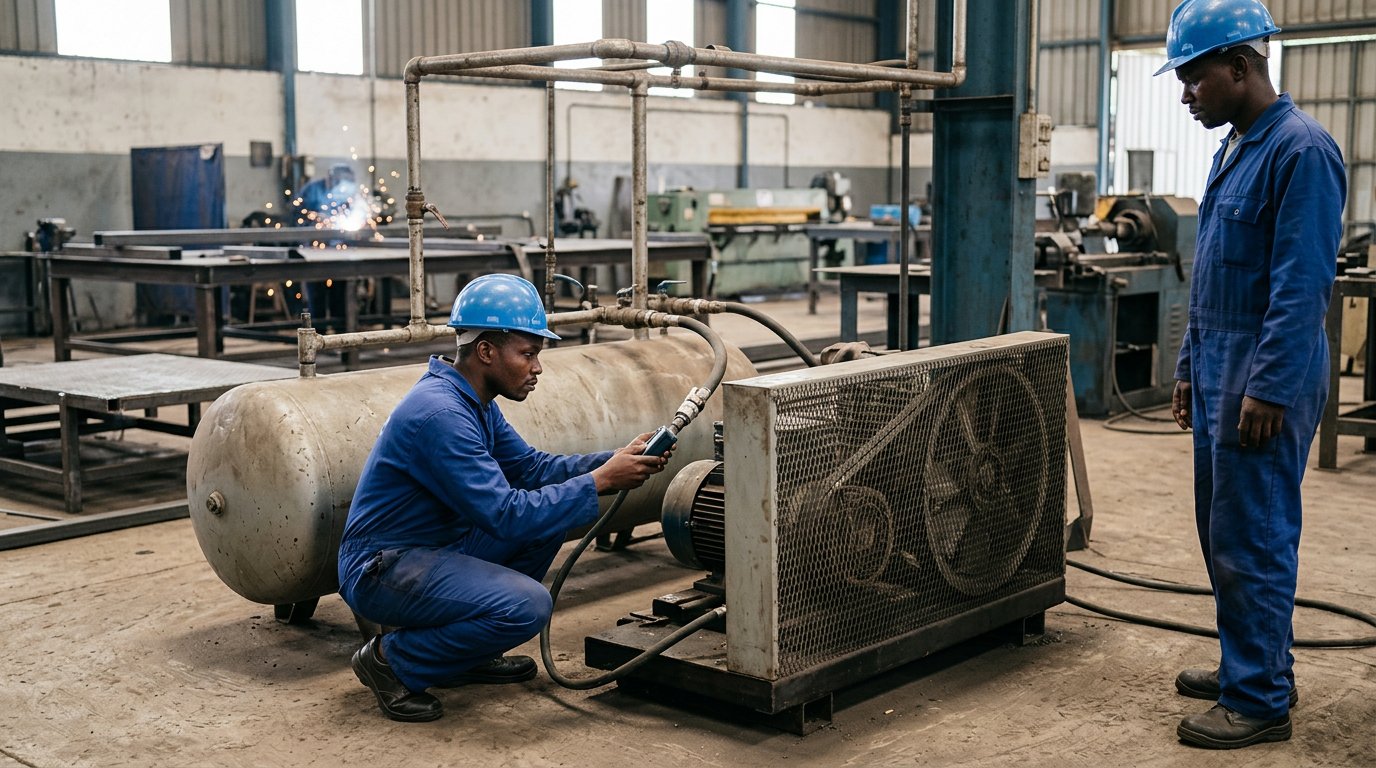
Base inverter capacity on the facility’s maximum simultaneous AC demand, not its monthly energy consumption. Account for starting surges from motors and compressors, along with the electrical supply configuration and power factor. The inverter must also suit the solar array and battery system. A load profile shows which equipment operates together and helps avoid sizing based only on connected-load ratings.
What Is the DC/AC Ratio?
The DC/AC ratio compares the solar array’s rated direct-current capacity with the inverter’s rated alternating-current output. Calculate it by dividing the PV array’s kW rating by the inverter’s kW rating. A ratio above one means the array’s DC rating exceeds the inverter’s AC rating. The design must account for expected production, inverter operating limits, and whether output clipping is acceptable.
What peak sun hours and solar irradiation values should be used for commercial solar sizing in Kenya?
Use solar-resource data for the project site and review monthly values rather than applying a single peak-sun-hours figure across Kenya. Peak sun hours convert daily solar irradiation into an equivalent number of hours at standard peak intensity. Account for seasonal variation, roof orientation, and shading. Combine these inputs with the site’s load profile to estimate expected generation and array capacity.