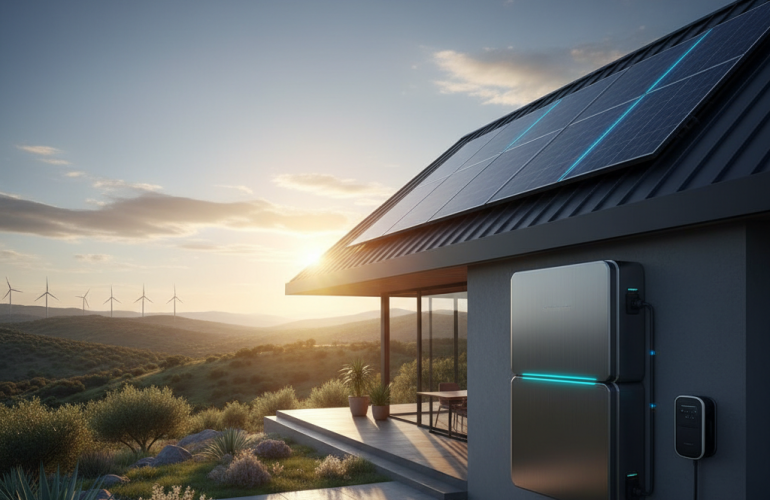
Battery lifespan in Kenyan conditions may range from 5 to 15 years, and home solar battery storage in Kenya should be sized around your household’s night-time demand, not battery capacity alone. The right system depends on the energy you need after sunset, the battery technology, usable capacity, inverter compatibility and the backup duration you require.
Those factors also affect how a system can expand as household demand changes. Battery capacity can decline over time, so consider service life, replacement planning, and equipment warranties when assessing the system as a long-term investment.
This guide explains how to assess battery requirements, what shapes system design, how expansion works, and what to know about equipment warranties. It also covers manufacturer warranty periods for solar panels and inverters, so you can evaluate storage alongside the rest of your installation.
Key Takeaways
- Size a battery around your household’s energy use and the usable capacity available, not its headline capacity alone.
- Battery chemistry affects lifespan, while system expansion depends on how well new storage integrates with existing equipment.
- Review workmanship and equipment warranties alongside inverter, charge controller and battery compatibility.
- Stored solar energy can support household loads after sunset and during grid interruptions; professional system design helps align storage with your needs.
Sizing a Home Solar Battery for Your Household
For home solar battery storage in Kenya, professional sizing starts with household demand. The design matches battery capacity to required backup hours.
Household Energy Needs and Battery Sizing
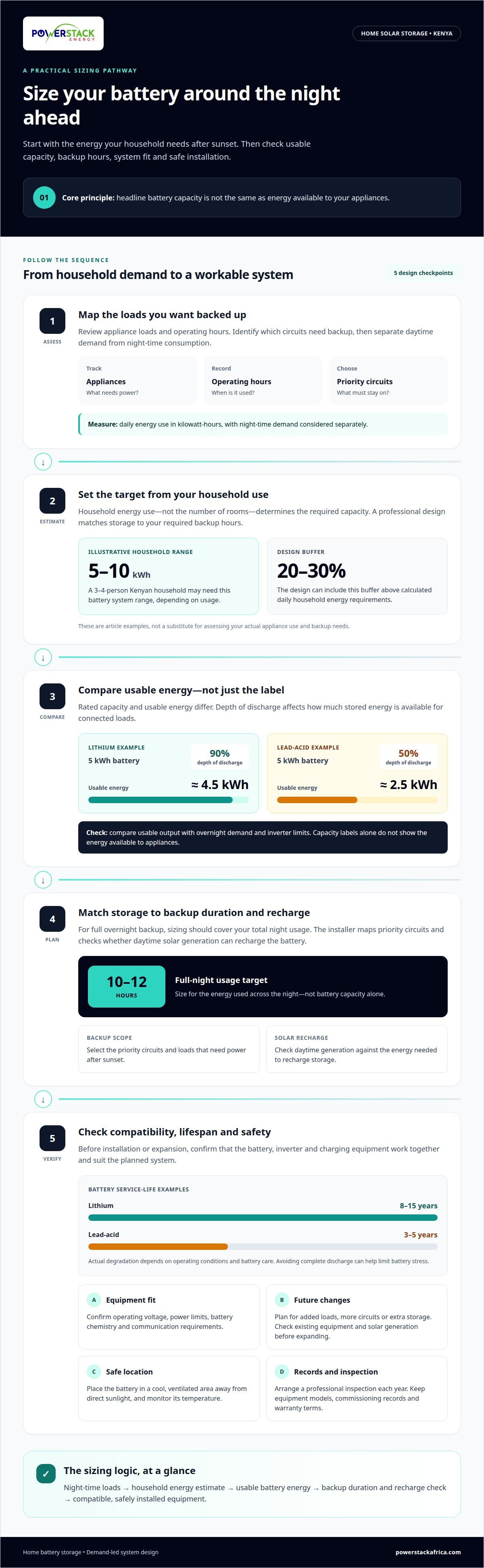
An installer reviews appliance loads, operating hours, and which circuits need backup. Daily energy use is calculated in kilowatt-hours, separating daytime demand from night-time consumption. A 3-4-person Kenyan household may need a 5-10 kWh battery system, depending on usage. The design can include a 20-30% buffer above calculated daily household energy requirements. Household use determines required capacity, not the number of rooms alone. This supports a solar system sized around your energy needs.
Usable Battery Energy and Storage
Rated capacity differs from usable energy. At 90% depth of discharge, a 5 kWh lithium battery supplies about 4.5 kWh. At 50%, a 5 kWh lead-acid battery supplies about 2.5 kWh. Professionals compare usable output with overnight demand and inverter limits. Stored solar energy can power selected lights, refrigeration, and other connected loads after sunset. Capacity labels alone cannot show the energy available to appliances.
For full overnight backup, sizing should cover 10-12 hours of total night usage. The installer maps priority circuits, then checks whether daytime solar generation can recharge the battery. This aligns storage with the wider solar system rather than panel output alone.
In Kenya, applicable approvals depend on whether a home system is standalone or grid-connected and on the electrical work involved. Electrical safety requirements apply to the installation, so identify relevant approvals during design, before work begins.
Battery safety risks include electrical faults and heat exposure. Install the battery in a cool, ventilated area away from direct sunlight, monitor its temperature, and arrange a professional inspection each year.
Battery Lifespan and System Expansion
Battery chemistry affects service life and efficiency. Expansion planning must also account for the existing equipment and any changes in household demand.
Battery Chemistry and Lifespan
Lithium solar batteries typically last 8 to 15 years, while lead-acid batteries usually last 3 to 5 years. Lithium-ion batteries also tend to offer longer lifespans and higher efficiency than lead-acid options. Actual degradation depends on operating conditions and battery care. Avoiding complete discharge can help limit battery stress, and declining storage capacity signals that replacement may eventually be needed.
Battery options for home solar in Kenya include lithium-ion and lead-acid. The right brand depends on system design and inverter compatibility; no single brand suits every household.
System Expansion Options
Plan future expansion around the existing inverter, battery configuration, and available solar generation. A professional can assess whether additional batteries will work with the installed equipment or whether the system needs redesign. Mixing battery chemistries or incompatible units can affect operation, so follow the equipment’s technical requirements when expanding.
Consider future loads before installation, such as adding refrigeration or extending backup to more circuits. Planning for them can make the initial design easier to adapt as household demand changes. Solar panels have a different service life from batteries, and their output can decline over time. Assess system performance before adding storage.
Panel and battery service lives are separate planning factors. Battery degradation reduces stored capacity, while changes in panel output affect the energy available to recharge it. Assess both to determine whether expansion should add storage, generation, or compatible system components.
Solar electricity costs under KSh 2 per kWh over a 25-year system life. Lithium-ion batteries have longer lifespans and higher efficiency than other listed options. Evolving storage brings longer lifespans, higher efficiency and lower costs. Lead-acid batteries require regular maintenance.
Workmanship, Panel, Inverter and Battery Warranties
Review equipment and workmanship warranties as separate protections. Warranty periods vary by product and manufacturer, so check the terms for each model. Workmanship terms concern installation quality, while equipment terms cover the named product under stated conditions. Check which components and specific faults each document covers, plus the process for making a claim.
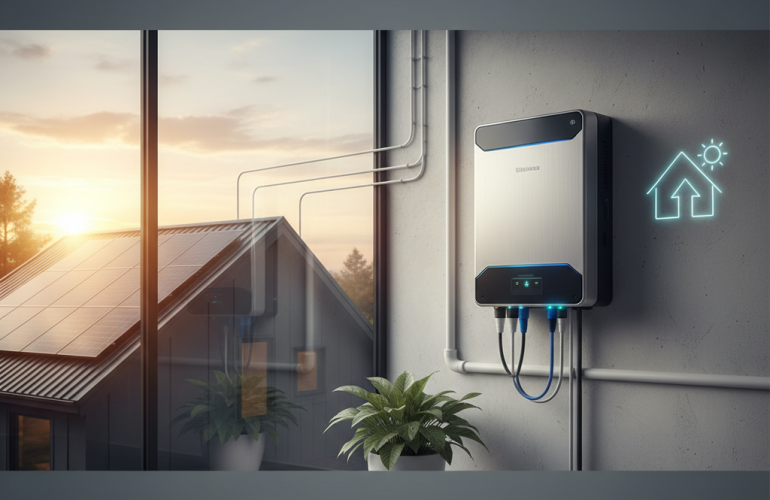
A hybrid inverter manages power from solar panels, batteries, and the grid. Some models include an MPPT charge controller, which tracks the panels’ maximum power point to regulate charging. Match the system design and panel array to the controller’s operating limits. Check the warranty for the specific inverter model and applicable conditions.
Battery and inverter compatibility involves more than matching product labels. The installer checks operating voltage, power limits, battery chemistry, and communication requirements between the battery management system and inverter. For example, a lithium battery that requires communication must be paired with an inverter that supports it. A mismatch can prevent correct charging or reliable operation.
Home solar batteries can work with Kenya Power grid electricity and existing solar panels when designed for those connections. A hybrid inverter can coordinate grid, solar, and battery power. The panel’s electrical characteristics must also suit the inverter or charge controller.
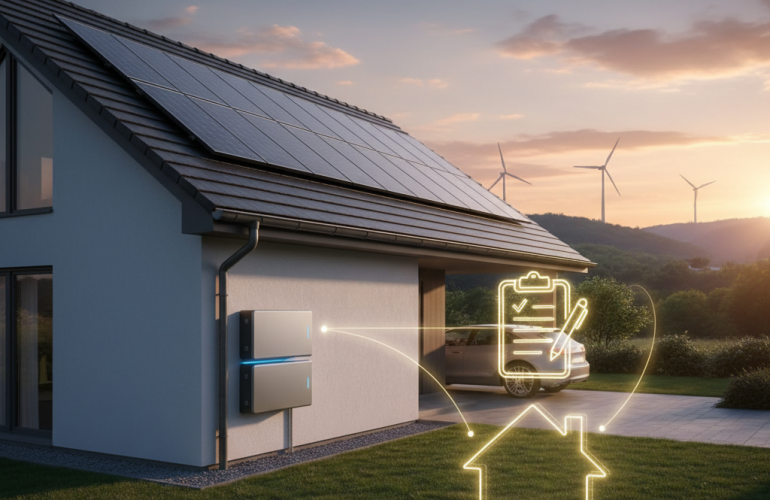
Before installation, have the professional record equipment models and warranty terms, then validate the design and connections. Keep commissioning records with the manufacturer documents. If a panel, inverter, or battery is replaced later, confirm the new component is compatible and that the change does not affect applicable warranty coverage. These records clarify what protection applies to the equipment and workmanship.
How Home Battery Storage Supports Energy Independence
Solar energy stored during daylight can power household loads after sunset, when photovoltaic panels stop generating. In Kenya, this can shift some evening demand from the grid to stored solar power. Without a battery, surplus daytime generation may go unused if appliances are not using it and the system does not feed it into the grid.
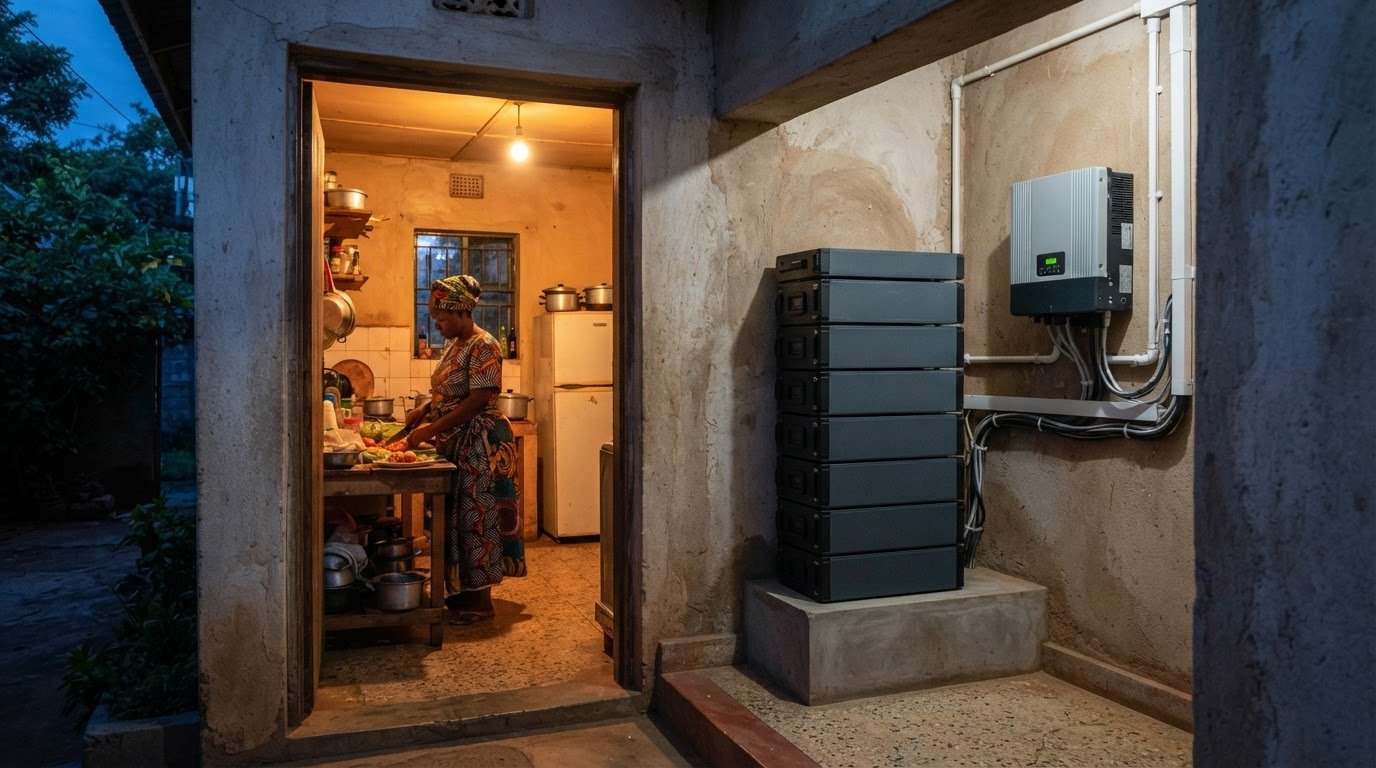
Storage can also support essential household devices during outages where grid supply is unreliable. A properly designed system can reserve battery energy for priority circuits, such as lighting, refrigeration, and communications. This helps maintain selected household functions when grid electricity is unavailable, rather than trying to power every appliance.
Daily appliance use shows how stored energy serves a household. Lighting using 100W for five hours consumes 0.5 kWh, while a 100W television used for four hours consumes 0.4 kWh. A refrigerator averaging 150W and cycling for 10 hours uses about 1.5 kWh. These examples help explain why stored energy can cover several evening loads.
For an off-grid home, storage is central because the property does not feed electricity into the national grid. The battery holds surplus solar energy for night-time use and cloudy periods, when panels generate less electricity. Stored energy reduces reliance on another power source, but household use still needs to match available generation and storage.
A grid-tied installation can use stored energy alongside grid electricity, while an off-grid system depends on its own generation and storage. In either setup, system controls determine when solar power charges the battery and when stored energy supplies household loads. This coordination helps align energy availability with daily use and supports greater household energy independence.
Powerstack Energy
Powerstack Energy Ltd is a next step when you need professional guidance on household solar storage and system design. Its work includes Commercial Solar EPC, Battery Energy Storage Systems, Hybrid Inverters & PCS, and Energy Audits. These capabilities connect storage, power conversion, and generation within a coordinated energy system.
For a home project, the key is to align battery storage with household loads, existing panels, inverter operation, and backup priorities. Powerstack Energy Ltd’s Residential Solar Installation service is relevant when you need a household system designed and installed. An Energy Audit can clarify energy use and identify requirements to guide system planning.
Battery Energy Storage Systems provide storage, while Hybrid Inverters & PCS handle power conversion in integrated systems. The right configuration depends on household demand, existing equipment, and how you intend to use stored energy. Consider these factors when planning a new installation or assessing system expansion.
Commercial Solar EPC is designed for commercial and industrial projects, not standard household installations. For a home, the relevant next step is a residential design based on appliance use, backup needs, panel generation, and equipment compatibility. A structured assessment can show how these elements fit together before installation decisions are made.
Prepare a clear picture of your household’s typical electricity use, priority appliances, current solar equipment, and backup expectations. These details help define your needs for a practical discussion. Powerstack Energy Ltd can address the solar, storage, inverter, or audit requirements relevant to your project.
Get in touch with Powerstack Energy Ltd to discuss your home solar storage requirements and the appropriate next step.
Frequently Asked Questions
What Is Included in a Home Solar System?
A home solar system commonly includes solar panels, a solar inverter, and battery storage. The design may also include mounting structures, wiring, and protection equipment to connect the components. The exact installation scope depends on the property and system design. Request an itemised equipment schedule to distinguish core components from project-specific additions.
Where can I get home solar battery installation in Kenya?
Powerstack Energy Ltd provides Residential Solar Installation across Kenya, integrating panels, inverters, and battery storage into a household system. This service suits homeowners who need a designed installation rather than a battery selected in isolation. Plan the system around your home’s electrical setup and intended use so the storage works as part of the overall installation.
What does a residential solar assessment cover?
A residential solar assessment defines project requirements before equipment is selected. It can review household electricity use, installation conditions at the property, existing electrical equipment, and the intended role of solar generation and storage. The findings help define the system scope, identify design constraints, and plan an installation suited to the home.
How much battery capacity does a Kenyan household need?
Capacity depends on which appliances you want to power, when they operate, and how long they need backup. A household prioritising essential lighting and refrigeration has different requirements from one that includes additional appliances. The design must also account for the inverter’s ability to supply those loads. Together, these factors show whether the proposed battery can support your intended use.
What does a solar battery’s cycle life mean?
Cycle life describes how many charge-and-discharge cycles a battery is rated to complete under specified conditions. It helps with product comparisons, but does not predict service life on its own. Operating conditions and the manufacturer’s test criteria matter too. Review the cycle-life conditions alongside the product warranty to understand how the rating applies to the battery.
How long do home solar batteries last in Kenya, and what warranties are offered?
Battery service life varies with chemistry, operating conditions, and use. Warranty terms differ by product, so review the coverage, exclusions, and claim process for the exact battery model. Keep purchase and installation records with the manufacturer’s warranty documents. Solar panel and inverter warranties are separate; check each document to see what it covers and under which conditions.