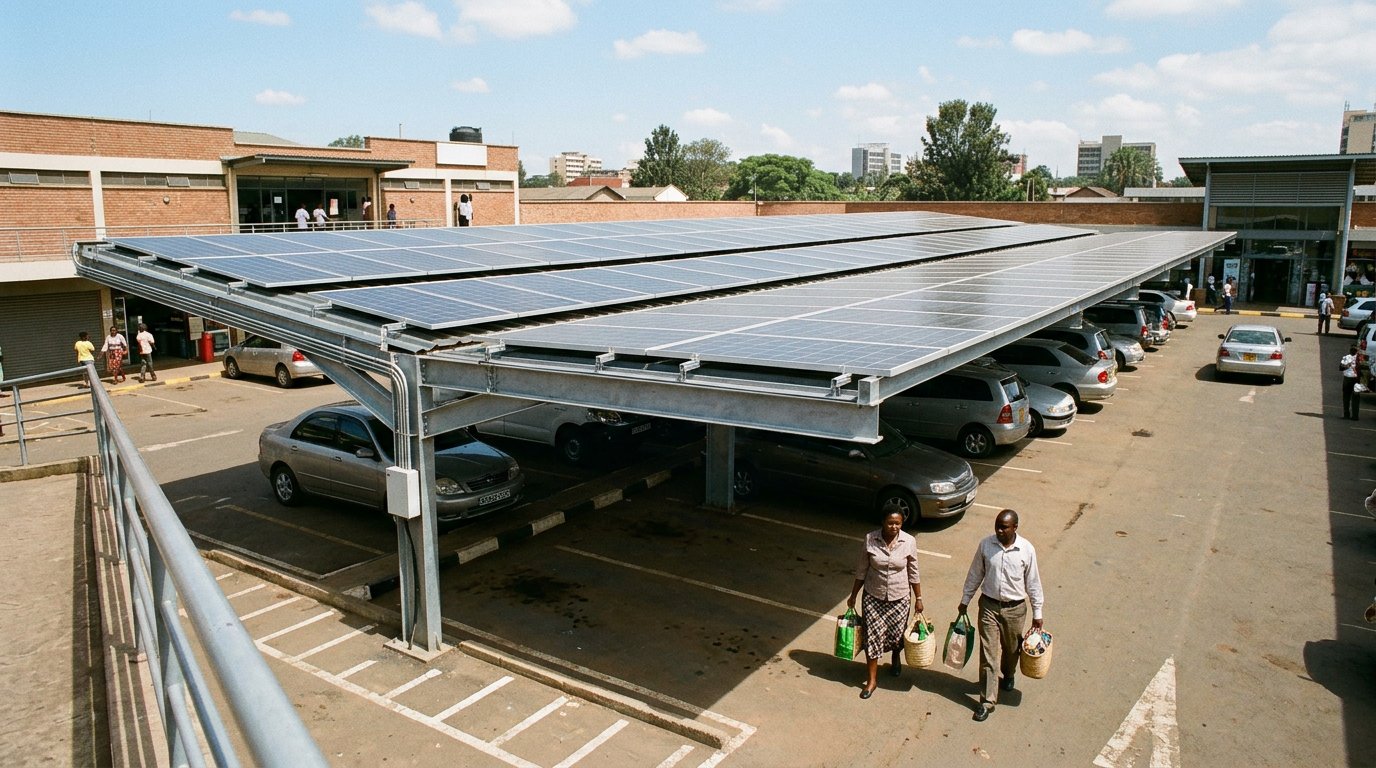
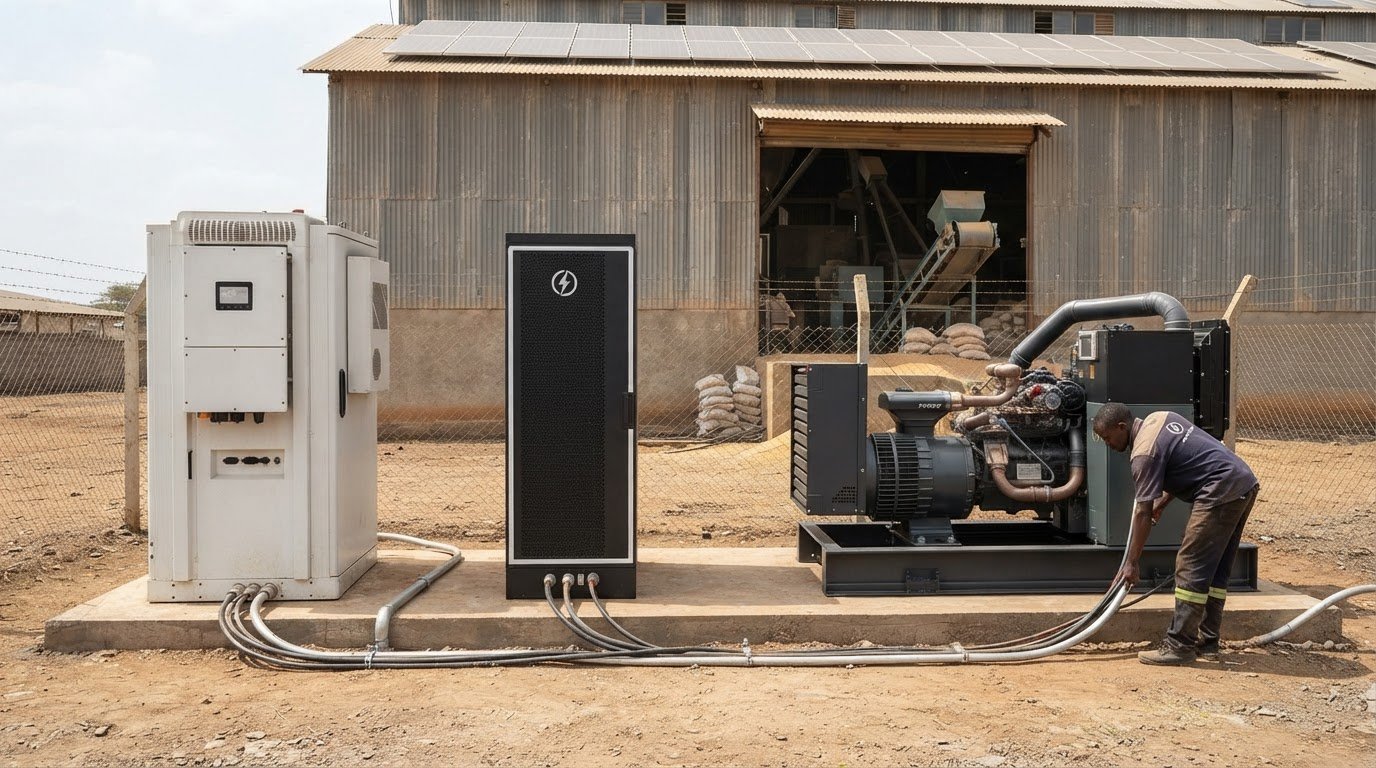
Diesel displacement solar battery systems for industry reduce generator fuel use by supplying facility loads with solar power and storing surplus electricity for periods of lower solar production. Diesel generation remains available for operating conditions the system cannot cover. In Kenya, system design depends on the facility’s load profile, generator performance, operating schedule, solar resource and backup requirements. Solar and batteries can complement a generator, but do not automatically replace it. This article explains how these factors guide an assessment, what operational and electrical data to provide, and how battery capacity and power conversion equipment are sized to match demand and support reliable operation.
Key Takeaways
- Solar and battery storage can reduce generator runtime while keeping diesel generation available when operating conditions require it.
- A hybrid system coordinates solar production, battery charging and generator operation to serve changing facility loads.
- Load profiles, generator fuel records and operating schedules help professionals estimate potential diesel reduction for your site.
- Battery capacity and power conversion equipment are sized around demand, required backup and how the system will operate alongside existing equipment.
Diesel vs Solar for Backup Power: Which One Truly Protects Your Business?
Diesel generators provide dispatchable backup, while solar and batteries can reduce generator runtime. System design needs to match the facility’s loads, operating pattern and continuity requirements.
Diesel Runtime and Transfer Operation
A solar-diesel hybrid combines solar generation and battery storage to serve suitable loads, reducing generator operating hours when solar energy is available. An automatic transfer switch can start a diesel generator during an outage, and the engine drives an alternator to produce electricity. For a factory, the design maps essential equipment and transfer arrangements so backup can support critical operations.
Generators can operate at night and in unsuitable weather, and can be configured for high capacities. They can also move between sites, unlike most fixed solar installations. System design should account for these differences, as well as generator condition and facility load requirements.
Fuel Consumption and Emissions Comparisons
Diesel generator fuel consumption varies with load and operating conditions. Solar power reduces operational emissions during energy production, while battery storage can shift surplus solar electricity to lower-production periods. Actual fuel reduction depends on generator loading, operating hours, solar output and battery dispatch.
For an industrial solar and battery installation in Kenya, project planning identifies the relevant permits, standards and grid-connection requirements. The design and approval pathway depends on the installation and its electrical arrangement, so these requirements should be included in the project scope.
Operational Safety and Battery End-of-Life Risks
A site assessment reviews load records, generator performance, available installation space and the loads requiring backup. The design then addresses equipment layout and electrical integration, followed by commissioning checks of system operation and transfer behaviour. This sequence helps identify site constraints before installation.
Safe operation depends on appropriate fuel storage, generator ventilation, electrical protection and battery operating conditions. Preventative maintenance covers inspections of the system and generator, while end-of-life planning considers battery handling and recycling. The US Department of Energy identifies calendar and cycle life, tolerance to abusive conditions, and recyclability as battery development considerations.
What is a Solar Diesel Hybrid System?
A solar-diesel hybrid coordinates solar generation with diesel generators and, where required, battery storage to supply an industrial load. The design should reflect demand patterns, grid availability and operational priorities.
Hybrid System Configurations
A grid-tied system operates alongside utility electricity, while a hybrid configuration coordinates the grid, solar, batteries and generators. A grid-defection system is designed to operate without relying on utility supply.
The configuration determines how a facility responds to grid interruptions and changes in solar output. For example, a factory can use grid power when available, retain generators for backup and use solar to serve suitable loads. A battery-free diesel-PV arrangement uses solar as it is generated, while the generator supplies any shortfall. Without storage, excess solar cannot be shifted to later operating periods.
Off-Grid and Weak-Grid Microgrids
An off-grid or weak-grid microgrid coordinates local generation and facility loads where utility supply is absent or unreliable. Solar can serve demand when available, batteries can store surplus for later use, and generators can provide another source of electricity.
An energy management system can schedule operation based on predicted solar generation and battery charging status. This is particularly relevant at remote sites with limited grid access. Assessing load patterns and supply conditions helps set operating priorities, including when batteries charge and when generators run.
Hybrid Power for Industrial Operations
Hybrid power can support mining, construction and oilfield operations by coordinating available generation with site demand. A mobile construction project may move equipment between work areas, while a mine or oilfield may have concentrated loads and limited grid access.
Solar can serve suitable loads during production hours, and batteries can shift stored electricity to periods of lower solar output. The operating schedule, load profile and grid access shape system design. These site conditions guide how the different generation sources work together.
Sizing and Integrating Power Sources
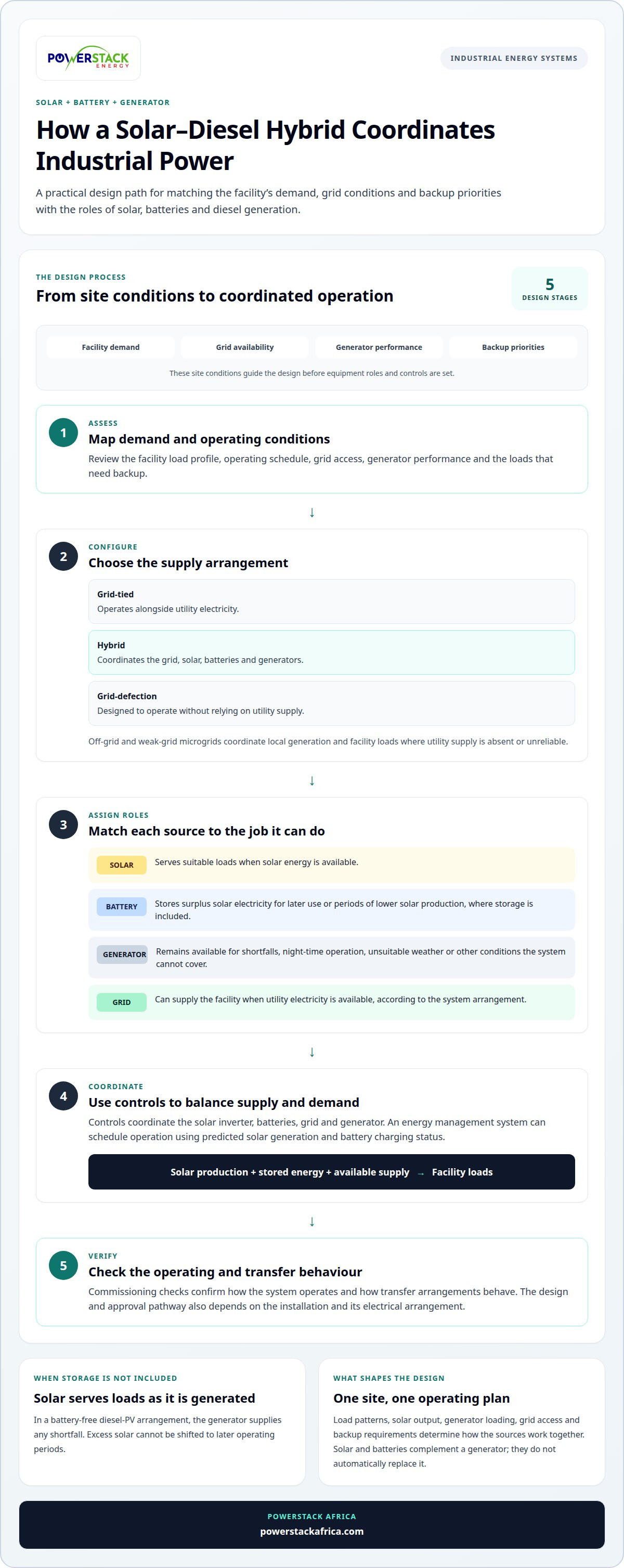
Before sizing the solar array, battery and power conversion equipment, the design process reviews load profiles, grid availability, generator performance and backup priorities. It assigns each source a role during normal operation, low-solar periods and grid interruptions.
Controls coordinate the inverter, batteries, grid and generator to balance supply with demand. For a site with predictable daytime loads, solar can serve those loads directly, while storage supports later use. Professional hybrid-system design can align equipment and controls with facility operating requirements.
Estimating diesel fuel reduction from project data
Diesel reduction is estimated by comparing a facility’s current generator operation with a modelled solar-and-storage scenario. Operational records help identify when renewable electricity could serve demand. For industrial facilities assessing diesel displacement with solar battery systems, this comparison ties the design to actual site performance rather than a generic projection.
Project Data for Fuel Reduction Estimates
Site data helps estimate how much generator-produced electricity solar and storage could replace. The estimate is more useful when its baseline reflects representative operations, including production schedules and periods of changing demand.
The analysis can distinguish ordinary shifts from unusual periods, such as planned shutdowns or temporary production changes. It can also account for seasonal operating patterns and differences between weekdays and weekends. These distinctions help show when solar generation is likely to coincide with demand and when stored energy may be needed.
Expected solar output is then modelled against the facility’s consumption profile. The analysis assesses which loads can be served directly, which need stored electricity, and which remain dependent on the generator. This produces a project-specific estimate of displaced generator operation.
Battery Sizing and Generator Runtime
Battery capacity affects how much solar electricity can be used after solar production declines, and therefore influences when the generator may still be needed.
The assessment considers the timing of demand and solar production, along with the loads requiring backup. Storage can be designed to support selected operations beyond sunlight hours, while its usable energy and charging opportunities determine how long it can serve them.
System controls also shape operation. They coordinate battery charging and discharging with generator dispatch while preserving the required backup reserve. The design must account for changing loads and available solar output throughout the facility’s operating schedule.
Fuel Use and Maintenance Impacts
When solar and stored electricity supply loads that would otherwise use the generator, diesel consumption can fall. Reduced runtime may also affect maintenance tasks tied to engine operating hours.
Generator servicing remains necessary. Comparing operating records and maintenance schedules for the existing setup and proposed hybrid arrangement helps identify how operating patterns may change and which periods are best suited to solar and battery dispatch.
Battery and power conversion system sizing
Storage and power conversion equipment are sized around the facility’s load profile, backup priorities, solar generation and electrical architecture. Lithium iron phosphate (LFP) is used in industrial reference configurations, but suitable battery chemistry depends on the project’s operating requirements, system compatibility and service conditions.
Battery energy capacity, measured in kWh, describes how much energy a battery can store. Power output, measured in kW, describes how quickly it can supply or absorb electricity. The power conversion system (PCS) manages that flow between the battery and the facility’s electrical system. Voltage compatibility and charging capacity also influence equipment selection.
A small-site reference configuration has a rated AC output of 220 kW, 220 kWh of LFP battery energy, three 125 kW power conversion systems and a 40 kW battery charging circuit. A medium-project reference configuration has a rated AC output of 400 kW, 440 kWh of LFP battery energy, six 125 kW power conversion systems and an 80 kW battery charging circuit.
These are reference configurations, not default specifications for every industrial facility. Sizing considers peak demand, critical loads and the required battery supply period. The PCS must accommodate load changes and coordinate charging with available solar generation. Battery voltage must also match the selected conversion equipment and site architecture.
A facility with brief, high-power loads may need a different balance of PCS output and stored energy than one requiring sustained backup. Charging capacity matters too: it affects how quickly storage can absorb available solar generation. In some medium-injection systems, a buffer battery with at least 1 hour of autonomy is proposed to help manage unexpected solar or demand changes.
Share your facility’s load profile and backup priorities to discuss industrial battery and power conversion system design.
Powerstack Energy: Battery Energy Storage Systems
Powerstack Energy Ltd can design and integrate battery energy storage for facilities using solar generation and diesel backup. Its Battery Energy Storage Systems are incorporated into project designs based on the facility’s load profile, operating schedule and backup requirements.
An Energy Audit can inform industrial system design by clarifying consumption patterns and operational requirements. Commercial Solar EPC and Hybrid Inverters & PCS can also support an integrated solar and storage project, with equipment selected to match the facility’s electrical needs.
If you’re assessing diesel reduction at your site, contact Powerstack Energy Ltd to discuss your project requirements.
Plan the Next Stage of Your Energy System
For a facility considering diesel displacement solar battery systems for industry, start by defining the operational priorities behind the investment. Decide which processes must remain available during an outage, how much generator use you aim to displace, and how the system should accommodate changes in production. These decisions provide a practical basis for designing a solution around your site.
Powerstack Africa Energy Ltd brings project requirements together through Commercial Solar EPC, Battery Energy Storage Systems, and Hybrid Inverters & PCS. Integrating these services can align equipment selection and system design with your facility’s operating needs, rather than treating each component as a separate purchase.
Bring your project requirements into a technical discussion and contact Powerstack Energy to explore a suitable next step for your facility.
Frequently Asked Questions
How can solar battery systems reduce diesel use in industrial facilities?
Solar can supply suitable daytime loads, while stored electricity can serve demand when solar production drops. At a manufacturing facility, an energy management system can prioritise solar for scheduled production and reserve battery supply for selected equipment or operational transitions. The generator remains available when solar and storage cannot meet demand. This reduces fuel use by displacing some generator operation, without assuming diesel backup is no longer needed.
What industrial solar and battery system sizes are suitable for diesel displacement in Kenya?
Suitable capacity depends on your facility’s peak demand, operating hours, backup priorities and solar production profile. A commercial example in Powerstack Energy’s range is the SAJ 50kW All-In-One Energy Storage Solution, paired with 100kWh of storage. This is a specific system configuration, not a universal sizing recommendation. A professional assessment determines whether its power and stored energy match your site’s loads and operating requirements.
Which battery chemistries and energy storage technologies are best for industrial solar systems?
Lithium iron phosphate (LFP) is identified for industrial storage. Battery capacity is sized to the facility’s demand, backup priorities, solar generation and operating schedule.