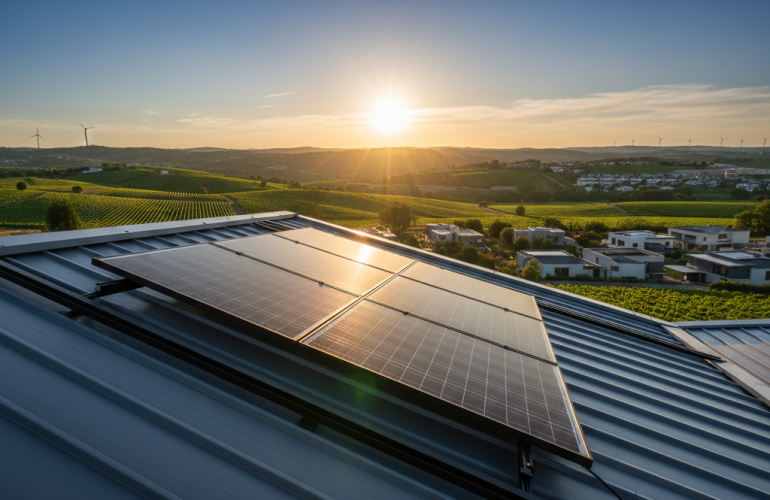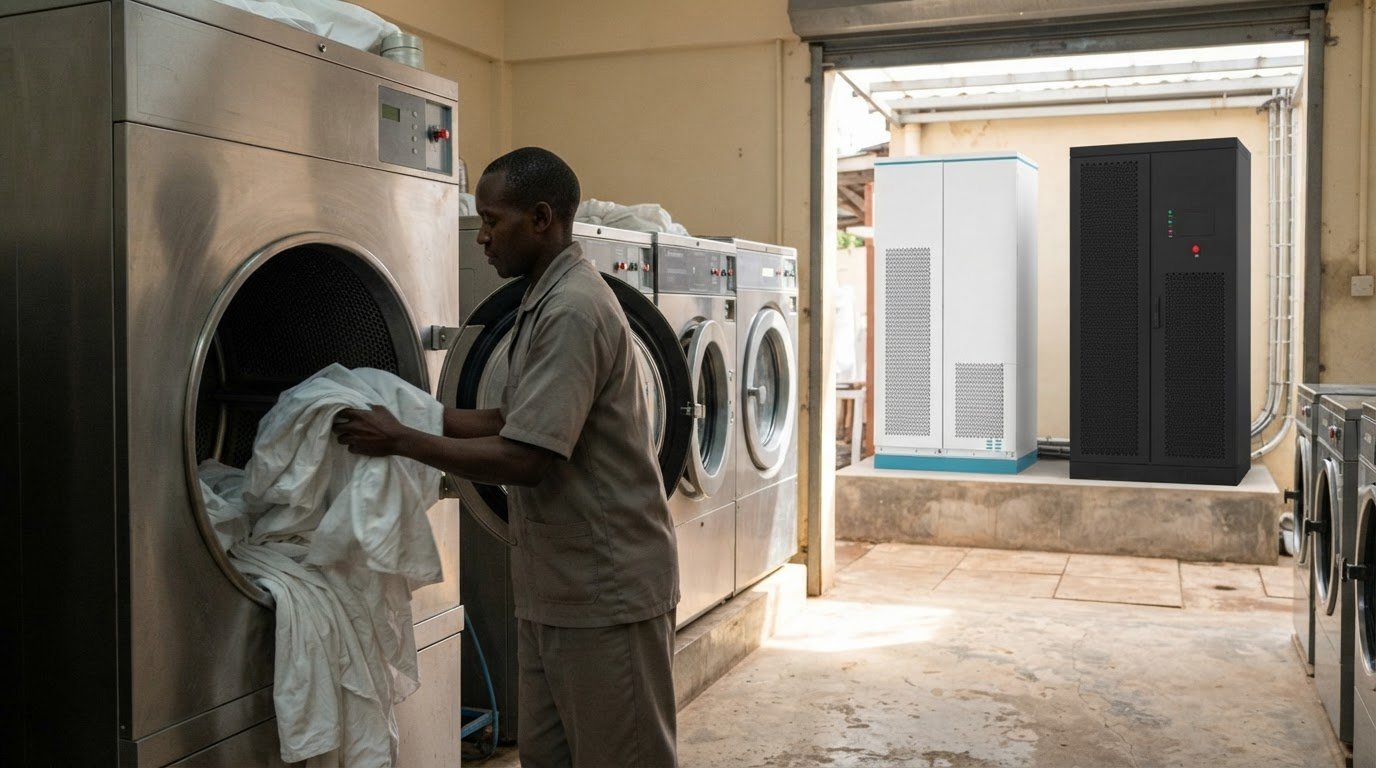
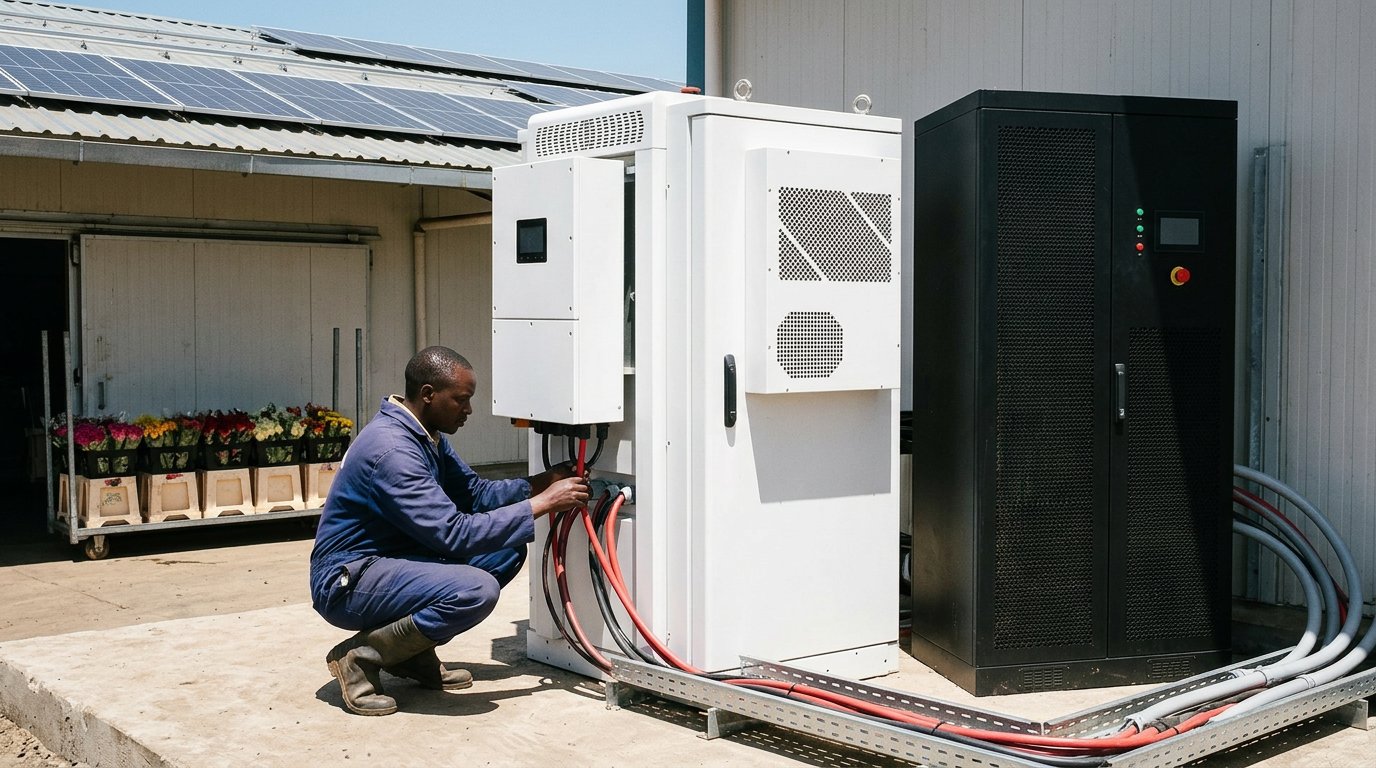
Kenyan businesses use commercial solar to offset daytime grid consumption, improve control over electricity use, and reduce reliance on diesel. Effective commercial solar system design in Kenya starts with the facility’s load profile, operating hours, and continuity requirements.
Lowering reliance on grid electricity can support more predictable operations, but panel capacity alone does not determine whether a project performs well. The system must match when your business consumes power, how demand varies, and whether energy is needed after daylight hours.
This guide explains why Kenyan businesses consider commercial solar, how system design matches generation to actual loads, when battery storage can support evening or overnight consumption, and how routine maintenance helps keep panels, inverters, and storage equipment operating as intended. Key tasks include panel cleaning, visual inspections, performance monitoring, and periodic checks of inverter and battery operation.
Key Takeaways
- Match a grid-tied, off-grid, rooftop, or ground-mounted design to your site’s grid access, available space, and electricity-use profile.
- Plan routine panel cleaning and system inspections to help maintain generation and identify equipment issues early.
- Size battery storage around when your facility uses electricity and how long critical loads need backup.
- Assess how daytime solar generation could reduce grid and diesel use against your business’s operating needs.
1. Why Choose Commercial Solar Panels in Kenya?
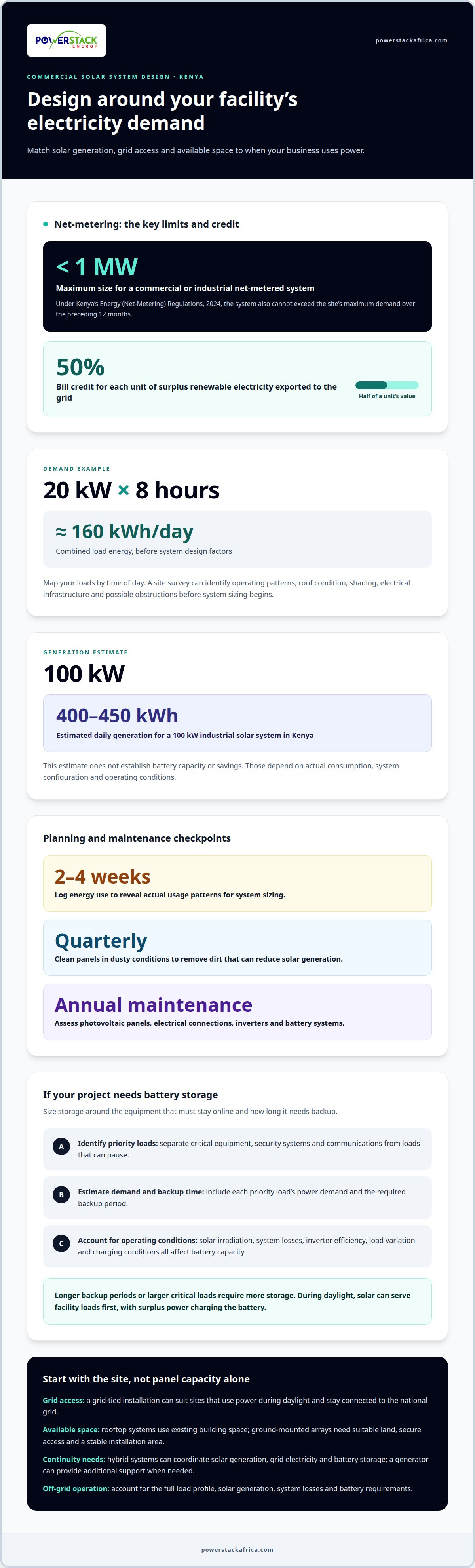
A commercial solar system design in Kenya should match the site’s electricity demand, grid access, and available space. A grid-tied installation suits factories and offices that consume power during daylight and remain connected to the national grid. Under Kenya’s Energy (Net-Metering) Regulations, 2024, a commercial or industrial net-metered system must be under 1 MW and cannot exceed the site’s maximum demand over the preceding twelve months. The regulations provide a bill credit of 50% for each unit of surplus renewable electricity exported to the grid.
Rooftop solar uses existing building space, while a ground-mounted array needs suitable land, secure access, and a stable installation area. A site survey identifies roof condition, shading, electrical infrastructure, and possible obstructions before sizing begins. The survey also maps operating loads by time of day. For example, a 20 kW combined load running for 8 hours uses approximately 160 kWh per day, before system design factors. For a step-by-step approach to commercial solar system sizing, use actual electricity consumption to estimate panel and battery requirements.
Choose a hybrid configuration when solar generation, grid electricity, and battery storage need to work together. A generator can provide additional support when solar and stored energy do not meet demand. The design must coordinate these sources with facility loads and the required backup period. Monitoring generation and consumption helps track performance and identify changes in demand.
Off-grid systems suit sites without grid access, but sizing must account for the full load profile, solar generation, system losses, and battery requirements. A site survey establishes which equipment is critical and when it operates, including overnight or variable factory loads. For context, a 100 kW industrial solar system is estimated to generate about 400–450 kWh daily in Kenya. That estimate does not establish battery capacity or savings: those depend on actual consumption, system configuration, and operating conditions.
2. What maintenance do commercial solar systems require?
Start maintenance with routine panel cleaning and inspections. In dusty conditions, quarterly cleaning can remove dirt that reduces solar generation. Inspections can also reveal debris, visible damage, and changes around the array. Monitoring devices help facilities track energy production and spot unexpected performance changes.
During annual maintenance, technicians can assess photovoltaic panels, electrical connections, inverters, and battery systems. Periodic inverter and battery checks help identify operating issues before they affect facility loads. Plan maintenance around the installation environment, including dust, weather exposure, access, and drainage. Keep a maintenance record to track inspections and observed faults.
Before solar installation, project planning should establish energy consumption, operating schedules, site conditions, and the required system configuration. Data logging over 2–4 weeks can reveal actual usage patterns for sizing. The installation process then moves through site assessment, engineering design, equipment planning, installation, and system commissioning. Applicable Kenyan energy regulations, standards, and licensing requirements depend on the specific project.
Financing routes depend on the business’s funding structure. Compare internally funded and lender-funded proposals through cash-flow projections, expected generation, and financing terms. Commercial solar installations in Kenya are described as typically achieving payback within 3–5 years; actual results depend on system performance and the facility’s energy use.
Technical risks include poor sizing, shading, equipment faults, and installation errors. Financial risks include assumptions about generation or savings that do not match actual operating conditions. Maintenance risks include delayed cleaning, missed inspections, and undetected inverter or battery faults. A site-specific energy audit can inform design and operating assumptions; commercial energy audits are one relevant starting point for project planning.
3. When Does a Commercial Solar Project Need Batteries?
A battery is useful when your facility needs solar electricity after panels stop producing. Businesses operating mainly from 8 a.m. to 5 p.m. may use much of their solar power directly. A 24-hour operation, or a site with substantial evening demand, may need storage to cover priority loads. Facilities that consume most electricity between 6 p.m. and 6 a.m. have a different storage requirement from daytime users.
Begin sizing by identifying the equipment that must stay online during a grid outage or after sunset. Separate critical loads, such as essential production equipment, security systems, and communications, from loads that can pause. Estimate each priority load’s power demand and the required backup period. Battery capacity must reflect this demand, solar irradiation, system losses, inverter efficiency, load variation, and charging conditions. A longer backup period or larger critical load requires more storage.
During daylight, panels can supply facility loads first, with surplus solar electricity charging the battery. Stored energy can then supply selected loads when solar production drops or the grid connection is unavailable. In an off-grid system, batteries store excess electricity for use at night or on cloudy days. Design for periods when solar production is lower than expected rather than assuming every day is the same.
LiFePO₄ batteries are one storage option, but performance depends on cell design, the battery management system, operating temperature, depth of discharge, charging conditions, and installation environment. Review warranty terms alongside these operating conditions: the stated warranty period alone does not determine backup performance. Correct configuration and monitoring help align battery charging, discharge, and priority loads with facility operations. Batteries may be unnecessary when daytime solar already matches consumption and backup is not required.
4. Reasons Kenyan businesses consider commercial solar
For Kenyan businesses, commercial solar can turn daytime sunlight into a practical operating resource. Panels generate electricity that facilities can use directly, reducing the share drawn from the grid. This can suit offices, warehouses, and factories with substantial daytime operations. Matching generation to consumption helps ensure system capacity serves actual business activity and gives energy managers another option when planning infrastructure upgrades and managing electricity exposure.
Electricity-bill reduction is a central reason to assess solar. Commercial solar systems can reduce Kenyan businesses’ electricity bills by 50–90%. The mechanism is direct: onsite solar production supplies some facility demand that would otherwise come from grid electricity. The actual reduction depends on how closely solar generation matches consumption, the system’s capacity, and how the facility operates. Reviewing interval usage alongside operating schedules helps show where solar panels can contribute most.
Industrial sites may also consider solar to reduce diesel use where generators support operations. Solar can supply daytime loads while an existing generator remains part of the site’s power arrangement. This can help businesses manage fuel exposure without assuming solar will serve every load. A design assessment should identify generator operation, electrical connection points, and loads that cannot be interrupted. These details shape how solar integrates with existing infrastructure.
Excess generation is another design consideration for grid-connected sites. Kenya’s Energy (Net-Metering) Regulations, 2024 provide commercial and industrial customers a bill credit of 50% for each unit of surplus renewable electricity exported to the grid. This provision makes export rules relevant to system capacity, but onsite consumption remains central to planning. Review demand profiles, daytime production, and export potential together before settling on a configuration. To assess how these factors apply to your facility, discuss your commercial solar requirements.
Powerstack Energy Ltd: Battery Energy Storage Systems
Powerstack Energy Ltd can assess whether battery storage fits your facility’s operating profile. Its Battery Energy Storage Systems support projects where priority loads need stored electricity after solar production falls or during a grid interruption. An Energy Audit can clarify consumption patterns and inform storage requirements.
When generation and storage need to be planned together, Commercial Solar EPC brings the solar installation into the project scope. Hybrid Inverters & PCS integrate power conversion and storage in the system design. The right configuration depends on your loads, operating schedule, backup requirements, and site conditions.
If your facility is evaluating battery integration, solar generation, or both, contact Powerstack Energy Ltd to discuss your project requirements.
Set a Clear Direction for Your Energy Project
Start by defining what the investment needs to achieve for your business. Identify the operational priority, whether it is reducing grid dependence, supporting essential loads, or planning for future expansion. Then create a project brief that connects facility requirements to a suitable technical approach. This keeps commercial solar system design in Kenya focused on business needs, not equipment selection alone.
Powerstack Energy Ltd’s engineering team can help shape the discussion through its commercial solar and energy storage work. Bring your facility’s operating priorities and project objectives to the conversation. A clear starting point makes it easier to assess the right scope and plan the next stage.
Contact Powerstack Energy Ltd to discuss your solar project and take the next step toward an energy plan built around your operations.
Frequently Asked Questions
Why Choose Commercial Solar Panels in Kenya?
Commercial solar can supply part of your business’s electricity demand through onsite generation. It is most useful when facility operations align with solar production, such as at a processing site running equipment during daylight. Solar can also form part of a grid-connected or generator-integrated setup. Before choosing a configuration, compare the site’s operating schedule, grid access, and available installation space.
What maintenance do commercial solar systems require?
Commercial systems need scheduled cleaning, performance monitoring, and equipment inspections. If monitoring shows an unexpected change in generation, compare the reading with the facility’s normal operating pattern and recent site conditions. Dust, shading, or visible debris may explain a drop. If performance issues persist or an inspection reveals a fault, have a qualified technician assess electrical connections, the inverter, and battery equipment.
When Does a Commercial Solar Project Need Batteries?
A commercial project needs batteries when stored solar electricity must supply selected loads after generation falls or during a grid interruption. A facility with critical processes outside daylight hours may benefit; a daytime operation that can rely on the grid may not need storage. Before specifying battery capacity and power conversion equipment, define which equipment needs backup, how it operates, and the required backup duration.
Can solar power run factory equipment and heavy machinery?
Solar can supply factory equipment and heavy machinery with solar power in Kenya when the system is engineered for the machinery’s electrical demand and operating conditions. The design should account for which equipment runs simultaneously, its operating schedule, and changes in load during operation. An energy assessment can help determine which machines solar can serve directly, whether storage is needed, and how the system should connect to existing power infrastructure.
How much solar capacity does a commercial building need?
Capacity depends on the building’s energy consumption, operating hours, available installation area, and desired share of solar generation. Commercial solar system design in Kenya should use actual load data, not just the facility’s total monthly bill. Record equipment ratings and operating schedules, then assess when demand occurs. This helps distinguish a system sized for daytime consumption from one intended to support broader energy needs. For guidance on estimating array and storage requirements from electricity use, see how to calculate panels and battery storage for a commercial solar system. For a household-focused comparison, see residential solar installation in Kenya.
What Should a Commercial Solar Quotation Include?
A useful quotation should describe the proposed system configuration, equipment, installation scope, and expected generation assumptions. It should also explain how the design addresses your facility’s load profile, grid or generator connection, and battery requirements. Request a clear BOQ, or bill of quantities, listing project materials and work, along with commissioning, monitoring, maintenance, and applicable equipment warranty terms.