Commercial peak demand shaving strategies in Kenya use battery storage to limit a facility’s grid draw during high-demand periods. Where the tariff includes demand charges, this can help reduce them.
Peak shaving limits short demand spikes; load shifting moves flexible electricity use to another time without necessarily reducing total consumption.
This article explains how storage supports peak shaving, which operational and tariff factors affect results, and how the approach compares with load shifting, efficiency measures and on-site generation.
Key Takeaways
- Match battery charging and discharging to your facility’s demand profile to limit grid draw during short periods of high load.
- Use load forecasting and scheduling to identify which operations can shift, then combine them with peak shaving where demand cannot be rescheduled.
- Review how your billing interval records peak demand, especially when assessing energy-intensive equipment or electric vehicle charging.
- An energy audit and appropriately sized battery storage system can help determine whether commercial peak shaving fits your site’s operating requirements.
What Is Peak Shaving and How Does It Support Commercial Operations with Energy Storage?
Battery energy storage allows a commercial site to limit grid draw during short demand peaks. Stored electricity supplies part of the load, which can help maintain operations without stopping production.
Commercial Battery Storage Systems
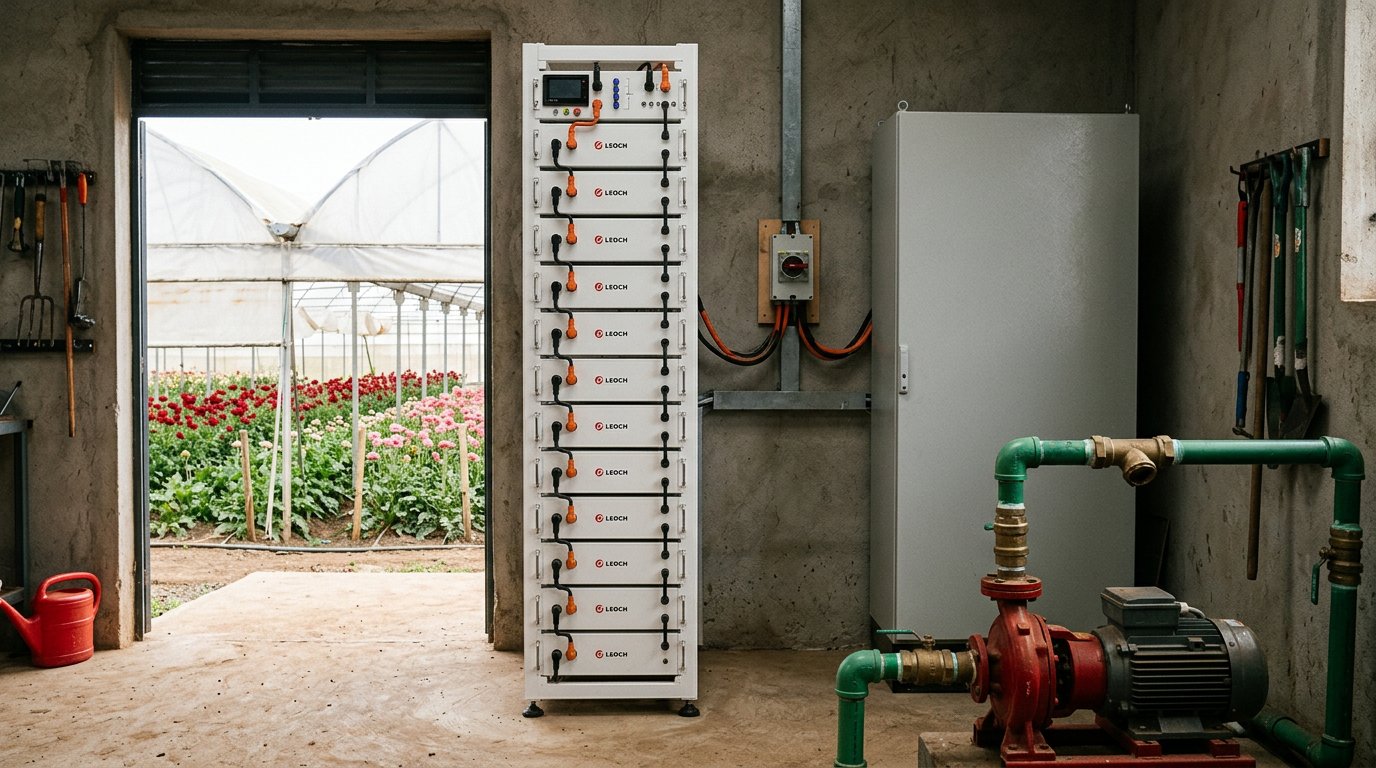
A battery energy storage system stores electricity for later use at a commercial or industrial site. It matters when equipment demand rises sharply and the facility needs to limit grid consumption while maintaining operations. A warehouse, for example, can draw stored energy to support refrigeration or material-handling loads. System design must match the site’s load profile and required discharge power. Available configurations include a 50kW, 100kWh all-in-one system and an outdoor 112kWh commercial battery.
Battery Charging and Discharging
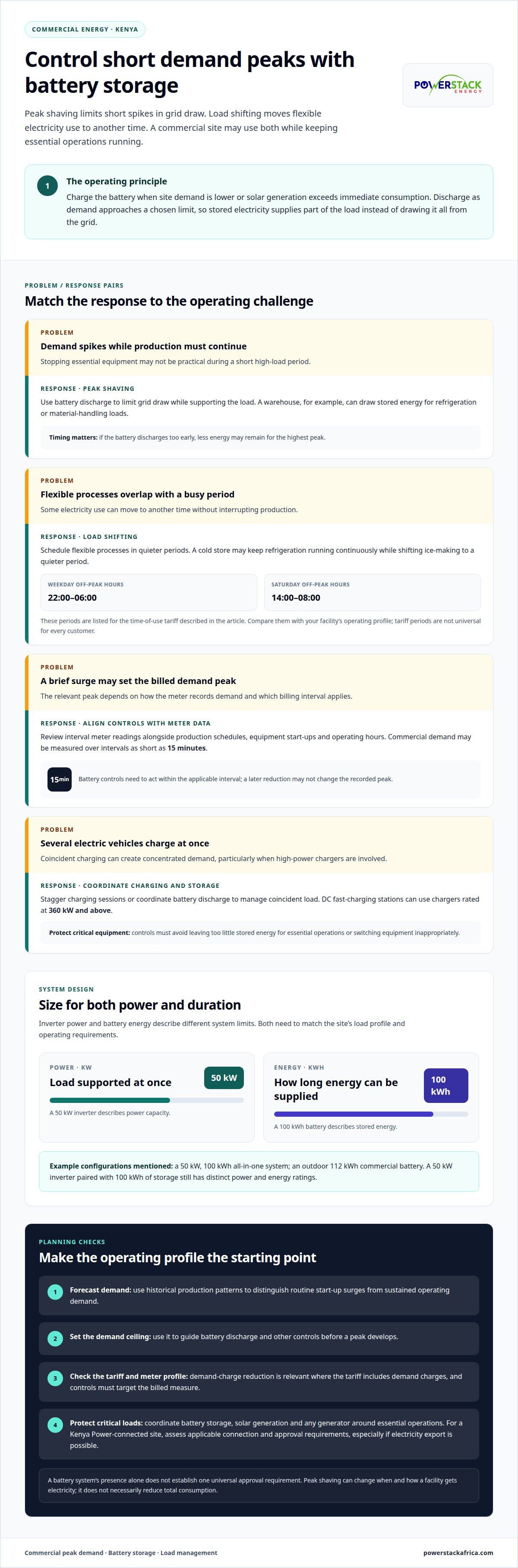
A peak-shaving system charges the battery when site demand is lower or solar generation exceeds immediate consumption, then discharges it as demand approaches a set limit. This reduces power drawn from the grid during peak periods. Controls must account for the timing and duration of high loads: if the battery discharges too early, less energy may remain for the highest peak. An energy management system can coordinate battery state, consumption and solar production against the chosen demand threshold.
Solar, Battery and Inverter Integration
Solar generation, battery storage and a commercial inverter work together to supply site loads and manage grid demand. Inverter power rating determines how much load the system can support at once; battery energy capacity determines how long it can supply that load. For example, a 50kW inverter paired with 100kWh of storage has distinct power and energy ratings, and system design must account for both. For a Kenya Power-connected site, assess applicable connection and approval requirements for the combined solar, battery and generator design, especially where electricity export is possible. A battery system’s presence alone does not establish one universal approval requirement.
Peak shaving compared with load shifting
Peak shaving limits short demand spikes, while load shifting reschedules flexible processes. A cold store, for example, may need peak shaving to maintain continuous refrigeration while shifting ice-making to quieter periods.
Load Forecasting and Shave Levels
Load forecasting estimates future electricity demand and helps a facility set a grid-demand ceiling. That ceiling guides battery discharge and other controls before a peak develops. A factory can use historical production patterns to distinguish routine start-up surges from sustained operating demand. Forecasting also helps reserve stored energy for periods when critical equipment and production processes overlap.
Load Shifting and Scheduling
Load shifting moves flexible electricity use to another period; it matters when processes can run without disrupting production. Kenya’s time-of-use tariff lists weekday off-peak hours as 22:00-06:00 and Saturday off-peak hours as 14:00-08:00, with an additional 5% discount for off-peak electricity use. A site can schedule charging or suitable industrial processes in those periods, then use peak shaving for inflexible loads. Generators can supply selected loads during peaks, while thermal storage can shift cooling or heating demand.
Interval Meter Data and Peak Loads
Professional analysis of interval meter data identifies when demand rises and which operations coincide with each peak. Commercial demand may be measured over intervals as short as 15 minutes. An energy specialist aligns these readings with production schedules, equipment start-ups and operating hours. Repeated peaks at shift changes, for example, may point to overlapping machinery. This analysis helps distinguish a persistent load from an isolated event, supporting more precise scheduling and shave-level decisions.
Peak shaving and demand-charge reduction
When considering commercial peak demand shaving strategies in Kenya, start with the facility’s tariff and meter profile. Kenya Power tariffs determine applicable energy and demand charges, while tariff definitions establish the relevant periods. Peak shaving must also protect critical loads: depleted storage, unsuitable controls or poorly coordinated generation can disrupt operations.
Demand Charges and Billing Intervals
A demand charge reflects the maximum electricity demand recorded during a billing interval, so a short surge can affect a bill. Commercial demand may be measured over intervals as short as 15 minutes. Interval length determines how demand is averaged and which peak matters. Battery controls need to act within the applicable interval; later reductions may not change the recorded peak. Effective commercial peak demand shaving strategies in Kenya target the billed measure, not simply daily consumption.
Commercial Tariffs and Peak Periods
Kenya Power’s commercial tariff determines how energy use and demand are billed; there is no single peak window for every customer. The time-of-use tariff lists weekday off-peak hours as 22:00-06:00 and Saturday off-peak hours as 14:00-08:00, with an additional 5% discount for off-peak use. Compare these periods with the facility’s operating profile before scheduling flexible loads.
Electric vehicle charging can create concentrated demand when several vehicles connect together. DC fast-charging stations can use chargers rated at 360 kW and above. Staggering charging sessions or coordinating storage discharge can reduce coincident load, but controls must protect critical facility equipment. Poor coordination can leave insufficient stored energy for essential operations or expose equipment to inappropriate switching. An energy management system can coordinate charger demand, battery operation and on-site generation.
Peak shaving and grid demand
Peak shaving changes when and how a facility gets electricity, but does not necessarily reduce total consumption. When factory demand rises, battery discharge or on-site generation can reduce grid draw. Across multiple sites, coordinated reductions during morning or evening peaks can ease pressure on shared infrastructure. The effect depends on operating schedules and on how controls protect critical loads.
Kenya’s LCPDP envisages 500 MW of battery energy storage systems by 2043. It recommends implementing 150 MW of battery energy storage by 2026. It also assumes 600 MW of pumped-storage power plants by 2043, intended to reduce medium- and long-term peak demand. These system plans describe storage’s role in balancing supply, while commercial batteries act at facility level.
At a warehouse, solar photovoltaic generation can charge storage during high-production hours. Controls can then reserve discharge for refrigeration and dispatch peaks. An energy management system monitors site consumption, battery state and solar output, and can briefly pause non-critical loads. This reduces grid imports at the local peak while keeping essential cooling and security equipment supplied.
Peak shaving supports the grid most directly when it reduces simultaneous imports rather than shifting them to another peak. A facility can flatten its import profile by combining battery discharge, solar generation and reduced non-critical consumption. Some systems can also feed stored electricity back to the grid during peak periods instead of serving only facility loads. The practical takeaway is to align facility controls with grid peaks, not just the site’s largest machine.
Nairobi steel-firm respondents rated implementation of systems to reduce electricity use during maximum demand at a mean of 4.00 on a five-point scale.
Powerstack Energy
Powerstack Energy Ltd helps commercial and industrial sites assess peak demand and integrate energy systems around operational requirements. Its energy audits examine consumption patterns, major loads, operating schedules and the relationship between site demand and electricity supply. The assessment helps identify whether the main opportunity is reducing avoidable consumption, rescheduling flexible processes, adding storage or combining these measures.
Where demand peaks persist despite practical scheduling changes, battery energy storage systems can supply power during selected high-load periods. Hybrid inverters and power conversion systems coordinate battery operation with site electricity and, where included in the design, solar generation. Commercial Solar EPC can integrate on-site solar and storage into a wider system. The right configuration depends on the facility’s load profile, critical equipment, required discharge power and operating periods.
For example, an audit can help a factory with simultaneous machinery start-ups identify which loads drive its peak. If some processes can be moved, scheduling may reduce overlapping demand without storage. If essential equipment must operate together, a battery system may help limit grid draw while supporting production continuity. Powerstack Energy Ltd assesses these requirements and develops an energy solution suited to the facility.
Bring the business’s electricity-use profile, operating schedule and priority loads into the project discussion. These details support an assessment based on actual site conditions and help clarify whether storage, solar integration or demand management is relevant. Contact Powerstack Energy Ltd to discuss commercial peak demand shaving for your facility.
Frequently Asked Questions
How Does Peak Shaving Work in C&I Projects?
In commercial and industrial projects, peak shaving is configured around agreed operating limits and equipment priorities. During commissioning, the engineering team tests how controls respond to changing site demand and confirms that essential circuits remain prioritised. At a processing facility, this means identifying which loads can be curtailed and which must remain available. Control settings should reflect actual operating conditions, not only a design scenario.
What Outcomes Can Businesses Expect from Peak Shaving?
Results depend on the facility’s tariff, demand profile, operating schedule and storage system performance, so one figure will not apply to every business. A useful assessment compares historical bills with projected operation under different demand-control scenarios. Seasonal production changes, battery charging requirements and maintenance also affect the outcome. Financial modelling and ROI calculations are provided in proposals, with assumptions made clear.
What Is Load Shifting?
Load shifting is practical only when a task can move without affecting output, service or product quality. A site assessment can identify flexible operations, such as water pumping between production cycles or charging equipment outside busy operating windows. The schedule must account for staffing, process requirements and equipment availability. This separates viable changes from shifts that merely transfer operational problems.
Which Businesses Benefit Most from Peak Shaving?
Businesses with large, recurring electrical loads are worth assessing, particularly when equipment demand rises at the same time. Examples include cold-chain operators with refrigeration, farms running pumps and commercial sites with multiple vehicle chargers. A strong fit depends on whether the site has a measurable demand peak and suitable control options. Facilities with highly variable demand or little flexibility need careful assessment before a system is selected.
What is peak demand shaving and how does it work for commercial electricity users?
For a commercial electricity user, peak demand shaving helps manage the site’s maximum grid-import target while maintaining required operations. The target must account for essential equipment, production changes and available energy resources. An operating plan can prioritise critical circuits and define how controls respond as the facility approaches its limit. Demand management is therefore an operational design decision, not simply an equipment choice.
How are maximum demand charges measured and billed for commercial customers in Kenya?
For a Kenyan commercial customer, the applicable Kenya Power tariff determines whether and how maximum demand is billed. Review the tariff category and the demand information shown on the electricity bill, then reconcile those details with the facility’s meter records for the same billing period. This helps identify the relevant billed measure and distinguish demand-related charges from electricity-use charges without assuming every commercial account follows the same structure.