A hybrid solar system for homes in Kenya combines solar panels, a hybrid inverter, battery storage and a grid connection to supply household electricity and backup power. Its design balances your electricity use, backup priorities and available installation space to determine which household loads it can support. This guide explains how the system works, how it may affect electricity bills and what shapes installation requirements.
Key Takeaways
- System sizing depends on your household’s electricity use, backup priorities and available space for solar panels and batteries.
- Solar can supply household loads and charge batteries, while the grid can provide power when solar generation is insufficient.
- Battery capacity and the equipment selected affect how much backup power is available and which appliances can keep running during an outage.
- Powerstack Energy’s energy audits, Battery Energy Storage Systems and Hybrid Inverters & PCS can support informed system planning and integration.
What is a hybrid solar system and how does it work?
A hybrid solar system for homes in Kenya combines solar panels, battery storage and a grid connection. A hybrid inverter converts panel output into alternating current for household appliances and manages battery charging, drawing grid power when solar generation and stored energy are insufficient. The system can be configured around your household’s current use and future demand.
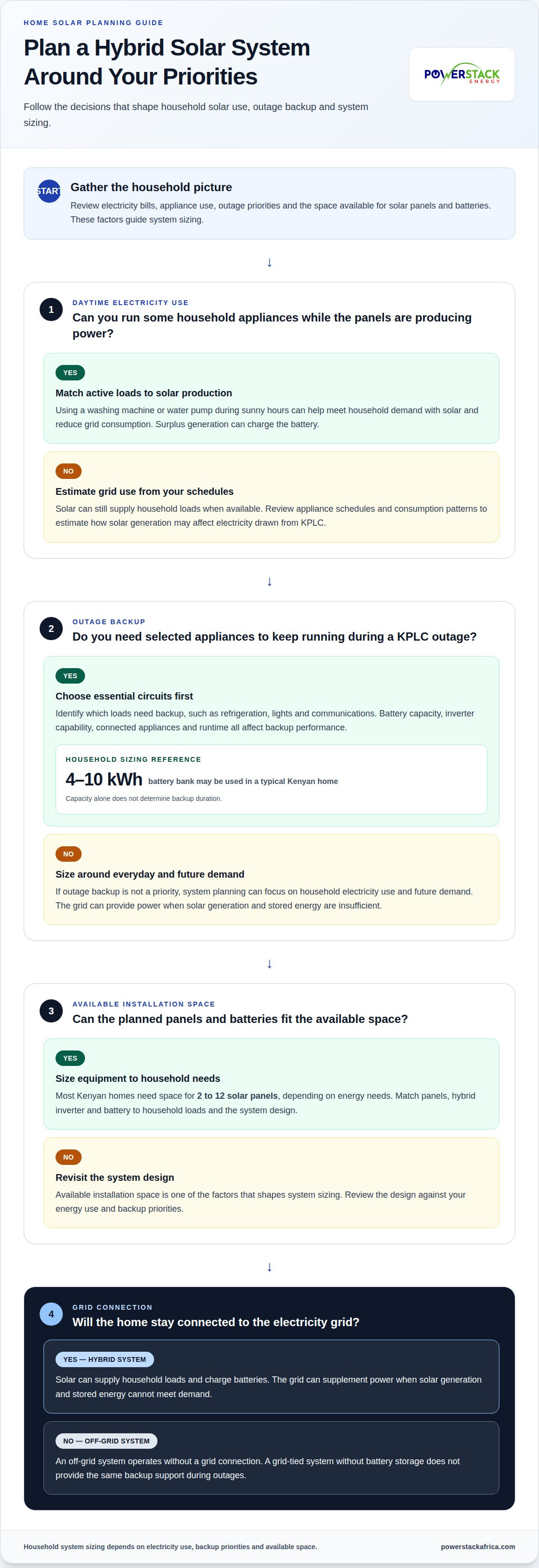
Professional sizing begins with electricity bills, appliance use and backup priorities. The installer identifies which loads should continue during an outage, then sizes the inverter, panels and battery around those requirements. A typical Kenyan home may use a lithium battery bank of 4-10 kWh. Most Kenyan homes need space for 2 to 12 solar panels, depending on energy needs.
Unlike an off-grid system, a hybrid system stays connected to the grid and includes battery storage. An off-grid system operates without a grid connection. A grid-tied system connects to the grid but, without battery storage, does not provide the same backup support during outages.
For Kenya Power net metering, exported electricity and any credits depend on the applicable arrangement. A household system can prioritize using solar power at home and charging its battery rather than relying on export credits.
Dyness and Deye storage equipment are among the named options in Kenya. The solar panels, hybrid inverter and battery must be matched to household loads and the system design.
A reputable installer assesses the home, documents the design, installs compatible equipment and commissions the system. The installation should include panels, inverter, battery, wiring and protective equipment. Maintenance includes scheduled inspection of connections and components. The design should address electrical isolation and battery placement. Manufacturer warranties for solar panels and inverters can range from 10-25 years. Financing terms depend on the funding arrangement, so consider repayment obligations and equipment ownership.
Electricity bill savings and backup power
A hybrid system can reduce the electricity your home draws from Kenya Power (KPLC) by meeting household demand with solar generation. The effect on your bill depends on how much electricity you use while the panels are producing power. Appliances running during daylight can use solar energy directly, while surplus generation can charge the battery for later.
For example, running a washing machine or water pump during sunny hours can help a household use more solar power on site. Evening lighting, refrigeration and electronics may draw from stored energy instead. An assessment of appliance schedules and consumption patterns helps estimate how solar generation and battery storage could affect grid use.
Backup performance is a separate design question from bill savings. Battery capacity, the appliances connected to backup circuits and how long they run all affect backup during a KPLC outage. A system may prioritize refrigeration, lights and communications rather than every appliance in the home. High-demand appliances can use stored energy faster, so choosing which loads to back up matters.
- Daytime use: Matching solar production with active household loads can reduce grid consumption.
- Battery charging: Stored solar energy can supply selected appliances after sunlight fades.
- Outage priorities: Essential circuits determine which loads receive backup power.
- Grid contribution: KPLC supplies power when solar and stored energy cannot meet demand.
A professional assessment brings these factors together. It reviews household bills, appliance use and outage priorities, then sizes generation and storage for the required operating pattern. This helps distinguish a system designed mainly to offset daytime consumption from one that also supports essential loads during outages. If you’re planning a household solar system, start with the loads you need to keep running and the times you use them.
How hybrid solar systems work
A residential solar inverter and battery system manages power from solar panels, batteries and the electricity grid. In daylight, photovoltaic panels produce direct-current electricity, which the hybrid inverter converts into alternating current for household circuits. When available, solar generation takes priority and reduces grid demand. Panel output varies through the day with sunlight intensity.
When solar production exceeds the home’s active demand, the inverter can direct surplus energy to charge the battery. Stored electricity can then supply compatible loads after sunset or during a grid outage. If solar and battery output cannot meet demand, the grid can provide supplementary power. This coordinated flow distinguishes a hybrid setup from one without batteries.
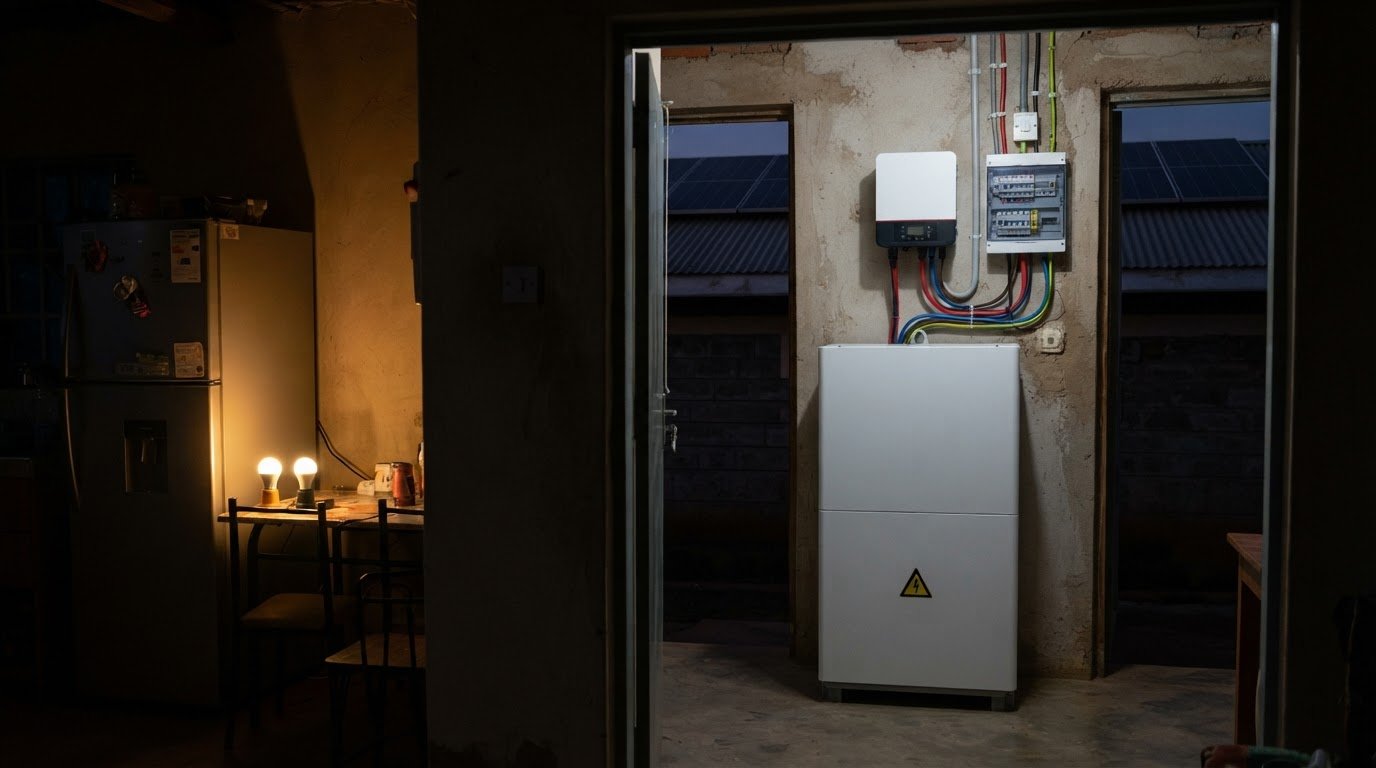
During an outage, backup depends on the system configuration. The inverter must support the required loads, and the battery must have enough stored energy. A design may place essential circuits, such as refrigeration, lighting and communications, on backup. High-demand appliances can use stored energy faster, so the selected loads influence backup duration.
- Solar generation: Panels convert sunlight into direct-current electricity.
- Household supply: The inverter converts that electricity into alternating current.
- Battery storage: Surplus generation charges the battery for later use.
- Grid support: Grid power supplements supply when solar and battery energy fall short.
In Kenya, a household system may use a battery bank of 4-10 kWh, depending on its design. That capacity does not determine backup alone: appliance demand and inverter capability also matter. The installer configures the system around the home’s selected circuits and energy use. For instance, supporting lights and a refrigerator differs from backing up every household appliance. Clear load priorities help align system operation with your needs.
As sunlight intensity increases, solar panels generate more energy. The hybrid inverter manages the DC energy from the panels alongside grid power, prioritizing solar generation when available. Excess solar energy can charge the batteries for use at night or during grid outages.
Hybrid system installation requirements
For hybrid solar systems for homes in Kenya, installation requirements vary by household and site. System configuration, battery capacity, panel quantity and electrical work shape the project scope. A setup for essential circuits differs from one designed to support several high-demand appliances. These differences affect equipment selection and installation work, so no single configuration suits every home.
A professional assessment starts with household electricity use, appliances and backup priorities. The installer designs the system around the required generation, inverter capacity and storage. A larger inverter may be needed when several appliances run at once. Battery capacity determines how much energy the system can store, while panel quantity affects generation and recharging. Roof layout, mounting requirements, wiring and protective equipment also shape the installation plan.
The proposal should identify the main equipment and work included. Review the inverter capacity, battery specification, panel quantity, mounting approach, electrical protection and commissioning. These details clarify what the system is designed to power and how the installation scope fits your home. Compare proposals only when their equipment and intended loads are similar.
Battery type, capacity and system design determine the storage configuration for your home. Lithium batteries in Kenyan hybrid systems usually last 10 to 15 years. Service life and warranty are separate considerations, so examine the battery warranty terms alongside the proposed design and expected operating pattern.
For a hybrid solar system for homes in Kenya, ask for a proposal that links each component to your household’s energy use and backup priorities. That makes it easier to assess whether the design is intended to support daytime consumption, outage needs, or both. A residential solar system assessment can establish the equipment and installation scope around your home’s requirements.
Lithium batteries in Kenyan hybrid systems usually last 10 to 15 years.
Powerstack Energy: Battery Energy Storage Systems
Powerstack Energy Ltd provides Battery Energy Storage Systems and Hybrid Inverters & PCS for projects requiring coordinated energy storage and power conversion. These offerings are relevant when your system plan includes storing solar electricity for later or managing power between generation, batteries and connected loads.
An Energy Audit can help relate your energy use to system requirements. For a home installation, an assessment can inform discussions about household demand, backup priorities and equipment selection. Powerstack Energy Ltd also provides Commercial Solar EPC for commercial and industrial projects, whose generation and storage requirements differ from residential needs.
Consider speaking with Powerstack Energy Ltd when you are planning storage integration and need to align system components with your operating requirements. Contact Powerstack Energy Ltd to discuss your project.
Set a clear direction for your home energy system
Before proceeding, define what you need your solar installation to achieve. List the household loads that matter most during an outage, when you use major appliances and whether you expect demand to change. These priorities give the system design a practical reference point and help tie equipment selection to how you use electricity.
For a hybrid solar system for your home in Kenya, start with a project discussion grounded in your requirements. Powerstack Energy Ltd provides Battery Energy Storage Systems and Hybrid Inverters & PCS for energy storage and conversion. Its Commercial Solar EPC offering serves commercial and industrial projects, while Energy Audits support assessment and planning.
A defined set of household priorities can make your next design conversation more focused. Discuss your solar project with Powerstack Energy Ltd and move forward with a plan suited to your home.
Frequently Asked Questions
What is a hybrid solar system for a home, and how does it work?
A hybrid solar system combines rooftop solar generation, battery storage and a grid connection managed by an inverter. Solar can supply a home office during daylight, for example, while stored energy serves selected circuits later. The grid remains an additional power source when solar and battery supply cannot meet demand. The system design determines how power flows between these sources.
How much does a home hybrid solar system cost in Kenya in 2026?
Pricing depends on system configuration, installation requirements and project location. Panel quantity, inverter selection, battery capacity and the work required at the property all shape the proposal. There is no single price for every home. Request a quote and technical proposal based on your household’s loads and installation requirements.
What system size and battery capacity does a typical Kenyan home need?
Home system sizes vary with consumption and backup requirements; advertised hybrid system sizes range from 3kW to 30kW or more. A typical Kenyan home hybrid system uses a battery bank of around 5 kWh to 15 kWh. These are reference ranges, not a default design. A household with high evening demand may need different storage and inverter capacity than one using most power during daylight.
How much can a Kenyan household save with a hybrid solar system?
Savings vary by household. They depend on how much solar electricity you use directly or store compared with how much power you continue to buy from the grid. A home with regular daytime electricity use, for example, may consume more solar power on site. Review your bills and household usage patterns to assess the system’s effect.
What are the costs of solar batteries in Kenya, and how long do they last?
Battery costs depend on the type, capacity and system design. Lithium batteries usually last 10 to 15 years.
Which solar panel, hybrid inverter, and battery brands are available in Kenya?
Dyness and Deye storage equipment are named options in Kenya, and Deye hybrid inverters are also listed.